

















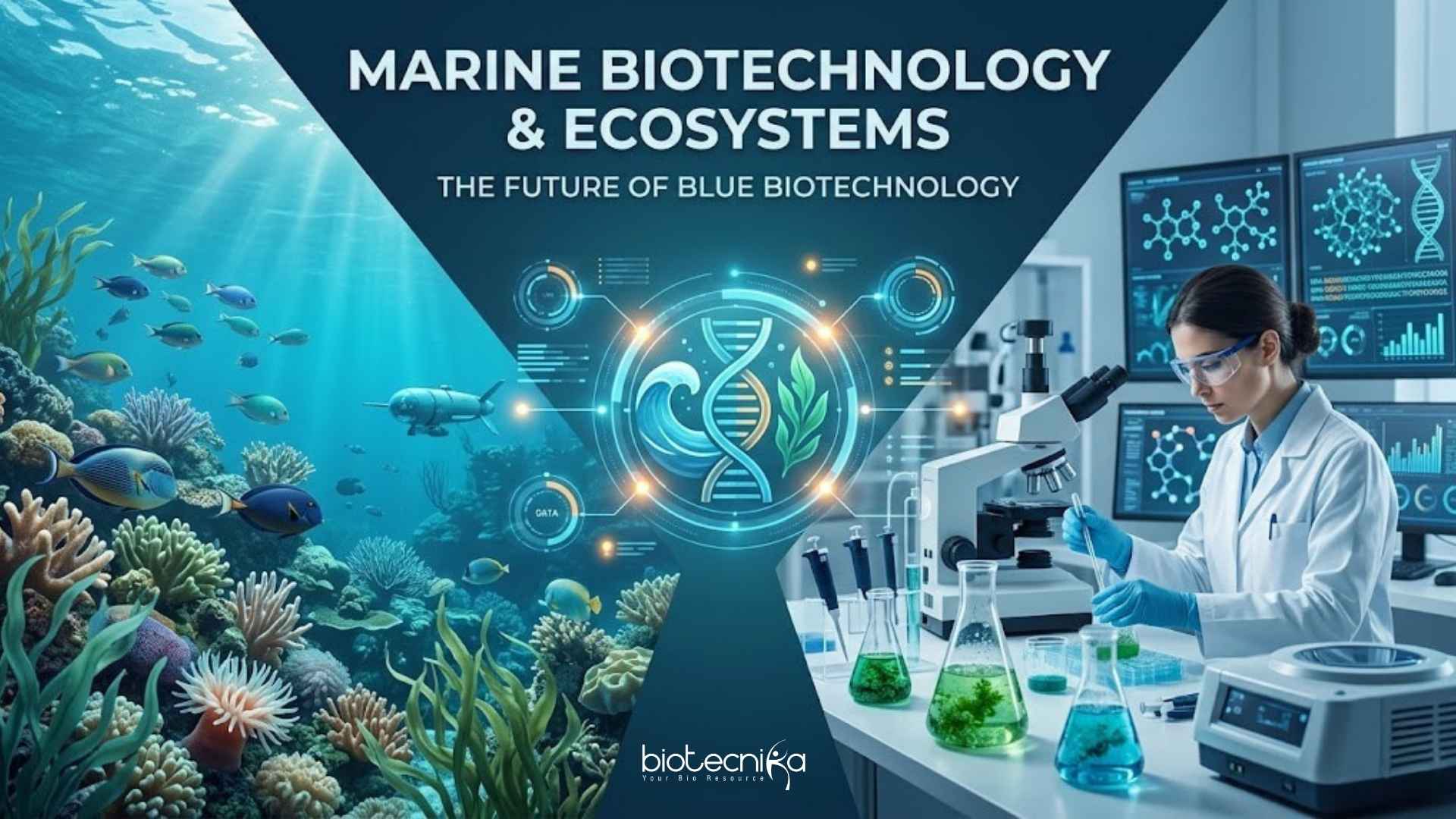
Marine Biotechnology and Marine Ecosystems: The Future of Blue Biotechnology
Do you wonder how the ocean can be used to enhance your life? The ocean has much more to offer than simply containing fish and vegetation – it is potentially a valuable resource for scientists and innovators alike. The scientific discipline of marine biotechnology develops new materials from living organisms found in the ocean, including algae, bacteria, fish, and other types of marine life. Examples of products that can be produced by marine or other aquatic organisms are: medicines, food, energy, and solutions to environmental problems. As people search for new and sustainable sources of energy, the ocean increasingly provides the potential for these sources as well.
What is Marine Biotechnology?
Marine biotechnology is a branch of science that studies living organisms in the ocean and uses them for human benefit. Scientists explore marine ecosystems to find unique organisms that can help solve problems in health, agriculture, and industry.
For example:
- Some marine bacteria produce chemicals that can be used to make new medicines
- Algae can be used to create biofuels
- Marine enzymes are used in food processing and cosmetics
Because ocean life is very different from land life, it offers new and exciting possibilities.
Importance of Marine Ecosystems
Marine ecosystems include oceans, coral reefs, mangroves, and deep-sea environments. These ecosystems are home to a huge variety of life forms.
They are important because:
- They support biodiversity (many types of living things)
- They help control the climate by absorbing carbon dioxide
- They provide food and livelihood for millions of people
- They are a source of raw materials for biotechnology
If these ecosystems are damaged, we lose not only marine life but also valuable scientific resources.
Role of Marine Organisms in Biotechnology
Marine organisms are the backbone of marine biotechnology. Each organism has special features that make it useful.
Some examples include:
- Algae: Used in food, cosmetics, and biofuel production
- Marine bacteria: Help in making antibiotics and enzymes
- Sponges: Known for producing compounds used in cancer research
- Fish and shellfish: Important for nutrition and aquaculture
These organisms survive in extreme conditions like high pressure and low light. Because of this, they produce unique compounds that are not found on land.
Applications of Marine Biotechnology
1. Medicine
One of the most important uses of marine biotechnology is in healthcare. Many marine organisms produce natural chemicals that can be used to treat diseases.
- Anti-cancer drugs from marine sponges
- Antibiotics from marine bacteria
- Anti-inflammatory compounds from algae
These discoveries are helping scientists develop new treatments.
2. Food and Nutrition
Marine biotechnology improves food production and quality.
- Development of better fish farming techniques
- Use of algae as a healthy food source
- Production of nutritional supplements like omega-3 fatty acids
This helps meet the growing demand for food worldwide.
3. Environmental Protection
Marine biotechnology also helps protect the environment.
- Cleaning oil spills using marine microbes
- Waste treatment using biological methods
- Reducing pollution through eco-friendly processes
This makes it an important tool for sustainable development.
4. Energy Production
The ocean is a potential source of renewable energy.
- Algae can be used to produce biofuels
- Marine biomass can be converted into energy
This reduces dependence on fossil fuels and supports clean energy.
What is Blue Biotechnology?
Blue biotechnology is another name for marine biotechnology. It focuses on using ocean resources in a sustainable way.
The goal is to:
- Protect marine ecosystems
- Use resources without harming the environment
- Support economic growth through innovation
It is called “blue” because it is linked to the ocean.
Challenges in Marine Biotechnology
Even though marine biotechnology has great potential, it also faces some challenges:
- Difficulty in exploring deep-sea environments
- High cost of research and technology
- Lack of awareness and skilled professionals
- Threats to marine ecosystems due to pollution and climate change
Protecting the ocean is very important for the future of this field.
Future of Marine Biotechnology
Marine Biotechnology will be a big part of our future, and it has great prospects. Marine Biotechnology will see many changes over the next several years as new technologies and research continue to allow scientists to examine the oceans and find solutions to help solve many challenges. We should see many exciting new developments in the marine biotechnology industry, including:
- Newer and more advanced pharmaceutical applications developed from marine organisms
- Innovations for sustainable and environmentally friendly food production
- Improved environmentally-friendly practices for our oceans
- Adding to the growth of the renewable energy sector from marine resources
Many countries around the world are investing in blue biotechnological research due to the vast potential it holds.
Marine biotechnology has been an innovative and developing area of research that merges marine science with oceanic research. Through the exploitation of marine organism research and the preservation of marine ecological systems, it is possible to develop products that can enhance health care, food systems, energy resources, and help to remedy environmental problems.
The care of marine resources must be carried out in an efficient manner; this goes beyond simply protecting marine life; it also means assuring the marine resources will be available for future generations.
Within the depths of Earth’s oceans reside unknown secrets, and these secrets are accessible through marine biotechnology accessibly and responsibly.