

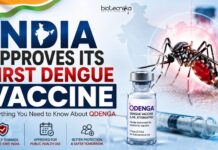

















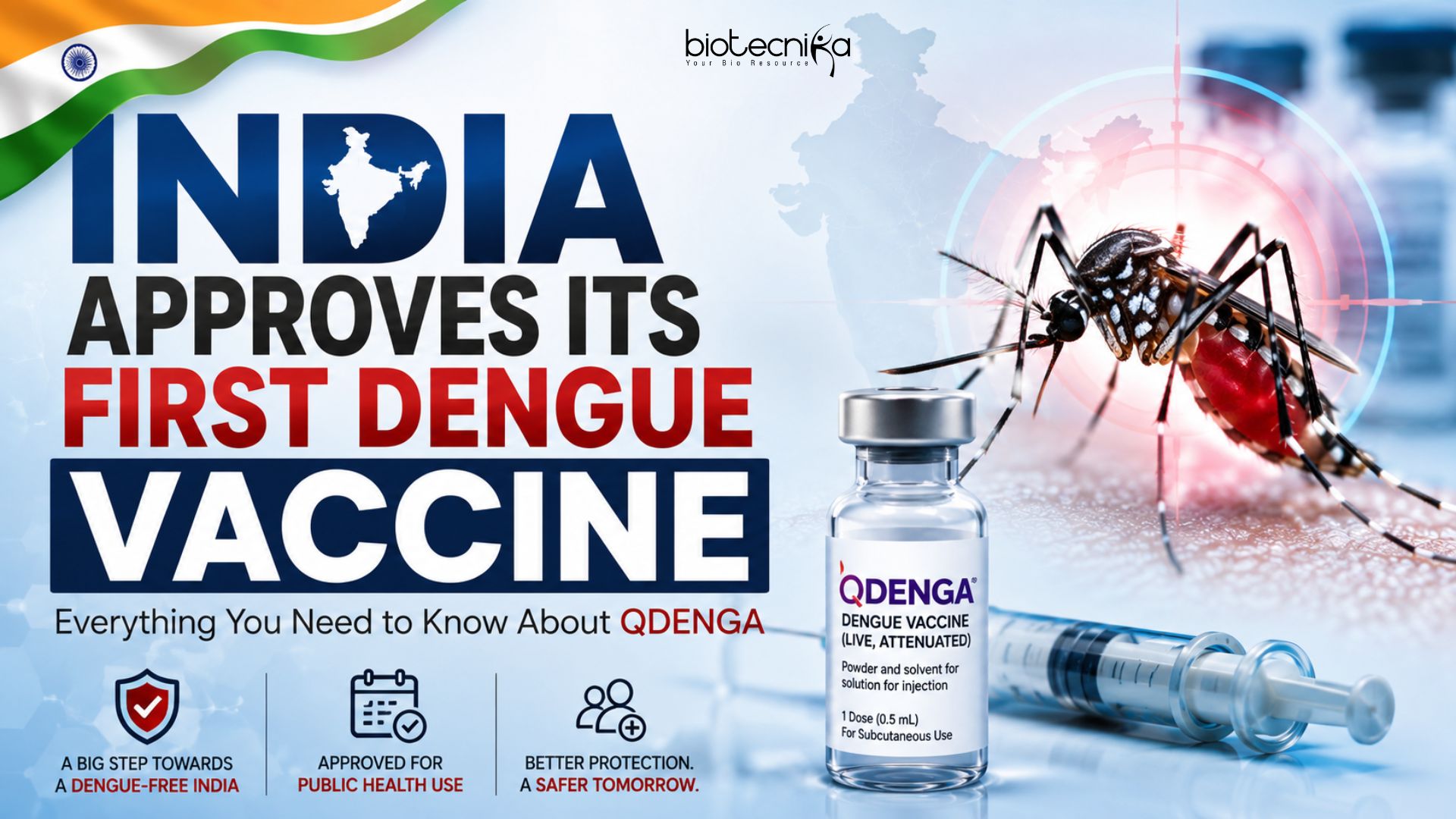
India Approves Its First Dengue Vaccine
Everything You Need to Know About QDENGA
Dengue has become a reason for continuous fear for millions of families in India, particularly during the monsoons. As the number of cases increases each year and hospitals find themselves unable to cope in times of outbreaks, the demand for more effective means of protection is now higher than ever before. However, some good news seems to have arrived. India’s health ministry has recently approved the country’s first-ever dengue vaccine, QDENGA (TAK-003), produced by the Japanese pharmaceutical manufacturer Takeda. It is believed that this vaccine will be a valuable addition to the arsenal used in the fight against dengue, as it is capable of preventing complications and hospitalisation. Below you’ll find out all the details about this groundbreaking development and how it will affect Indian citizens.
What Is QDENGA?
QDENGA, also known as TAK-003, is a live-attenuated tetravalent dengue vaccine. This means it contains weakened forms of the virus that help the body’s immune system learn how to fight dengue without causing the disease.
One of its biggest advantages is that it protects against all four dengue virus types—DENV-1, DENV-2, DENV-3, and DENV-4. Since a person can get infected with different dengue virus types during their lifetime, protection against all four is important.
Another key benefit is that people do not need a blood test before getting vaccinated. This makes QDENGA different from the older dengue vaccine, Dengvaxia, which is recommended only for people who have already had dengue because of safety concerns in those who have never been infected.
This feature could make vaccination programmes much easier to carry out across India.
A Vaccine Already Used in Many Countries
India is not the first country to approve QDENGA. The vaccine has already been approved in more than 40 countries, including:
- European Union countries
- United Kingdom
- Brazil
- Indonesia
- Argentina
India now joins this growing list as dengue continues to become one of the country’s biggest seasonal health challenges.
Why Is This Approval Important?
India carries nearly one-third of the world’s dengue burden, according to Reuters. Reported dengue cases have increased more than 11 times over the past two decades.
Every year, especially during the monsoon and post-monsoon seasons, hospitals across the country see a large number of dengue patients. Severe infections often lead to hospitalisation and can sometimes become life-threatening.
Until now, India mainly depended on preventive measures such as:
- Controlling mosquito populations
- Removing mosquito breeding sites
- Using mosquito repellents and protective clothing
- Early diagnosis
- Supportive medical treatment
With QDENGA now approved, vaccination becomes an additional tool to help prevent the disease.
How Is the Vaccine Given?
QDENGA is to be given in two doses, with the second dose taken after three months from the first one. The vaccine is provided by a subcutaneous injection, meaning that it is injected right below the skin surface.
According to the recommendations of the WHO, QDENGA should be used in countries where the risk of dengue is high.
Who Can Receive the Vaccine?
The full set of prescribing instructions for India is going to be released by CDSCO and Takeda once the vaccine is finally introduced.
In a number of other nations, QDENGA has received approval for use in children and adults. The vaccine may also be administered without regard for whether an individual has had a dengue infection earlier in life.
This constitutes one of the major distinctions between QDENGA and Dengvaxia since, in the case of QDENGA, no prior infection test would be required for vaccination programs.
How Effective Is QDENGA?
The vaccine’s effectiveness was studied in the large TIDES Phase III clinical trial, which included more than 20,000 children and adolescents from eight dengue-endemic countries.
After 4.5 years of follow-up, researchers found encouraging results.
The vaccine provided:
- 84% protection against dengue-related hospitalisation
- Around 61% protection against laboratory-confirmed dengue infection
- Continued protection against severe dengue in both people who had previous dengue infections and those who had never been infected
Researchers also found that protection differed slightly depending on the dengue virus type, but overall the results were strong enough for WHO to recommend the vaccine and for many countries to approve its use.
How Much Will It Cost?
The official price of QDENGA in India has not yet been announced.
However, several factors could make it more affordable in the future.
Takeda has partnered with Hyderabad-based Biological E to manufacture up to 50 million vaccine doses every year in India.
Local manufacturing could:
- Lower production costs
- Improve vaccine supply
- Reduce dependence on imported doses
The final price will also depend on whether the vaccine is initially available only through private hospitals and clinics or later becomes part of government vaccination programmes.
More information on pricing and commercial availability is expected closer to the official launch.
Will Everyone Need the Vaccine?
Not necessarily.
The World Health Organisation says dengue vaccination should be part of a broader prevention strategy rather than the only solution.
WHO recommends combining vaccination with:
- Mosquito control
- Community awareness programmes
- Early diagnosis
- Good access to healthcare
- Disease surveillance
People will still need to protect themselves from mosquito bites by using repellents, wearing protective clothing, and preventing mosquitoes from breeding around homes and workplaces.
Can the Vaccine End Dengue?
No.
Experts say even a highly effective vaccine cannot completely eliminate dengue because several challenges remain.
These include:
- Four different dengue virus types are circulating at the same time
- Mosquitoes continue to spread the virus
- Climate change is expanding mosquito habitats
- Rapid urbanisation is creating more breeding areas
For this reason, vaccination should support existing public health measures rather than replace them.
What Does This Mean for India?
The Approval of QDENGA is, therefore, an important step in the management of dengue fever in India. If adopted, the vaccine may contribute to reducing severe cases, admissions into hospitals and strain on health systems during seasons.
The collaboration between Takeda and Biological E may also position India as a key manufacturing hub for dengue vaccines.
But it is also emphasised that vaccination alone is not sufficient. It is necessary for there to be continuous vector control, public awareness, surveillance and treatment to prevent transmission of dengue.
Now, India has a very important tool in the fight against dengue fever after getting the first licensed vaccine for the disease. Although further information regarding price, distribution and incorporation into government vaccine programs is yet to be released, the protection of QDENGA against all four strains of dengue virus and the administration of the vaccine without prior test for dengue infection make it an important addition to the dengue prevention strategies in India.