



















Could Injectable Mini Livers Replace Some Liver Transplants in the Future?
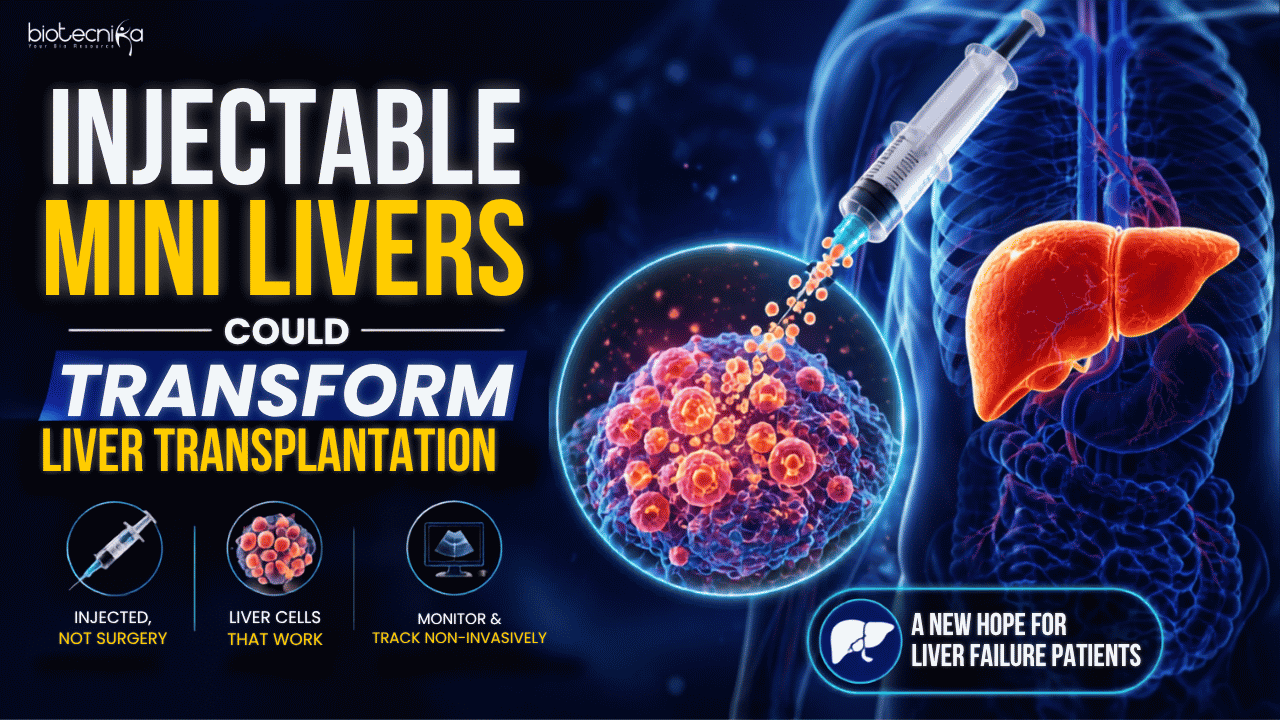
There’s a growing need for newer technologies in healthcare for treating many diseases. While coming to transplantations, the availability of a donor and the tolerance of the receivers matters the most. To address this common issue, a research team from MIT has developed an innovative technology which gives hope in treating patients with severe liver diseases. Scientists have created injectable “mini livers” that can perform many of the liver’s essential functions inside the body, as an alternative to traditional liver transplantation.
The study is published in Cell Biomaterials and funded by the Koch Institute Support (core) grant. The main aim of the study is to support patients suffering from liver diseases and no longer able to perform essential functions. The technology is currently in the animal testing stage, the success of which can transform into a less invasive alternative for liver transplantation.
Why Liver Transplantation is Crucial
The liver is one of the most important organs of the human body. It performs several biological functions, and the cells responsible for these functions are called hepatocytes. It acts as the site for the production of proteins, breakdown of metabolites and drugs, removal of toxins from the bloodstream and other enzymatic activities. Damage to this organ can lead to life-threatening complications. At present, liver transplantation is the standardized treatment for end-stage liver failure.
For liver transplantation, access to donor organs remains a challenge. In the United States, tens of thousands of people succumb to liver diseases and are on the waitlist for a suitable donor organ. Sometimes, even if they get a donor, the person may not have the potential to undergo surgery due to various underlying conditions. This creates the need for finding more ways to provide temporary or long-term liver support, without the need for full organ replacement.
Sangeeta Bhatia, senior author of this study, along with Vardhman Kumar, the paper’s lead author and other researchers, has been working on developing a non-invasive liver transplant method. The first approach is to embed the liver cells (hepatocytes) into a biomaterial matrix, like hydrogel. What makes this hard is the need to implant the biomaterial surgically.
Then the team came up with another option, which is to inject the liver cells directly into the body without any surgical procedures. To make this strategy successful, they developed an engineered microenvironment that would help with survivability and the easy tracking of the graft cells.
Turning Healthy Cells into Functional Tissue
The MIT Team formulated an injection that contains healthy hepatocytes along with microscopic hydrogel particles. These particles act as the supportive matrix while protecting the cells and helping them organize into the functional tissue, forming the connections with blood vessels.
The unique and most important feature of this technology is its injectability. The formulation acts as a liquid inside the syringe and flows through easily during the administration, and regains its structure once inside the body. This prevents the need for surgery, yet places the engineered tissues.
Lead researcher Dr. Sangeeta Bhatia described these implants as “satellite livers,” suggesting they could provide additional liver function while the original organ remains in place.
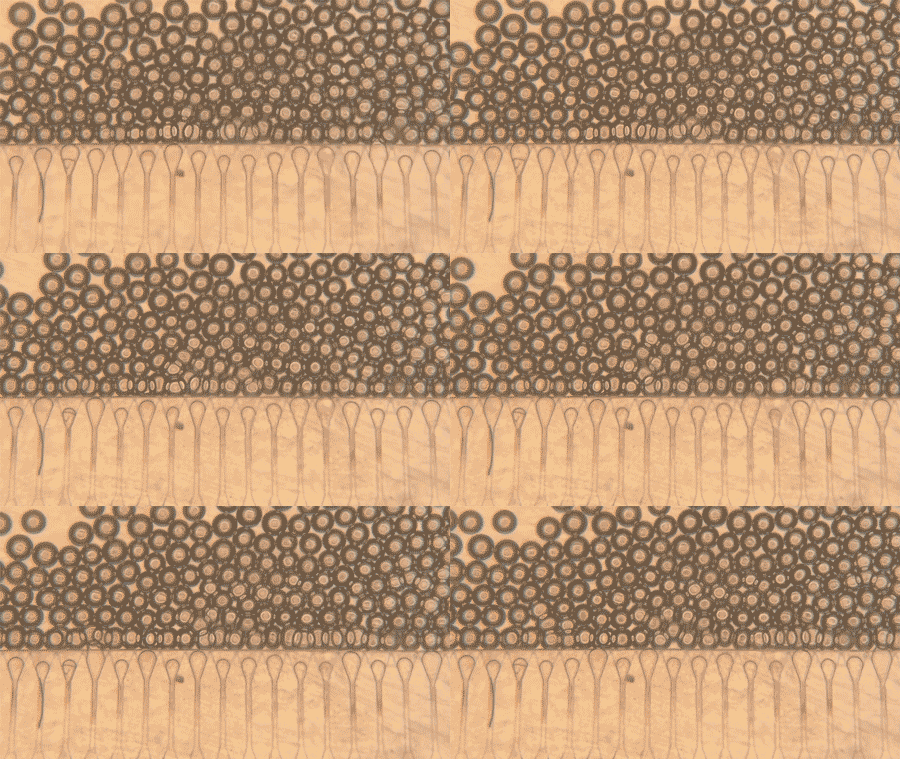
Hydrogel microspheres combined with hepatocytes form injectable mini livers that remain functional and support long-term cell survival inside the body. Image Credit: Bhatia Lab, MIT | Source: Cell Biomaterials (2026)
Encouraging Results in Preclinical Studies
In collaboration with Nicole Henning, an ultrasound research specialist at the Koch Institute, the team developed an ultrasound-guided technique to precisely deliver the cell mixture (Liver cells, hydrogel particles and fibroblasts to support the growth into functional tissues) through a syringe. The imaging method enables them to monitor the implant and ensure it remains stable in the body.
To evaluate the approach, the scientists implanted the engineered liver tissue into abdominal fat in mice. According to Kumar, most liver diseases do not require the transplanted tissue to be placed near the liver in order to function effectively. The results showed that the transplanted cells remained alive and active for at least two months after injection.
During this period, the cells continued carrying out important liver-related activities, including the production of proteins and enzymes typically generated by healthy liver tissue. The implanted grafts also successfully connected to the animals’ blood supply, allowing them to receive oxygen and nutrients needed for long-term survival.
Researchers consider this vascular integration a significant achievement because many engineered tissues fail when they cannot establish sufficient blood circulation after transplantation.
What Could This Mean for Patients?
Although human studies have not yet begun, the findings point toward a promising future for regenerative medicine and liver transplantation. If proven safe and effective in larger studies, injectable liver grafts could potentially help patients who are too sick for major surgery or those waiting for donor organs to become available.
The flexibility of the technology may offer additional advantages. Scientists believe similar grafts could potentially be implanted at multiple locations within the body where adequate blood flow exists, creating new opportunities for personalised treatment strategies.
Liver Transplantation: The Road Ahead
The research remains in its early stages, and further testing will be required before the technology reaches clinical trials. However, the study demonstrates that functional liver tissue can be delivered through a minimally invasive procedure and remain active inside the body for extended periods.
As the demand for liver transplantation continues to exceed the supply of donor organs, advances such as injectable satellite livers may help bridge a critical gap and open new possibilities for treating liver failure in the years ahead.