




















Internship Guide for Biotech Students
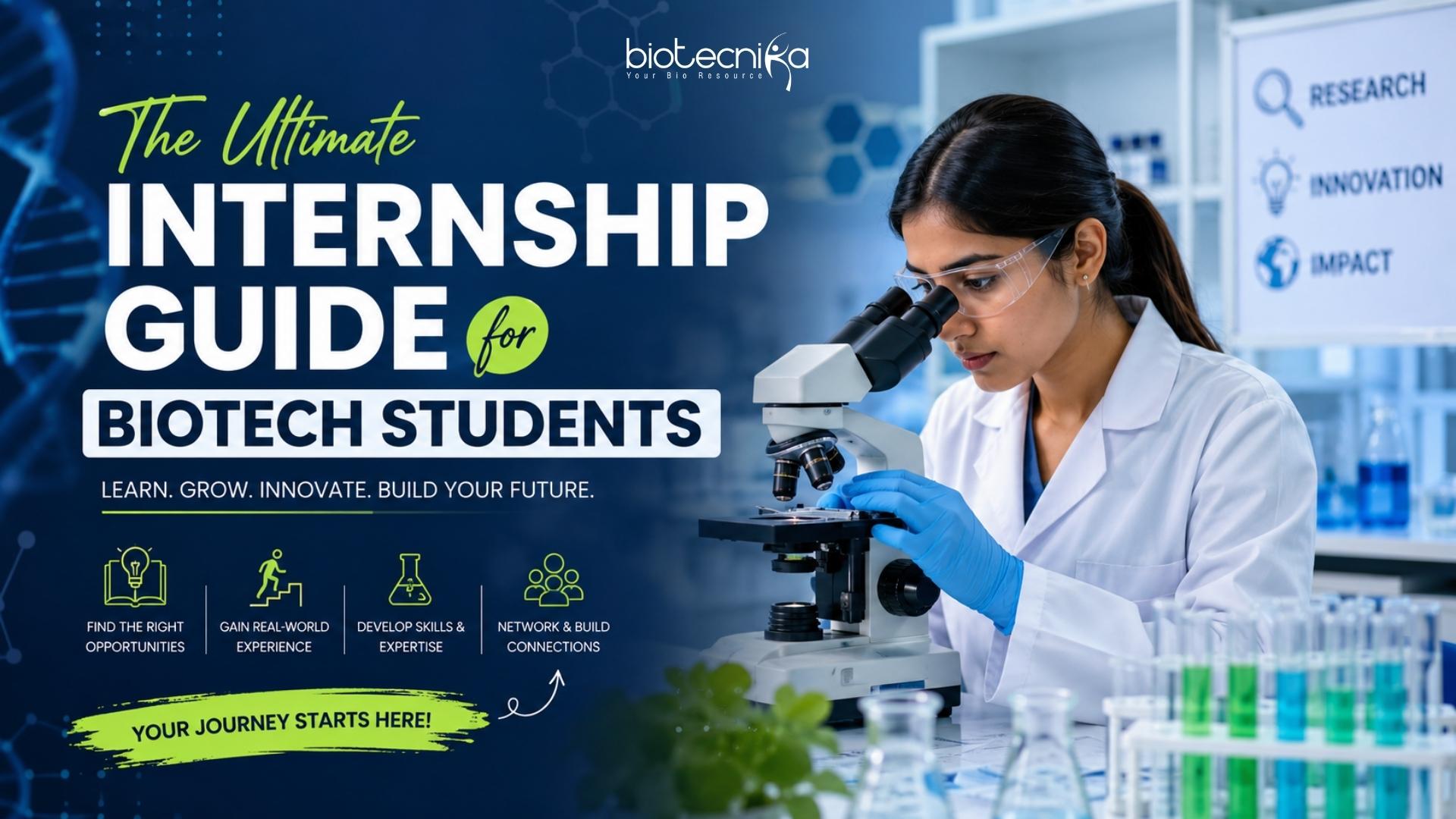
There are lots of possibilities to choose from with Biotech as an ever-expanding area of work; e.g., Healthcare, Research & Development, Pharmaceutical, Agriculture, and Food Production Industries. In addition to obtaining your degree in this field, having real-world experience on your resume will help you secure job offers; therefore, internships play a huge role in your success once you graduate. This Internship Guide has been created for Biotech students to clarify the significance of Internships, how to obtain them, and how to succeed in their chosen Biotech Career based on developing Internships while in college. If you require an easy source for Career Guidance, please use this article!
What is an Internship?
An internship is a short-term training program in which students work at a company, lab, hospital, or research institute to gain practical skills.
It can be:
- Paid or unpaid
- Online or offline
- Research-based or industry-based
- Short-term or long-term
Most internships last from one to six months.
Importance of internships
Internships bring you out of the theory book into a new environment to acquire more skills.
You gain practical skills
In a field like biotech, the value of hands-on experience can not be overstated. Through internships, students get the chance to acquire skills such as laboratory skills, data management, research work, and industry processes.
Your resume gains more weight
The recruiting companies will favor you over someone with no experience as one internship can boost your resume and make you stand out.
You explore your interests
Some students like research work, others prefer pharmaceutical production, clinical research, and bioinformatics. It’s during the internship that you find out which one fits your personality and desires.
You make connections
You get to meet researchers, scientists, HR personnel, and industry specialists who could later be your mentors and guide you.
When Should You Apply?
The best time is during semester breaks or summer vacations.
- BSc students can apply after the second year
- MSc students should try during every semester break
- Final-year students should definitely complete at least one internship
Applying early increases your chances.
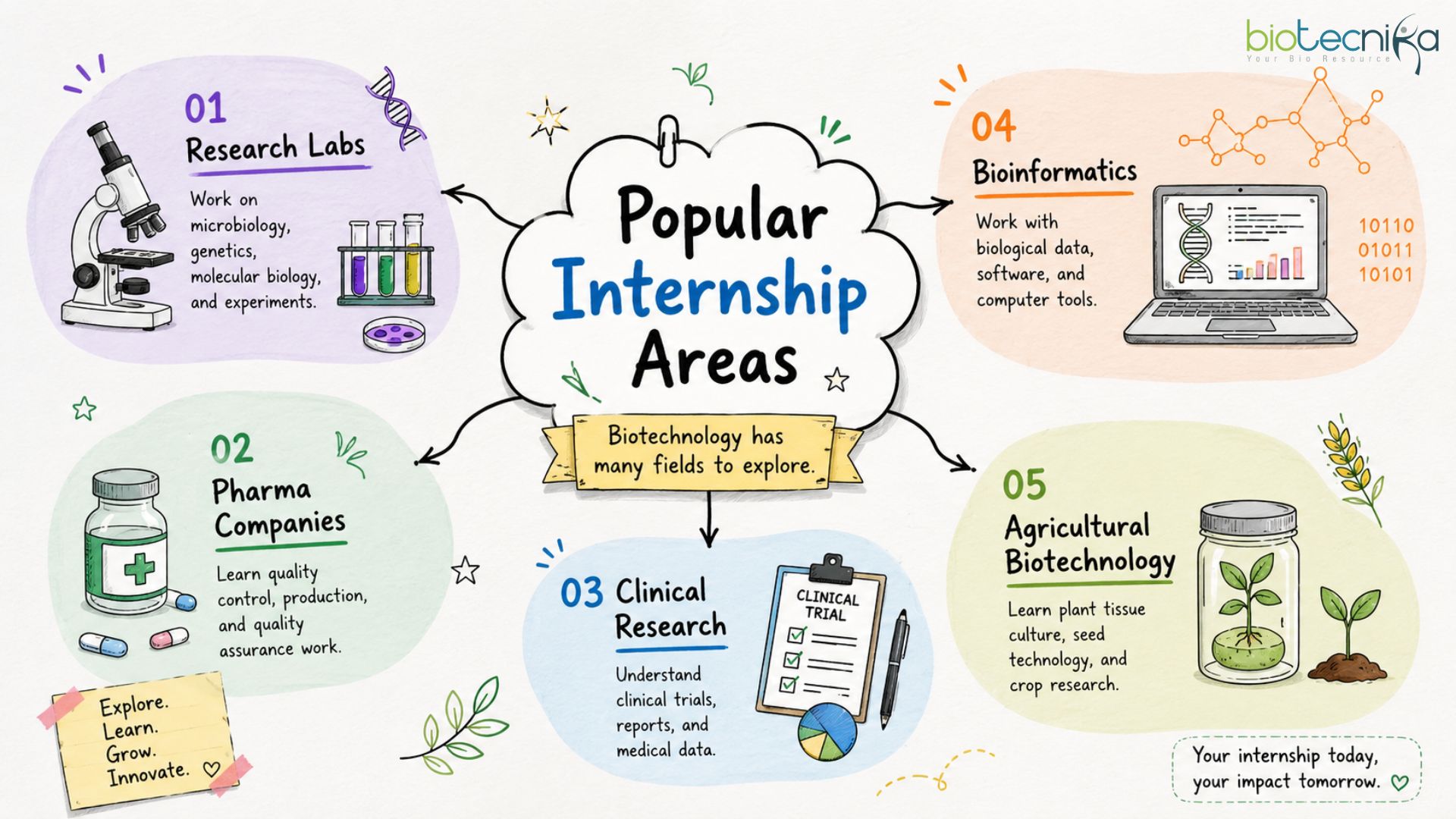
Popular Internship Areas
Biotechnology has many fields to explore.
Research Labs
Work on microbiology, genetics, molecular biology, and experiments.
Pharma Companies
Learn quality control, production, and quality assurance work.
Clinical Research
Understand clinical trials, reports, and medical data.
Bioinformatics
Work with biological data, software, and computer tools.
Agricultural Biotechnology
Learn plant tissue culture, seed technology, and crop research.
How to Find Internships
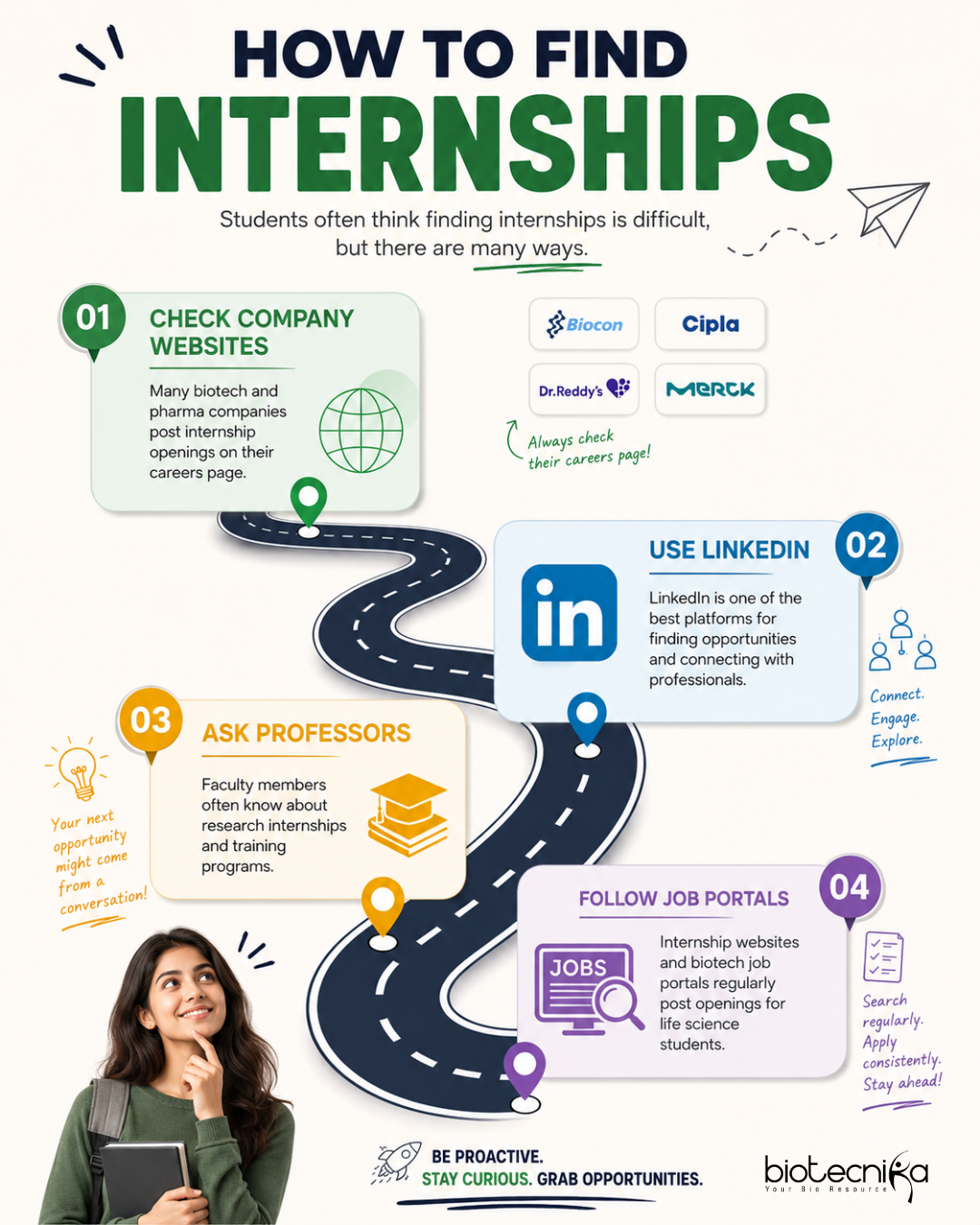
Students often think finding internships is difficult, but there are many ways.
Check Company Websites
Many biotech and pharma companies post internship openings on their careers page.
Use LinkedIn
LinkedIn is one of the best platforms for finding opportunities and connecting with professionals.
Ask Professors
Faculty members often know about research internships and training programs.
Follow Job Portals
Internship websites and biotech job portals regularly post openings for life science students.
Skills That Help
You do not need to know everything, but basic skills help a lot.
Technical Skills
- PCR
- Cell culture
- Gel electrophoresis
- Microbiology basics
- Lab safety
Soft Skills
- Communication
- Teamwork
- Time management
- Confidence
Resume Tips
Keep your resume simple and clear.
Include:
- Education details
- Skills
- Projects
- Certifications
- Workshops or training
Avoid long paragraphs and unnecessary information.
Interview Tips
Most internship interviews are basic.
- Revise important biotech concepts
- Be confident but polite
- Speak clearly
- Show interest in learning
- Read about the company before the interview
A positive attitude matters a lot.
Mistakes to Avoid
Many students lose opportunities because of small mistakes.
Avoid:
- Applying late
- Sending incomplete resumes
- Ignoring recruiter emails
- Poor communication
- Applying without checking eligibility
Professional behavior always creates a good impression.
Can Internships Help You Get Jobs?
The answer is YES! Many students receive job offers from companies where they participate as interns. Even if applicants aren’t hired by their internships, the skills gained will only improve their overall opportunities in the future. Additionally, internships can lead to superior biotech career opportunities.
Final Remarks
Internships are a great way to gain experience, develop, and get ready for a career in biotechnology by providing hands-on experience, building confidence, and learning about potential career paths.
The Internship Guide is straightforward: begin early, continue to gain knowledge, and apply often. Each internship will provide you with valuable skills and bring you closer to achieving your dream career in biotechnology!