




















India launches a 7-Minute Injection Therapy using Tecentriq for Lung Cancer Treatment
Cancer Treatment in India is shifting its horizon. A new cancer treatment has been launched in India that opens a new window for treating lung cancer. An innovative seven-minute injectable medication is a major breakthrough, as it makes treatment much easier and less time-consuming. This is a crucial step for India, as it makes cancer care more comfortable and convenient for patients.
This innovation is powered by Roche Pharma India. The newly introduced drug Tecentriq is an intravenous (IV) infusion administered via subcutaneous injection, meaning it is delivered under the skin. This serves as a safer and more comfortable way for many people suffering from lung disease to receive their current therapies.
A Faster Alternative to Traditional IV Treatment
According to medical experts, this immunotherapy is more suitable for patients diagnosed with non-small cell lung cancer (NSCLC), which is the most dominant form of lung cancer in India. This may allow patients to receive medical therapies without requiring lengthy hospital stays, and reduce the cost of completing all phases of therapy compared to previously required.
Before Tecentriq, NSCLC formerly required lengthy administration of medications via IV infusion, often taking multiple hours of therapy. With this new subcutaneous product, it takes approximately 7 min. to administer, delivered directly under the skin in the thigh area.
How Atezolizumab Works Against Cancer Cells
Atezolizumab is a component of Tecentriq. This means Atezolizumab is one of many immuno-oncological therapies that offer a novel way to empower one’s own immune system to fight one’s own cancer cells.
Cancer cells frequently escape the immune system by expressing a protein called PD-L1. This means that the immune system does not recognize these cells as being harmful and therefore cannot eliminate them from the body. Atezolizumab helps the immune system recognize and kill cancer cells by blocking the PD-L1 protein on their surface, thereby allowing immune cells to identify and destroy them more effectively.
Doctors have reported that Atezolizumab may work particularly well in patients who have high levels of PD-L1 in their tumors. For this reason, before starting treatment with Atezolizumab, the doctor will perform various tests to measure PD-L1 expression in the tumor. It is estimated that nearly 50% of patients with NSCLC will receive Atezolizumab treatment.
Cancer Cells Express PD-L1 Protein
⬇
Immune System Fails to Recognize Cancer Cells
⬇
Cancer Cells Escape Immune Attack
⬇
Atezolizumab Blocks PD-L1 Protein
⬇
Immune Cells Recognize Cancer Cells Properly
⬇
Immune System Attacks & Destroys Cancer Cells
⬇
Better Treatment Response in High PD-L1 NSCLC Patients
Why the 7-Minute Therapy Matters for Patients
One of the most significant benefits of this new treatment option is its convenience for the patient. Patients will often become physically and mentally exhausted from going to the hospital frequently and spending long amounts of time at the hospital for their treatment. The additional stress of spending long periods of time in the hospital for their IV treatments can be very taxing for patients, especially for the elderly and those who must travel long distances to receive treatment. The fact that Atezolizumab allows treatment to be administered in approximately 7 minutes will make the process much more manageable for patients.
According to doctors, reducing treatment length may improve people’s likelihood of completing them. Longer treatment processes may cause many people to defer or miss their appointments due to the time required to complete the full series of treatments. Therefore, a more efficient and streamlined process may make people more likely to go regularly for their treatment.
Immunotherapy vs Chemotherapy
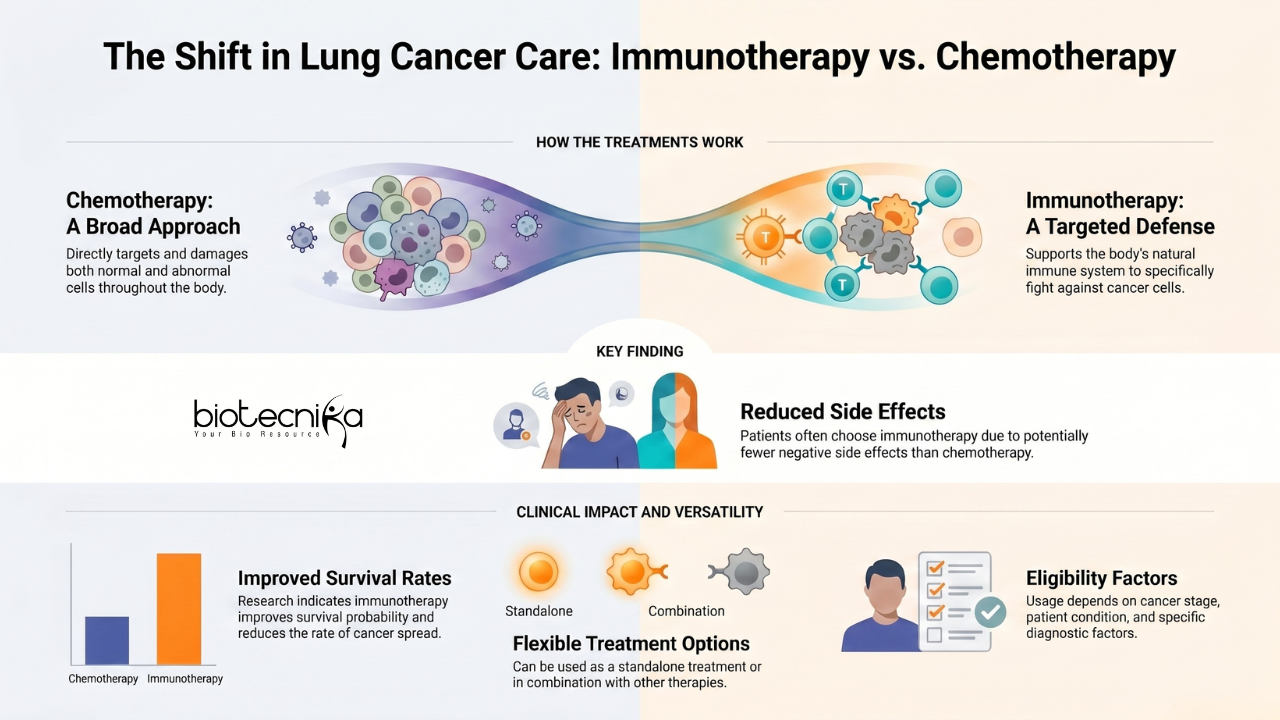
Tecentriq, the brand name for an immune therapy drug to treat lung cancer, illustrates the rising need for immunotherapy as a means of treating lung cancer using modern medicine. Chemotherapy directly targets and damages both normal and abnormal cells in the body. On the other hand, immunotherapy supports the body’s natural immune system in fighting cancer. For this reason, many patients choose to receive the immune therapy regimen versus a regular chemotherapy regimen due to the potentially fewer negative side effects associated with immune therapy.
Cancer Treatment = High Cost: The Challenge
The primary barriers to the widespread use of immune therapy to treat lung cancer are the significant costs associated with this treatment. The average cost for a dosage of Tecentriq is approximately Rs 3.7 Lakhs, with most patients anticipated to require a minimum of six (6) doses during their treatment cycle. As a result, the total costs can accumulate to several lakhs of rupees, making it an unattainable choice for the majority of middle-class and lower-income patients seeking to find a cure for lung cancer.
Cancer specialists explain that advanced immunotherapy medicines are expensive because they involve years of scientific research, testing, and advanced technology. Reports show that modern immunotherapy treatments in India usually cost between Rs 1.5 lakh and Rs 4 lakh per cycle.
Patient Support and Future Outlook
To help reduce the financial burden on patients, Roche has introduced a patient support programme called “Blue Tree.” In addition, the treatment has been included under the Central Government Health Scheme (CGHS), which may help eligible patients receive reimbursement support.
Even though affordability remains a challenge, doctors see the launch of this seven-minute injection as a major breakthrough in cancer treatment in India. Faster treatment, shorter hospital visits, and improved patient comfort could make a big difference in the lives of lung cancer patients and their families. The new development also shows how lung cancer immunotherapy is changing cancer care and offering new hope to patients across the country.