

















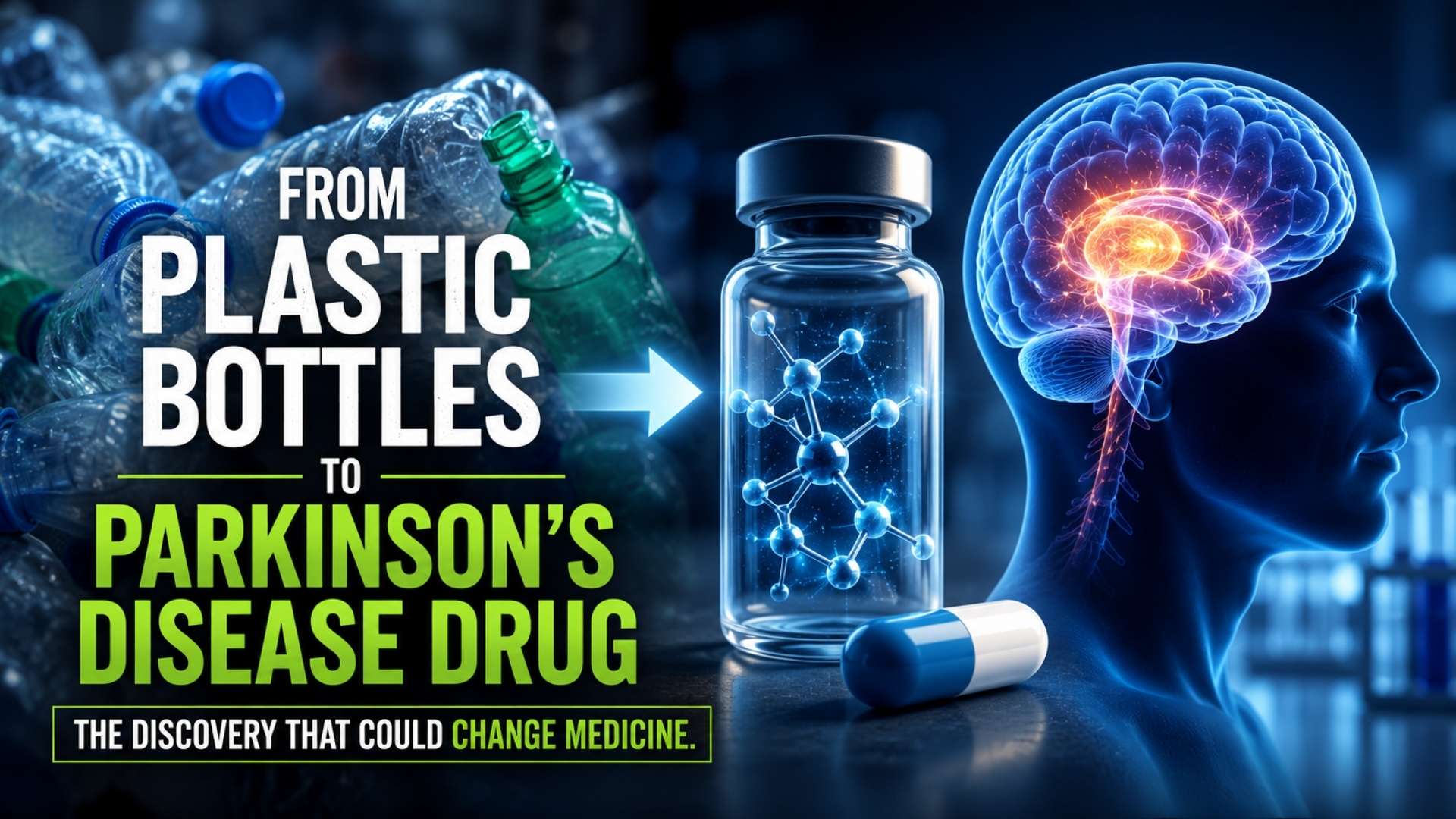
From Plastic Bottles to Parkinson’s Disease Drug: The Discovery That Could Change Medicine
What if the empty plastic bottle in your recycling bin could one day help treat disease? That is exactly what scientists in the UK have shown in a new study. They have found a way to turn waste plastic bottles into L-DOPA. This is one of the main medicines used to treat Parkinson’s disease. The discovery could change the way we see plastic waste and offer a cleaner way to make medicines.
The research was published in the journal Nature Sustainability. The scientists from the University of Edinburgh have used a biological process to turn plastic waste into medicine for a neurological disease for the first time.
The team of researchers has worked with polyethylene terephthalate, which is also known as PET. This material is commonly used in water and soft drink bottles. The study shows that this plastic is present in food packaging.
Across the globe, around 50 million tonnes of PET are produced every year. Out of which only a small portion is recycled. Whereas, a large amount of the plastic ends up in landfills, where it is burned. This creates pollution in our environment.
A brain chemical called dopamine gets depleted as Parkinson’s disease progresses. L-DOPA is a medicine used to replace dopamine and help manage the symptoms of the disease. Millions of people across the world are relying on this drug to improve their movement and quality of life.
According to the researchers, this new method could offer a more sustainable way to produce medicines. Traditional pharmaceutical manufacturing often depends on fossil fuel-based chemicals. In contrast, the new process makes use of carbon that is already locked inside discarded plastic. This means waste that would otherwise harm the environment could become a valuable raw material for medicine production.
The scientists have already shown that they can produce and isolate L-DOPA at a preparative scale. While this is an important milestone, the technology is still in the early stages. The next step is to improve the efficiency of the process, increase production, and study whether it can work on an industrial scale.
The team of scientists at the University of Edinburgh’s School of Biological Sciences was led by Professor Stephen Wallace. He said that their work shows how engineering biology can give waste materials a completely new purpose. He further added that plastic is often seen as an environmental problem. But it also contains carbon that can be used to make products that improve human health.
The research was carried out at the Carbon-Loop Sustainable Biomanufacturing Hub, also known as C-Loop. The £14 million program is supported by the Physical Sciences Research Council (EPSRC), which is part of UK Research and Innovation (UKRI). The project also received funding from UKRI and the Industrial Biotechnology Innovation Centre (IBioIC), with Impact Solutions serving as an industry partner.
Professor Charlotte Deane, Executive Chair of the Physical Sciences Research Council (EPSRC), said the study highlights the growing role of engineering biology in solving environmental and healthcare challenges at the same time. She said turning discarded plastic into a treatment for Parkinson’s disease shows how waste materials can become valuable products that benefit both people and the planet.
The findings also point to a bigger opportunity in the Parkinson’s Disease Drug. The same approach could one day be used to produce other high-value products, including fragrances, cosmetics, flavorings, and industrial chemicals. Although more research is needed before the technology reaches commercial production. The study offers a fresh way to think about plastic waste.
For years, recycling has focused on giving plastic a second life as another plastic product. This research suggests something even more valuable may be possible. One day, yesterday’s plastic bottles could help produce medicines that improve millions of lives.