





















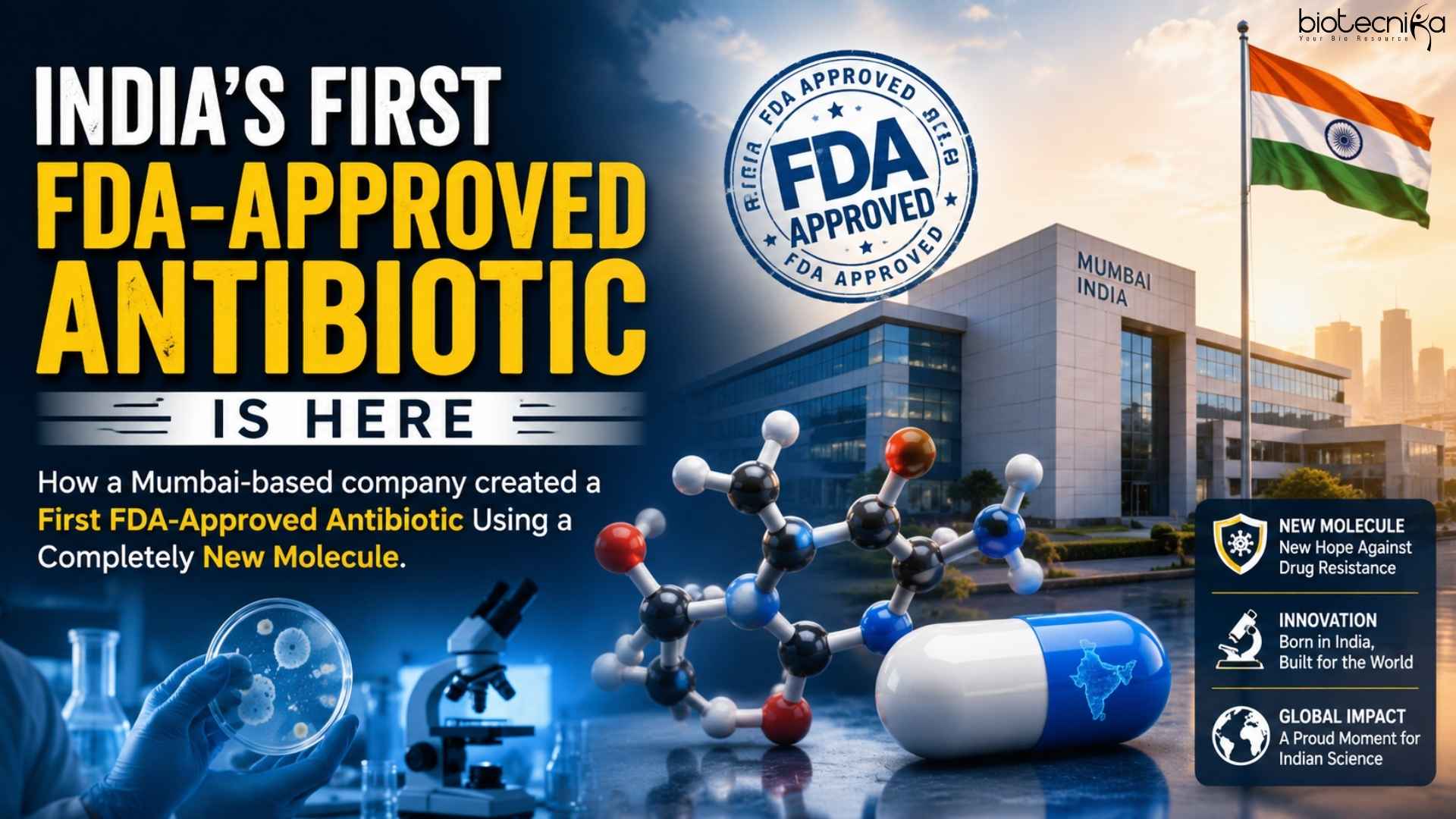
India’s First FDA-Approved Antibiotic Is Here
How a Mumbai-based company created a breakthrough drug using a molecule that never existed before
India has long held the title of “pharmacy of the world” based on its ability to sell low-cost generic medications based on new compounds that were created in various parts of the globe; however, developing a new medication from the ground up has historically been done by large pharmaceutical firms in North America or Europe. Now, that has changed. Mumbai-based pharmaceutical company Wockhardt has achieved a major milestone with its new antibiotic Zaynich. The drug has become the first medicine fully discovered, developed, and commercialized by an Indian pharmaceutical company to receive approval from the US Food and Drug Administration (FDA), one of the world’s strictest drug regulators.
Zaynich is also a New Chemical Entity (NCE), which means it contains a completely new molecule that did not exist before and had never been approved as a medicine.
The FDA recently approved Zaynich as an injectable antibiotic for treating complicated urinary tract infections (UTIs) caused by drug-resistant bacteria. The drug has now entered the global antibiotic market, which is worth around $9 billion.
According to Dennis Deruelle, Chief Medical Officer at Wockhardt, drug-resistant infections are becoming a serious global health problem, leaving doctors with fewer treatment options. He described the FDA approval of Zaynich as an important step forward for patients suffering from these difficult-to-treat infections.
The Growing Threat of Antibiotic Resistance
Antimicrobial resistance (AMR) happens when bacteria, viruses, or fungi evolve and become resistant to medicines designed to kill them.
Today, AMR is one of the biggest public health challenges in the world. It directly causes about 1.27 million deaths every year and contributes to nearly 5 million deaths globally.
India carries one of the heaviest AMR burdens. Studies estimate that more than 300,000 people died from AMR-related causes in 2019. Experts say this is due to high infection rates, overuse of antibiotics, and limited access to newer medicines.
What Makes Zaynich Different?
Most antibiotics used against resistant bacteria combine an antibiotic with another compound that protects it from enzymes produced by bacteria. Examples include ceftazidime-avibactam and meropenem-vaborbactam.
Zaynich works differently.
It combines cefepime, an existing antibiotic, with zidebactam, a new molecule discovered by Wockhardt.
According to Dr. Kamini Walia of the Indian Council of Medical Research (ICMR), these two components attack bacteria in different ways while they are building their protective cell wall.
- Cefepime targets a protein called PBP3.
- Zidebactam targets another protein called PBP2.
Both proteins are essential for bacteria to survive and multiply.
By attacking both proteins at the same time, Zaynich disrupts two critical stages of bacterial growth, making it much harder for bacteria to survive even if they are resistant to many existing antibiotics.
Scientists call this approach a “beta-lactam enhancer.” Unlike older antibiotic combinations that mainly protect the antibiotic, zidebactam actively helps kill bacteria by attacking a second weak point.
Dr. Walia said that data collected through ICMR’s antimicrobial resistance surveillance network helped identify the resistance patterns seen in Indian patients and guided Wockhardt in developing this strategy.
Strong Clinical Trial Results
The new drug performed very well in clinical trials.
In the Phase 3 ENHANCE-1 study, 530 patients from 64 hospitals across the United States, Europe, Latin America, China, and India participated.
The results showed that:
- 89% of patients treated with Zaynich achieved both clinical recovery and complete removal of the infection-causing bacteria.
- In comparison, 68.4% of patients treated with meropenem, one of the most widely used last-resort antibiotics, achieved the same outcome.
For a field where new antibiotics often provide only small improvements, this difference was significant.
India’s drug regulator, the Central Drugs Standard Control Organization (CDSCO), approved Zaynich on 27 May, even before the FDA approval. Wockhardt has also applied for approval from the European Medicines Agency (EMA).
Why New Antibiotics Are Rare
While Zaynich is medically important, it is also notable because very few new antibiotics are being developed today.
A World Health Organization (WHO) analysis published in October 2025 found that the number of antibiotics in clinical development dropped from 97 in 2023 to 90 in 2025. Out of those, only 15 were considered truly innovative.
Experts say the biggest reason is economics.
Antibiotics differ from medicines for diseases like diabetes or hypertension in that they are typically taken for only a brief period. The medical community also tries to limit the use of potent antibiotics in order to help delay the emergence of resistance.
As a result, antibiotic sales are much lower than long-term medicines, making them less profitable for pharmaceutical companies.
According to Dr. Sarman Singh, it takes 10 to 15 years for a company to develop an antibiotic, which will cost it hundreds of millions of dollars; by the time that a company has recovered its investment, perhaps the bacteria will have become resistant to the new drug.
Scientifically, drug discovery is a hard task. There are millions of molecules to be screened; however, only a very small number (somewhere between 1 in 1000 and 1 in 1 million) will appear positive in laboratory testing. Even if they do appear to be positive in laboratory testing, very few will be subjected to animal models and human clinical trials. In addition, there will be a number of failures throughout the process that will have taken years and cost tens of millions of dollars to complete.
The Challenge of Access
According to specialists, finding a new antibiotic is merely a portion of the problem, as patients must also be able to acquire those antibiotics.
Bhakti Chavan survived extremely drug-resistant tuberculosis (XDR-TB) and is also a part of a group called the WHO Task Force, being created to study antimicrobial resistance (AMR). Ms. Chavan has had firsthand knowledge of how difficult it is to obtain life-saving antibiotics in India. She said that making Zaynich affordable and accessible would be necessary to solve the current problems related to antibiotic resistance in a populous nation like India.
Equally, Shobha Shukla, chairperson of the Global AMR Media Alliance, remarked that science needs to make new antibiotics such as Zaynich available to people around the world as quickly as possible. In addition, she pointed out that developing countries face barriers that prevent patients from obtaining new drugs.
The fact that Zaynich was developed by Indian scientists is a great victory for science and medicine in India. However, the success of any antibiotic will depend as much on innovative discovery as it will on how effectively those antibiotics can reach patients who require them.