











Scientists Test Reverse Aging Treatment in Human Patients
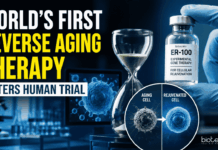
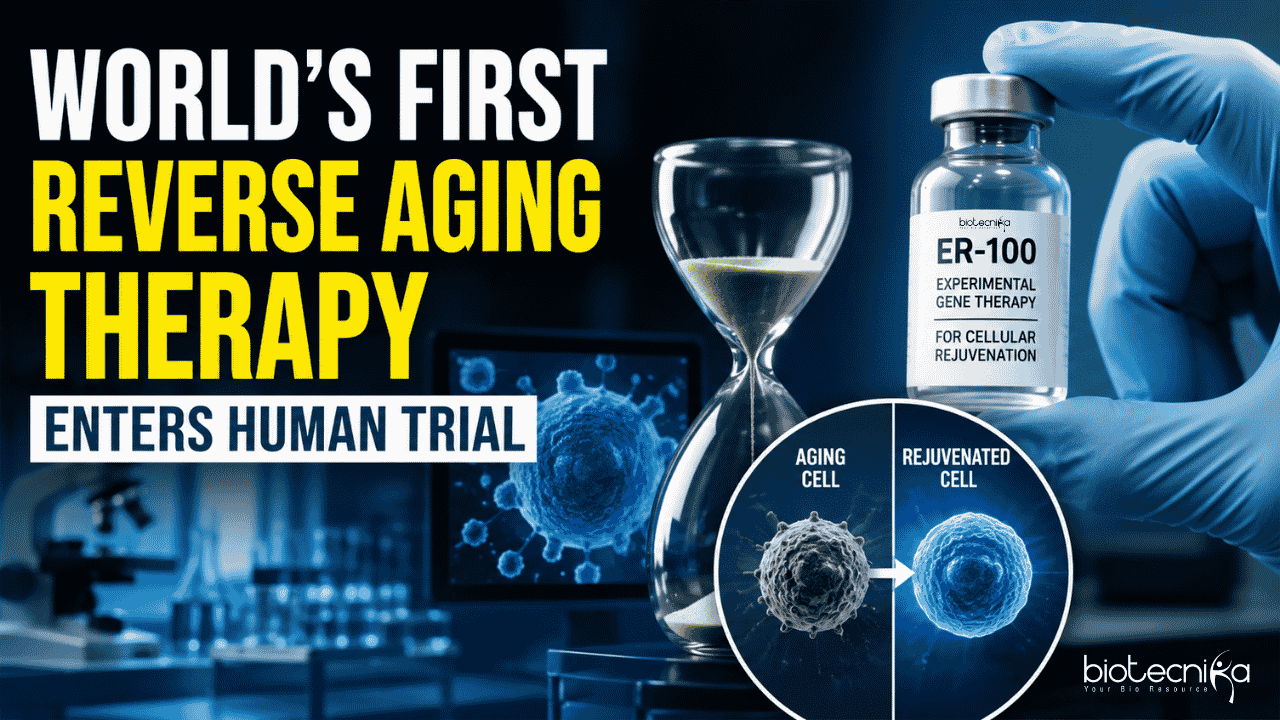
This long-debated research on reverse aging of cells has hit the human testing stage. Yes, you read it right. For the first time, a patient has received an experimental therapy, which is designed to reverse the aging of cells to youthful function. This marks a major milestone in the field of regenerative medicine.
This treatment was developed by Life Biosciences, a US-based company, and the experimental therapy is named ER-100. The therapy targets age-related vision loss and hopes to rejuvenate the damaged nerve cells. The idea is to restore vision with a single injection, plus antibiotic doses for several weeks. This sounds like a promising medical miracle, yet the researchers are unsure due to its high-risk.
How the Reverse Aging Therapy Works
Before getting into the actual working mechanism, one should understand how it started. This ER-100 is based on the principle of partial cellular reprogramming, introduced by Shinya Yamanaka, a Japanese Nobel Prize-winning scientist. The research discovered that a small group of proteins could revert mature/aged cells to their younger biological state.
The original technique used four proteins, commonly called the Yamanaka factors. However, one of those factors, c-Myc, has been associated with an increased risk of tumor formation. To improve safety, ER-100 uses only three factors – Oct4, Sox2, and Klf4, often referred to collectively as OSK.
The research focuses on rewinding specific age-related changes, allowing cells to preserve their normal identity and function rather than completely reverting to the stem cell stage.
- The single-gene therapy injection is administered directly into the patient’s eye.
- Antibiotics are prescribed for several weeks and act on the genes that enable the “switch on” mechanism.
The ER-100 is associated with a harmless virus that cannot cause any infectious diseases. This virus acts as a factor in shuttling genetic activity, regulating the switching-on and switching-off mechanism. These genes switch on only when a particular antibiotic is taken, and once the patient stops the antibiotic, the genes switch off, allowing for some control.
Any Harm from the Virus? Built-In Safety Measures
Cellular reprogramming is a powerful biological process, and safety remains a major concern. In response to this, the researchers designed ER-100 to include a system controlled by doxycycline, an antibiotic. This maintains the gene switch and keeps the therapeutic genes inactive, enabling scientists to have control over the treatment. In addition, this safeguards against potential effects.
A New Approach to Age-Related Disease
Unlike traditional therapies that focus on treating symptoms, ER-100 aims to address biological changes that occur as cells age.
The first human study began with a small group of 18 patients at a time. Out of 18, 12 of them were diagnosed with the condition called open-angle glaucoma (OAG), and the remaining 6 with non-arteritic anterior ischemic optic neuropathy (NAION), an optic nerve damage condition (eye stroke). The root cause of this is the damage to retinal ganglion cells, which are responsible for carrying visual signals to the brain. Since these cells do not regenerate naturally, it can lead to permanent loss of sight.
To overcome this, the researchers are working on reverse aging of these cells.
Life Bio co-founder David Sinclair and his team at Harvard have been working on ER-100 for several years now. The first success of the study in the mouse system gave hope in 2020. The reprogrammed cells started to behave like their younger versions in mice, and the team has been on preclinical trials since then. This year, on Jan 15th, they got a green signal from the US FDA for the first clinical trial.
“This is an important moment for Life Bio and for the field of aging biology,” quotes Sinclair. He also claims that this research has suggested that aging is not irreversible damage, but the loss of epigenetic information, and this research focuses on restoring that information and seeing if this can improve human disease outcomes.
What does Reverse Aging mean to the World?
What led the researchers to choose the eyes was their ability to provide a controlled environment. This enables the researchers to monitor the changes more easily. Firstly, the clinical study showed success in mice and non-human primates, yielding promising results for the regeneration of optic nerves. Now, the team is up on the clinical trials involving humans.
Researchers around the world are looking forward to the outcomes, as they have the potential to change the treatment of age-related illnesses. Apart from the eyes, applying this approach to other conditions affecting the brain, heart, muscles, etc., sparks curiosity. Yet, the risks associated with cellular reprogramming remain a question, as cells may undergo unintended changes. Hence, the primary goal of this study is clinical trial safety. Despite these concerns, the study represents a major milestone, becoming the first reverse-aging experimental therapy to reach the human clinical trial stage.