














Scientists Successfully Edit Human Embryo Genes With Greater Accuracy
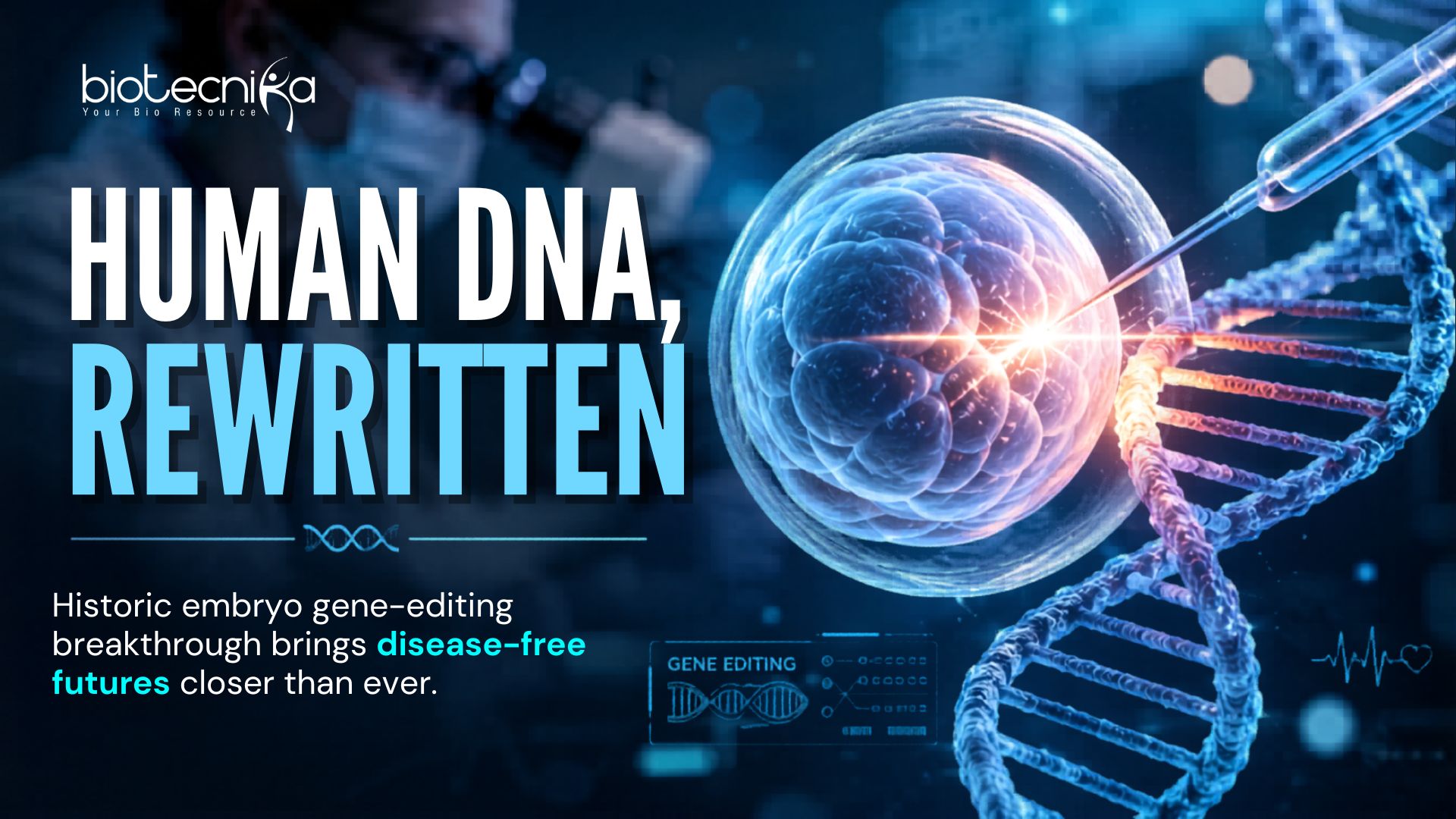
Scientists at Columbia University have managed to edit genes in early human embryos more accurately than anyone has before. The research could one day make it possible to create human embryos with specific genetic changes, and that has people both excited and worried.
The study was led by geneticist Dr. Dieter Egli, who said the work should get people talking about what it really means to start changing human DNA before birth. While the technology might help stop certain diseases from being passed down through families, some experts are concerned it could eventually be used to hand-pick traits in children, which brings up some uncomfortable comparisons to eugenics.
The team used a gene-editing method called base editing. Unlike the better-known CRISPR, which works by making cuts in the DNA strand, base editing works differently by directly changing individual DNA letters, making it a more targeted approach that lowers the risk of unexpected changes elsewhere in the genome.
That said, Dr. Egli was clear that there are still a lot of unanswered safety questions. The technology is nowhere near ready to be used in fertility clinics, and a lot more research still needs to happen first. The study has been shared online and is waiting to go through the standard review process before it can be officially published in a scientific journal.
The Past of Gene Editing Technology
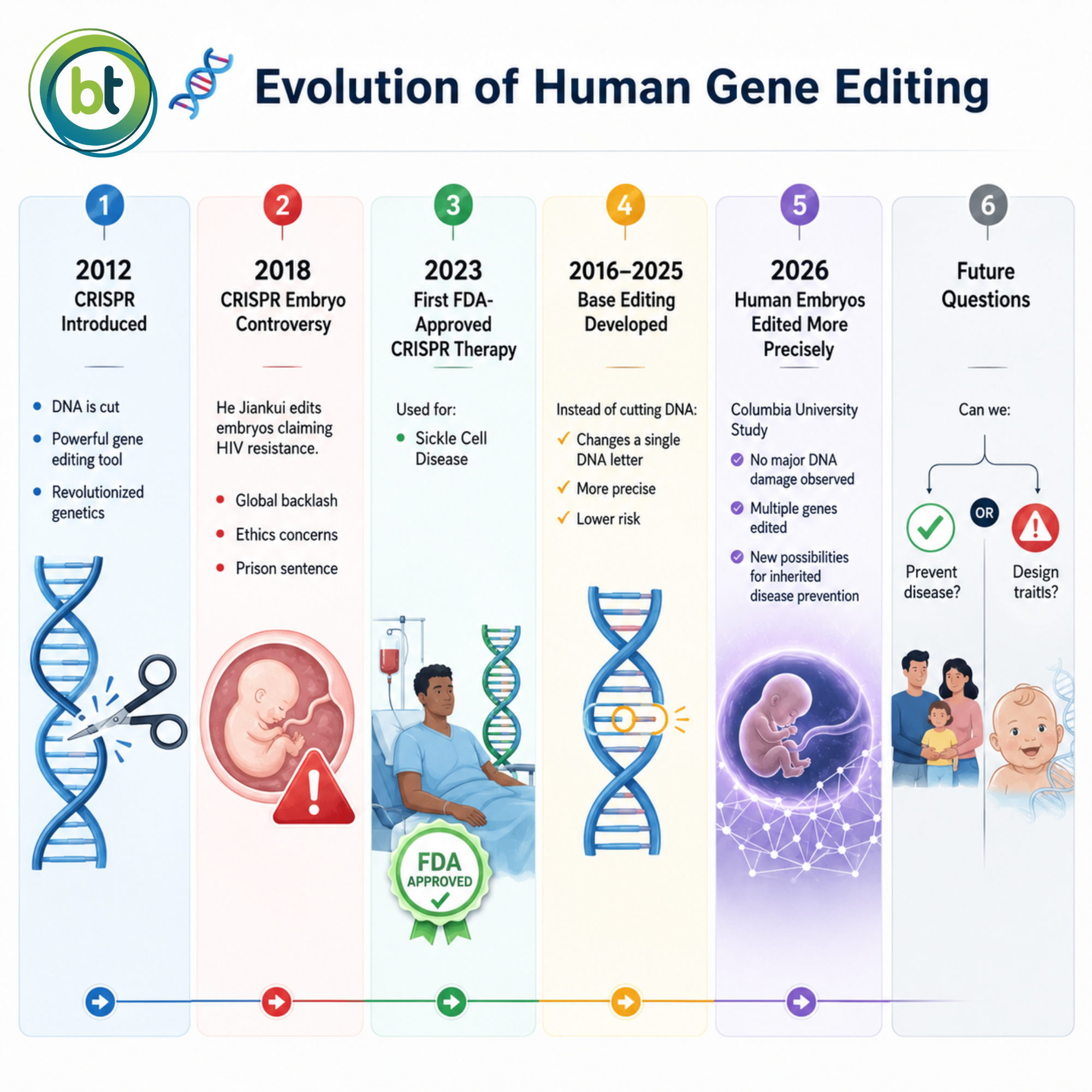
Researchers developed a new technique called CRISPR in 2012 that allows for very precise editing and degradation of areas of DNA within genome strands. At first, it was primarily a research tool used to study genes, but as soon as research labs began using the new technology, it was immediately recognized by the medical community, and pharmaceutical companies began working to develop CRISPR-enabled gene therapies for the treatment of genetic disorders. The first CRISPR-enabled treatment to gain approval from the FDA was for the treatment of sickle cell disease, and that approval was issued by the FDA in 2023.
There are concerns with the CRISPR technology. For instance, one known limitation of CRISPR is that it can occasionally act on unintended parts of the genome, known as off-target effects, and in some cases, the edits may not carry through to every cell in the body, which means the changes might not be consistent across all tissues. The validity of the CRISPR treatment of medical patients (gene therapy) and how it’s utilized in some cases was brought into question in October 2018 by scientist He Jiankui when he announced he had edited embryos to produce children who would be resistant to HIV. He was condemned for his actions and subsequently sentenced by Chinese authorities to three years in prison. To this day, no independent scientist has been able to confirm the validity of the results of He Jiankui’s experiment.
Earlier Experiments Showed Serious Risks
Before testing base editing, Dr. Egli and his team studied how traditional CRISPR worked in human embryos.
They used sperm from men carrying a mutation in the EYS gene, which causes inherited blindness. The sperm fertilized healthy eggs, creating embryos with one normal and one faulty copy of the gene. Researchers then used CRISPR to remove the defective section.
Scientists hoped the embryos would repair the damaged gene using the healthy copy as a template. While some embryos successfully repaired the mutation, many did not.
About half of the embryos experienced major problems. Some lost large sections of DNA, while others lost an entire chromosome containing the EYS gene. Dr. Egli described the damage as having “absolutely catastrophic consequences.”
These results convinced many scientists and bioethicists that editing human embryos was still too risky to consider for medical use.
A New Approach: Base Editing
In 2016, Dr. David Liu and his colleagues at Harvard University developed base editing. Instead of cutting DNA, the method makes a small change in one DNA strand and guides the cell to correct the mutation.
Base editing has already shown promising results. In 2025, a baby with a serious genetic disorder was successfully treated using a customized base-editing therapy.
Encouraged by these advances, Dr. Egli’s team decided to test base editing in human embryos.
What the New Study Found
The researchers focused on two genes:
- PCSK9, which can influence LDL (“bad”) cholesterol levels and increase the risk of heart disease.
- HBG, which plays a role in fetal hemoglobin production.
The team introduced base-editing tools into fertilized eggs and two-cell embryos donated by parents.
Unlike previous CRISPR experiments, the researchers did not observe the large-scale DNA damage that had caused concern in earlier studies. They successfully edited both genes and, in some cases, changed both genes within the same embryo.
However, the process was not perfect.
Sometimes the editing molecules failed to reach every cell. As a result, some cells contained the edited gene while others remained unchanged. This created what scientists call mosaic embryos, where different cells carry different genetic versions.
If such embryos developed into babies, the genetic differences between cells could potentially cause health problems.
Expert Reactions
Despite the challenges, some experts see promise in the new results.
Dr. Paula Amato, a fertility specialist at Oregon Health & Science University who was not involved in the research, described the method as promising. However, she emphasized the importance of carefully reviewing the final published study.
Dr. Ana Iltis, a bioethicist at Wake Forest University, urged caution. She warned that some harmful effects might not become apparent until after birth, meaning safety evaluations must go beyond checking for chromosome damage.
Possible Benefits for IVF
One of the study’s co-authors, Dr. Nathan Treff, believes the technology could eventually help people undergoing in vitro fertilization (IVF).
Currently, embryos carrying harmful mutations are often not selected for implantation. If scientists can safely correct disease-causing mutations, more embryos might become suitable for use.
Dr. Treff acknowledged that significant work remains before this becomes reality but said the research is an important step forward.
His company, Nucleus Genomics, will help fund future stages of the research. The U.S. federal government does not provide funding for research involving human embryos.
Future studies will focus on reducing the occurrence of mosaic embryos and testing base editing in embryos containing around 100 cells, which is the stage at which fertility clinics typically freeze and evaluate embryos.
Ethical Concerns Continue
Nucleus Genomics already screens IVF embryos for thousands of genetic disorders. The company also estimates risks for conditions such as heart disease and diabetes and examines genes linked to traits like height and intelligence.
The company attracted criticism in 2025 after advertising its services with the slogan “have your best baby.” Some geneticists argue that predictions for traits such as intelligence are not accurate enough to be reliable.
Critics have accused the company of promoting a modern version of eugenics, although the company rejects that claim.
The Bigger Question
Not everyone believes embryo gene editing is necessary.
Dr. Fyodor Urnov of the University of California, Berkeley, said traditional IVF screening already allows doctors to identify embryos with genetic abnormalities. He questioned whether it makes sense to use a technology with many unknown risks when safer methods already exist.
He also warned that once perfected, gene-editing tools might be used not only to prevent disease but also to enhance human traits.
Still, there are practical limits. Most human characteristics, including intelligence and height, are influenced by hundreds or even thousands of genes. Editing so many genes would greatly increase the chances of errors.
Dr. Egli believes scientists may eventually be able to edit a few genes at the same time, perhaps three to five, but he says the limits of the technology are still unknown.
For now, the research represents a major scientific advance, but experts agree that many technical, medical, and ethical questions must be answered before gene-edited embryos could ever become part of routine medical care.