









World’s First Synthetic Cells That Can Feed, Grow and Reproduce
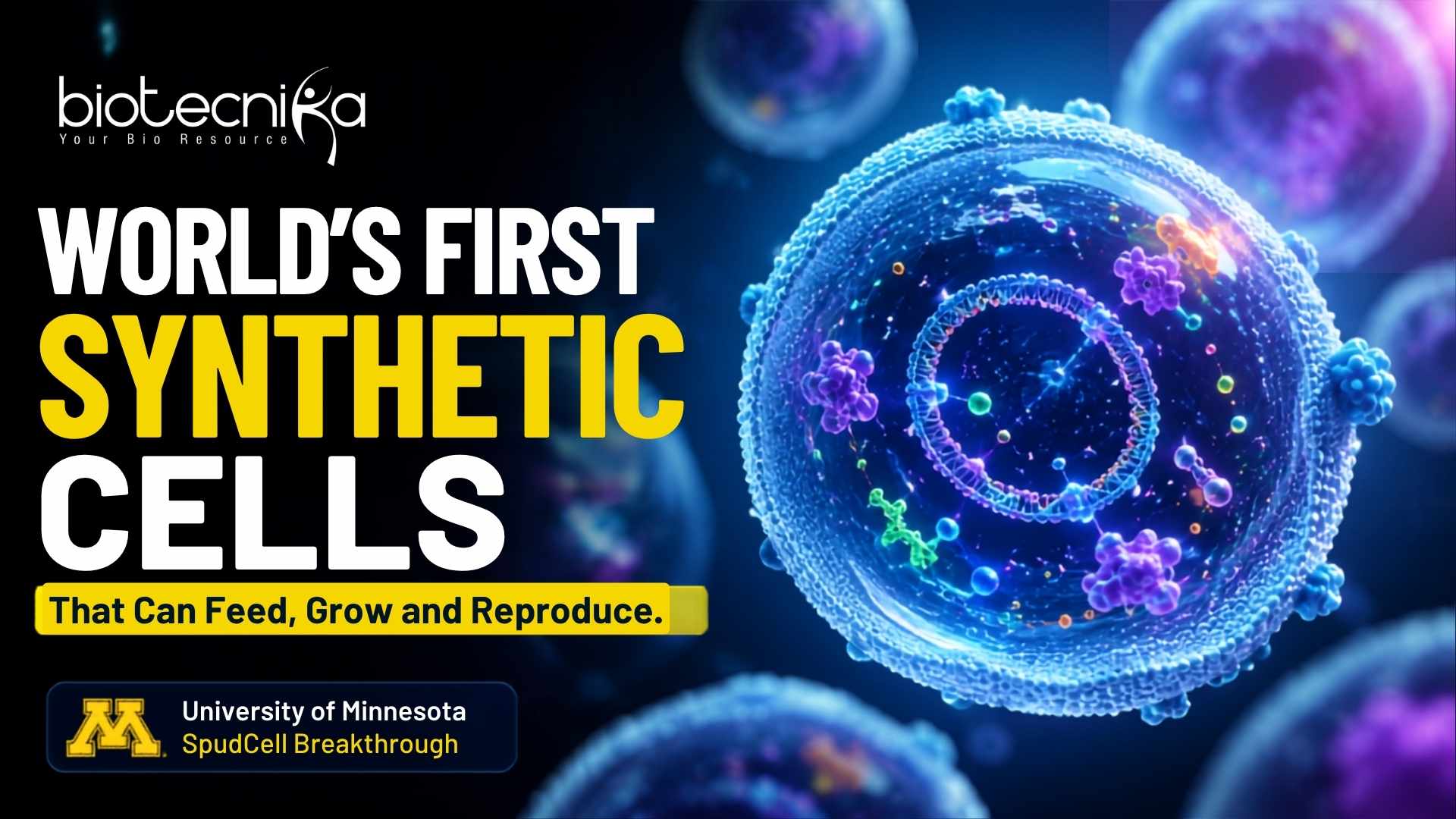
Have you ever wondered if it’s possible to build a living cell from scratch? This intriguing question has captivated many biologists over the years. Exciting news from researchers at the University of Minnesota shows they have found the answer. With the development of the world’s first synthetic cells, scientists have made a huge leap forward. These cells can feed, grow, and reproduce just like natural ones.
The team showed the world that some of life’s most fundamental functions can be recreated with carefully designed biological parts. The project was called SpudCell. The tiny artificial cells do not constitute a fully living organism. They still depend on scientists for nutrients and other essential ingredients.
This project was led by synthetic biologist Kate Adamala. Along with her team, she has spent years trying to understand and simplify one of nature’s most complex creations. Their goal was not to copy nature. They wanted to find out how much of life’s machinery can be rebuilt. For which they have carefully designed chemical components.
That effort has produced SpudCell, a stripped-down version of a cell that can carry out several essential jobs. It can take in nutrients, increase in size and divide to make new cells. Those are all characteristics of living cells, but the researchers stress that SpudCell is not a living organism.
Adamala said that it proves that fundamental functions of life, like growth and replication, don’t need a mysterious magical spark.
There is one important limitation. The synthetic cells cannot live by themselves. Scientists have to supply them with nutrients and ribosomes to keep them working. They also do not have the natural systems needed to remove waste or defend themselves.
Even with those limitations, researchers say the study is an important advance for synthetic biology. Building a cell from non-living materials has long been considered one of the field’s biggest goals because it helps answer a fundamental question about how life begins.
The team also found a simple way to make the cells reproduce. Natural cells depend on an internal framework called the cytoskeleton to divide. SpudCell avoids that complexity. Instead, proteins collect on the cell membrane until enough pressure builds up to split the membrane into two new cells.
The researchers then made a small genetic change that increased the production of a fusion protein. The modified cells grew faster and produced more offspring. After five generations, the faster-growing cells had overtaken the original population, showing that even a simple synthetic system can respond to genetic changes that improve growth.
SpudCell also has a much simpler genetic makeup than a human cell. Its genome is only about 90 kilobase pairs, compared with around 3 million kilobase pairs in humans. The cell carries its DNA in seven separate plasmids instead of a single chromosome, making it easier for researchers to program different tasks.
Researchers believe this modular design could eventually help build living systems for specific tasks, from manufacturing valuable chemicals to developing new research tools. Those applications remain a long way off, but the latest results suggest the technology is moving in that direction.
SpudCell is not alive, the researchers say. But it can do some of the things that living cells do. That makes it an important step towards understanding how life works and how scientists may one day build life-like cells in the lab.