














Table of Contents
What If “Normal” Isn’t Normal? AI & CRISPR Reveal Hidden Heart Disease
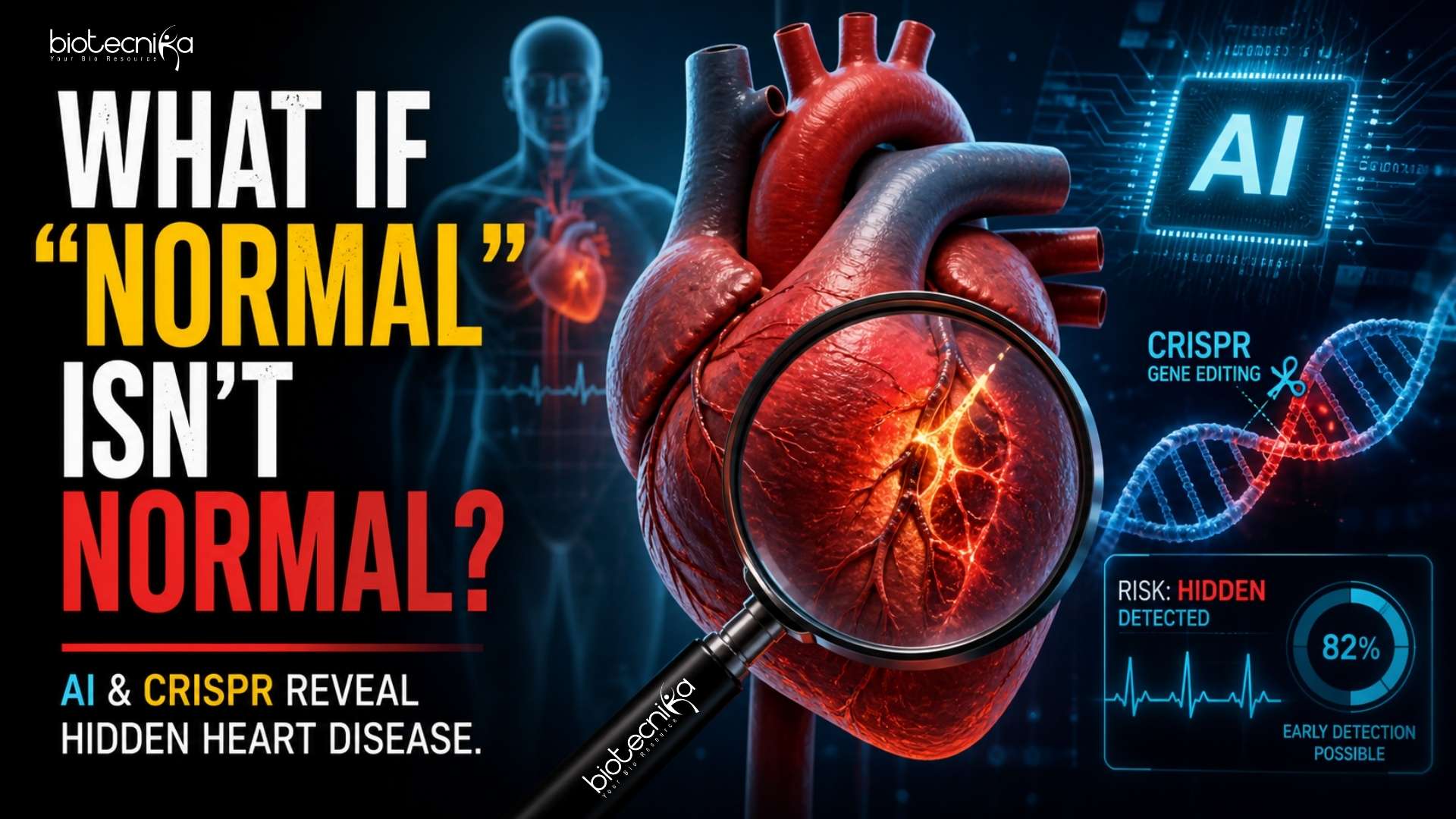
On April 30, 2026, Shinjini was just scrolling through some updates from JMIR Publications when she noticed two stories that caught her attention. They weren’t complicated or technical; they simply showed how healthcare is slowly changing. These two stories discussed both the use of AI technology and the small CRISPR devices that could eventually fit into your pocket to detect health issues. These devices can help spot signs of heart disease much before you experience them. In fact, the entire thing seems to suggest that we will be able to detect illnesses much earlier than before. Moreover, we will not need any additional effort by ourselves.
What she found next were two simple but powerful stories. Both showed how everyday health tools are being turned into smarter ways to catch diseases early. This includes heart disease, among others.
1. AI and Mammograms: More Than Just Cancer Screening
One of the stories explains how AI can turn a routine mammogram (used to check for breast cancer) into a tool for spotting disease risk, specifically heart disease, as well.
A JMIR correspondent, Shalini Kathuria Narang, describes how AI can analyze something called breast arterial calcification (BAC). This is a buildup of calcium in the arteries of the breast. While it appears on mammograms, it was not always used to assess heart health. It also was not always used to detect heart disease.
Now, with AI, doctors can measure this calcium more accurately. The system gives a risk score, and the findings are very clear: for every extra square millimeter of calcium buildup, the risk of developing heart disease increases by about 1%.
This is especially helpful for women under 50. Many traditional screenings do not focus much on this age group, so early heart disease risks can be missed. By using existing mammogram data, doctors can now identify these risks without extra tests, appointments, or blood work.
Another benefit is that this method is cost-effective. Since it uses scans that women are already getting, it adds no extra burden. Furthermore, it could also help reduce the gap in diagnosis between men and women. This is especially important concerning heart disease cases.
2. CRISPR-on-a-Chip: Lab Testing in Your Pocket
The second story, written by Dr. Cliff Dominy, looks at a new technology called “CRISPR-on-a-chip.” This combines gene-editing tools with tiny devices. As a result, powerful, portable diagnostic systems for identifying medical conditions such as heart disease are created.
These small chips can detect infections or early signs of cancer, as well as other issues like heart disease. They do this with very high accuracy—similar to what you would expect from a full laboratory.
One of the biggest advantages is sensitivity. These chips can be 10 to 100 times more sensitive than standard PCR tests, which are commonly used today for detecting a range of diseases, including heart disease.
Even more impressive, some versions use graphene-based sensors that can detect a single molecule of tumor DNA in the blood. This means diseases, like heart disease, could be identified long before any symptoms appear.
Because these devices are small and can connect to smartphones, they could allow testing to happen anywhere: at a clinic, bedside, or even at home. Therefore, this removes the need for large lab setups and makes testing for heart disease more accessible.
A Shift Toward Early Detection
The above two points indicate that there has been a shift away from treatment after the patient becomes symptomatic and towards earlier identification. There has been an increased effort to identify health-related issues earlier, including using AI technology to glean additional insights on tests you would otherwise be taking, as well as advanced diagnostics in a portable format, with the objective of identifying potential health issues at an early stage, such as heart disease, and managing them prior to them developing into a serious issue.
This represents a tremendous opportunity for us to advance towards the future of health care, a future where our focus is more about prevention—such as reducing heart disease—than treatment.