





















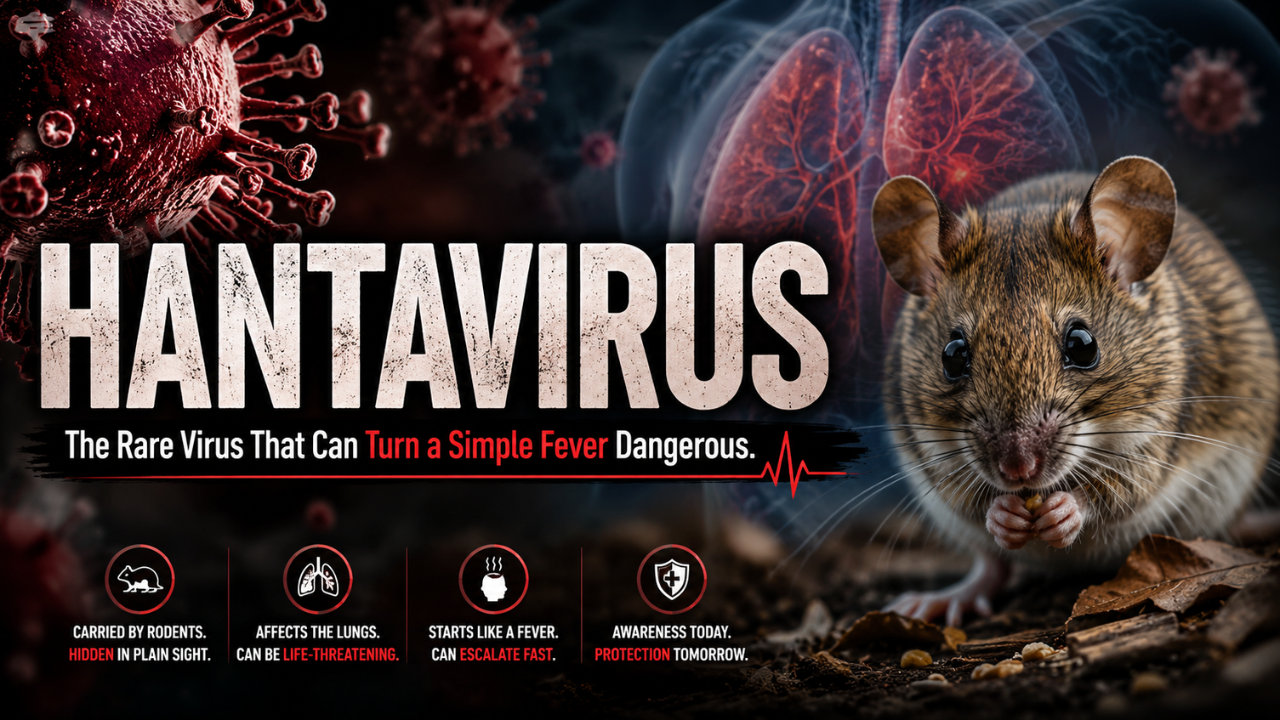
Hantavirus: The Rare Virus That Can Turn a Simple Fever Dangerous
Most people with a fever feel it’s harmless and ignore it. Most think it is flu, dengue, Covid, or simple exhaustion. They think that by taking rest, they will recover. But what if that same fever is more than what we see? What if it’s the first warning of a silent lung attack happening inside the body? The doctors call this a rare illness caused by Hantavirus.
The infection begins as a simple fever and then quickly turns into a life-threatening lung emergency. The virus is not commonly found in our environment. But when it strikes, it can damage the lungs within days. The person affected by this virus suffers from a breathing issue. That’s what worries most lung specialists around the world.
The infection may look normal and like any other common flu at first. As a result, many people with this infection do not seek medical help early.
Dr. Pradeep Bajad, Senior Consultant Pulmonologist and Sleep Medicine Specialist at Amrita Hospital, Faridabad, said that Hantavirus is a rare but potentially deadly infection that can quietly damage the lungs within days, and very few people have heard of it.
Unlike COVID – 19, or the influenza virus, the hantavirus does not usually spread from one person to another. This virus spreads through infected rodents such as rats and mice. The virus is found in their urine, saliva, and droppings. People get infected by inhaling contaminated dust particles while cleaning closed or poorly ventilated spaces. This means that a simple household task can become risky without your knowledge.
The doctors have said that people get exposed while sweeping dusty storage rooms, cleaning warehouses, or working in areas where rodents may have lived. As dust particles rise in the air, virus particles can also become airborne. This helps them enter the lungs easily.
People often mistake the early symptoms for common viral illnesses. They develop fever, headache, body ache, chills, nausea, vomiting, fatigue or stomach discomfort. Some people think they have food poisoning. While the others assume it is seasonal flu and decide to rest at home.
For the first few days after getting infected, the illness may not look serious at all. That’s where the real danger lies.
Dr. Bajad explained that the biggest problem with hantavirus is not the infection itself, but the false sense of normalcy in the first few days. Sometimes those lost days can make the difference between recovery and crisis.
As the infection progresses further, the condition can worsen very quickly. Patients may suddenly develop chest tightness, dry cough, rapid heartbeat, and severe shortness of breath. Oxygen levels can begin to fall as fluid leaks into the lungs, making breathing harder with every passing hour.
Some patients become critically ill so fast that they require intensive care support and ventilators within a short period.
The most severe form of the illness is known as Hantavirus Pulmonary Syndrome, or HPS. This condition carries a mortality rate of around 35 to 40%, according to the US Centers for Disease Control and Prevention. Researchers have also reported that the virus can trigger a strong inflammatory reaction in the lungs and blood vessels, leading to respiratory failure.
Even though the infection is rare, health experts say awareness is important because early medical attention can improve outcomes.
Doctors are also stressing about the prevention, especially in places where rodent exposure is common. Simple precautions can significantly lower the risk. These include controlling rodent infestations, properly storing food, improving ventilation in enclosed rooms, and wearing gloves and a mask when cleaning dusty areas.
Public health experts say people should avoid sweeping up dry rodent waste directly, as it can release infectious particles into the air. Instead, contaminated areas should be disinfected and cleaned carefully.
For pulmonologists, the concern is not panic but awareness. A person with a fever and body aches may not immediately think of Hantavirus Infection, and that is exactly why the illness can become dangerous. It hides behind symptoms that seem familiar and harmless.
In many cases, people believe they just need rest. But sometimes, what looks like a routine viral fever may actually be the start of a serious respiratory emergency.