











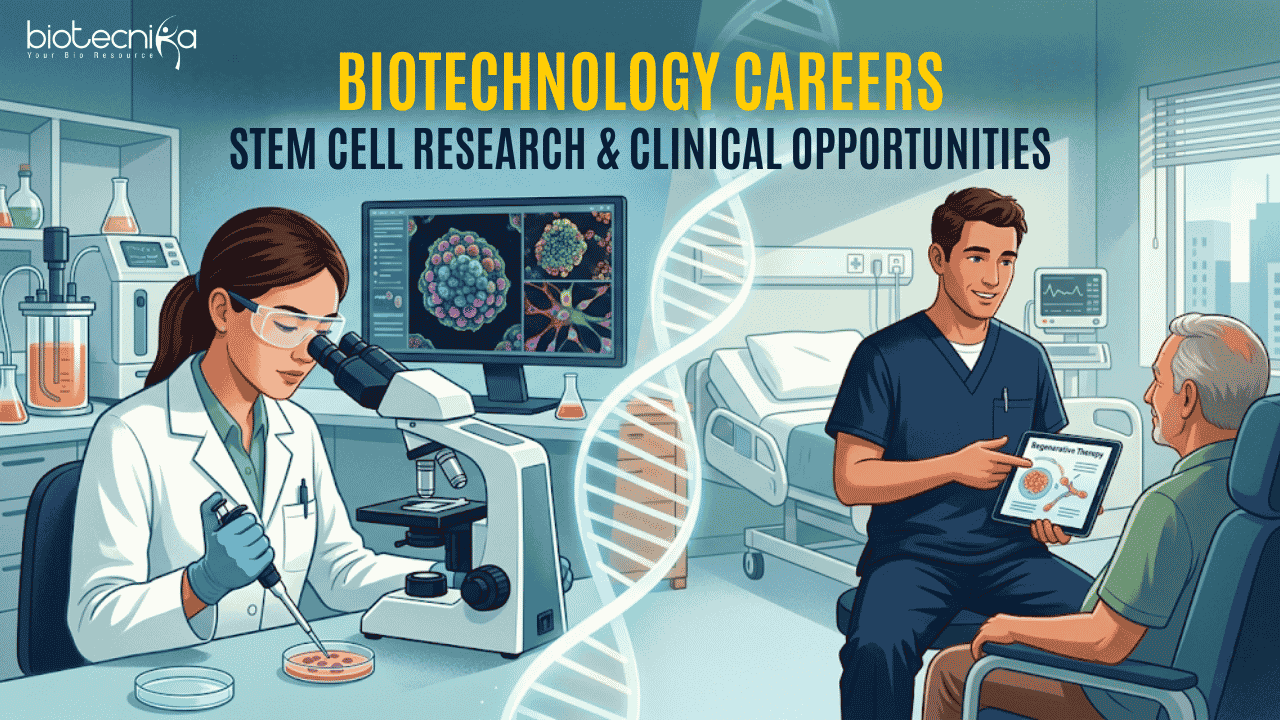
Stem Cell Research and Clinical Opportunities Guide
Every life starts with one cell, which differentiates itself to a multicellular organism. Yes, you guessed it right, it is the stem cell. It has got numerous advantages in the healthcare sector. Stem cells help doctors and scientists to figure out new possibilities to treat diseases, repair damaged tissues, and thus improve patient care. Hence, Stem cell Research is the most interesting and fastest-growing area in the life sciences world.
This growth in the field attracts many students to choose a career in stem cells, which is more specialized in biotechnology. A career in stem cell research offers various opportunities in research laboratories/ institutes, Biotech and Pharma companies, and regenerative medicine centers. The combination of science, healthcare, and innovation makes it a significant career choice for Life Sciences enthusiasts.
So, What Are Stem Cells?
These are cells that have the special power to turn into many different types of cells in the body. They can divide, auto-renew, and differentiate, and also repair the damaged tissues. They can become muscle cells. Nerve cells, blood cells, and many more.
Main Types of Stem Cells
- Embryonic Stem Cells: Can become almost any cell type.
- Adult Stem Cells: Found in tissues like bone marrow and help in damage repair.
- Induced Pluripotent Stem Cells (iPSCs): Adult cells reprogrammed into stem-like cells in laboratories.
- Mesenchymal Stem Cells (MSCs): Commonly studied for tissue repair and immune-related treatments.
What Makes the Stem Cell Research Important
Currently, no disease has a complete cure. However, researchers are pursuing stem cell research as a potential means of regenerating damaged tissue to aid recovery.
Stem Cell Research is helping scientists understand diseases and create advanced treatments. It is being studied for:
- Diabetes
- Parkinson’s disease
- Heart disease
- Spinal cord injury
- Blood disorders
- Immune disorders
- Burns and skin damage
- Arthritis
- Organ damage
Stem cells may help in recovering from these diseases through a variety of mechanisms, including reducing inflammation, promoting blood vessel formation, replacing damaged cells, and supporting tissue repair.
Biotechnology Career Opportunities in Stem Cell Research
A Biotechnology Career in stem cells offers many job options.
- Research Scientist: Conducts research on stem cells in a laboratory, creates therapies based on their research, and publishes results.
- Clinical Research Associate: Assists with running clinical trials while providing oversight to ensure that safety standards are adhered to.
- Cell Culture Specialist: Develops methods for growing stem cells in a sterile lab environment.
- Quality Control Analyst: Tests stem cell-related materials for safety, purity, and quality.
- Regulatory Affairs Specialist: Oversees the approval process and compliance to either FDA, EMA, or country regulations.
- Medical Writer: Develops scientific reports on clinical trials, including trial protocols and summaries of research.
- Technical Sales Representative: Provides support to hospitals and laboratories through the sale and use of stem cell-related tools and technologies.
Clinical Opportunities in Stem Cells
There is an increase in the clinical application of stem cells. Many treatments are in use today, but there are also a number of treatments in trials.
1. Current Clinical Uses
- Hematopoietic/bone marrow stem cell transplants for leukemia, lymphoma, anemia, and immune (autoimmune) disorders
- Supportive treatments available for specific blood cancers
2. Emerging Clinical Areas
- Repair of the heart after damage
- Regeneration of cartilages and bones
- Repair of damaged corneas (eye disorders)
- Neurological repair research
- Wound healing and burns care
- Autoimmune disease treatment
- Research in fertility and reproductive medicine
3. Job Opportunities
- Hospitals
- IVF (In Vitro Fertilization) centers
- Clinical trial organizations
- Regenerative medicine clinics
- Tissue engineering companies
- Academic medical centers
Skills Needed for a Career in Stem Cells
To succeed in a Career in Stem Cells, students are required to build these skills:
- Cell culture techniques
- Molecular biology methods
- Aseptic handling
- Data analysis
- Documentation
- Communication skills
- Problem solving
- Knowledge of ethics and regulations
Hands-on lab training is highly valuable.
Educational Qualifications to Pursue a Career in Stem Cells
Students from these backgrounds can enter this field:
- B.Sc Biotechnology
- B.Sc Microbiology
- B.Sc Life Sciences
- B.Pharm
- M.Sc Biotechnology
- M.Sc Cell Biology
- M.Tech Biotechnology
- PhD in related subjects
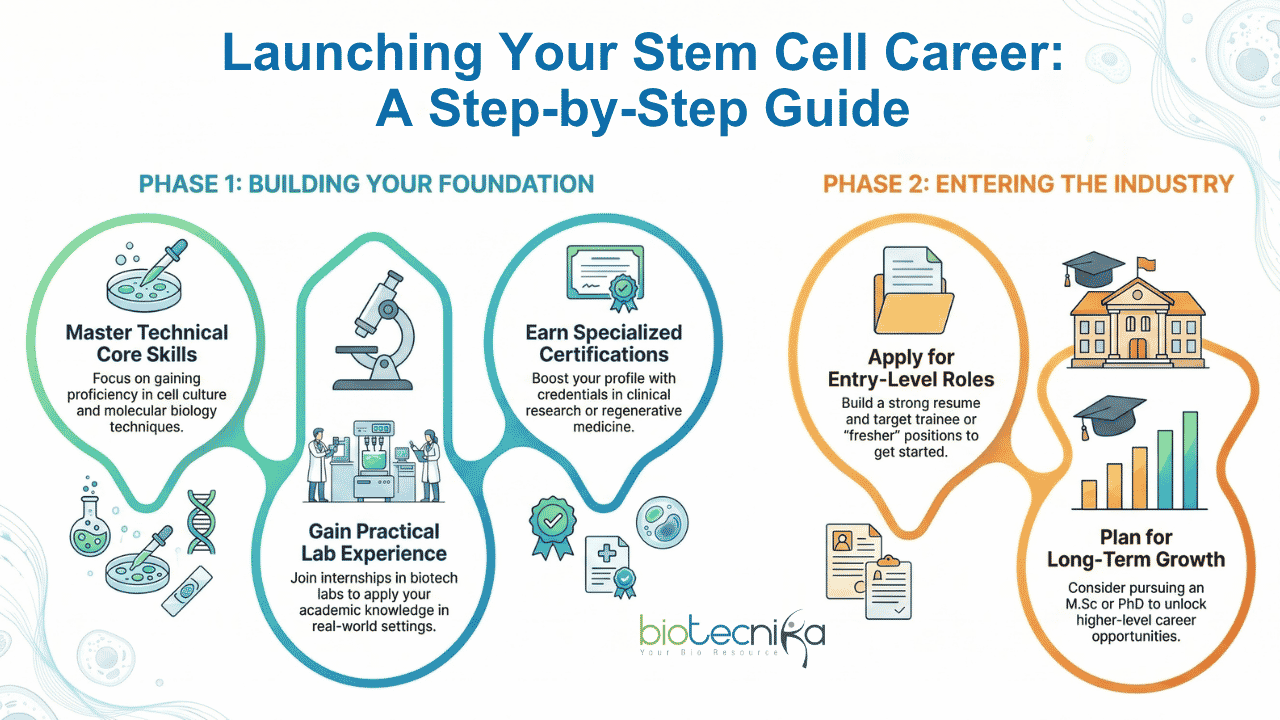
Internships, projects, and certifications can improve job chances.
Salary in India
Salary depends on qualification, skills, and company.
- Freshers: ₹2 LPA to ₹5 LPA
- Experienced Professionals: ₹5 LPA to ₹11 LPA
- Scientists / Senior Roles: ₹15 LPA+
International salaries can be much higher. These may vary depending on experience, company, and market.
Top Recruiters in India
Many organizations and institutes have open opportunities for stem cell professionals
- Companies that Hire: Biocon, Syngene, Reliance Life Sciences, Stempeutics Research, Serum Institute, Apollo Hospitals, Fortis Hospitals.
- Top Stem Cell Research Institutes in India: IISc, NCBS, inStem, CCMB, AIIMS, NII, Tata Memorial Center.
Future Scope
There is a bright future for stem cell research. Governments, universities, and biotech companies are making huge investments in regenerative medicine. Some new fields, such as tissue engineering using exosomes, gene-edited stem cells, and personalized medicine, are also experiencing rapid growth. Therefore, future employment opportunities will be found in research and development, manufacturing and production, clinical trials, and healthcare-related jobs.
Challenges in this Field
As with any emerging technology, the field of stem cell research has a number of challenges:
- Stronger regulation
- Longer duration of clinical trials
- The need for continuing education
- High levels of competitiveness
- A requirement for high precision & great amounts of patience when conducting experiments
A Biotechnology Career specializing in stem cell research would be an ideal fit for any student wishing to pursue their education in the future of medicine because it will provide them with opportunities for both research and clinical experience, vast opportunities for growth, and an opportunity to help people live healthier lives. If you have an interest in science and innovation, then a Career in Stem Cell Research may be just what you are looking for!