








Anthropic’s Claude Science Brings AI-Powered Antibiotic Design
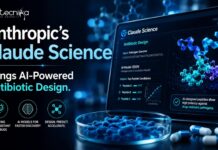
For years, the scientists have struggled with the antibiotic research, expensive laboratory work and countless failed experiments before identifying the promising drug candidate. But not anymore. All thanks to Anthropic’s new platform, Claude Science. This platform is a new hope to make the early stages of the journey faster and easier. The platform is bringing scientific databases and powerful AI models together at one place. It aims to help researchers across the world to spend less time sorting through data and more time on discovery.
AI is already changing many areas of life science. But to use these tools, the scientists often required strong computational skills. Today, many researchers depend on bioinformaticians or data scientists to run these complex models.
Claude Science is trying to remove that barrier by allowing scientists to interact with advanced biological AI through simple text prompts.
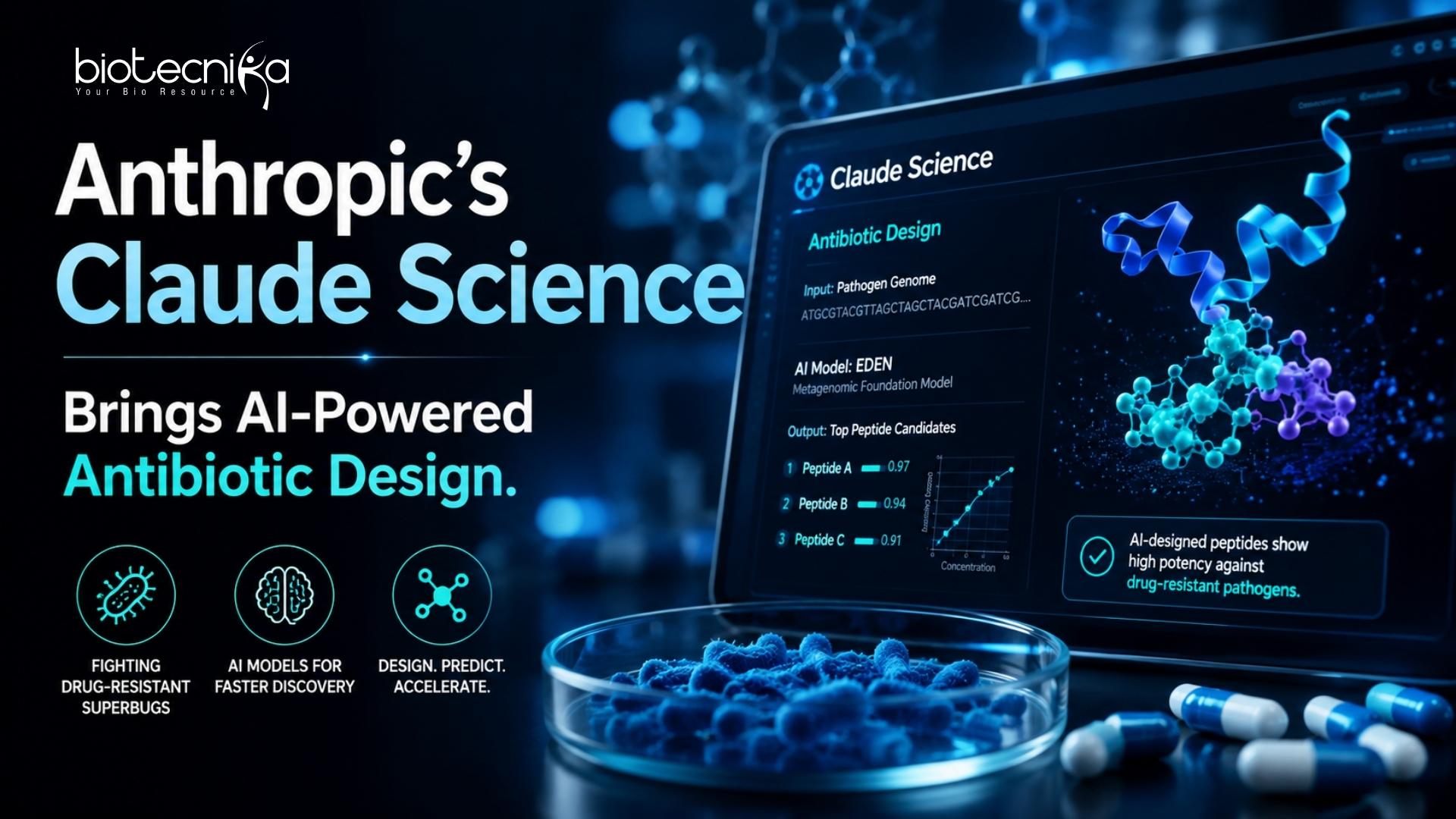
One of the first companies to bring its technology to Claude Science is Basecamp Research, a biotechnology company based in London. The company has made its EDEN platform available through the new system. EDEN is a metagenomic foundation model that can support antibiotic design and vaccine target prediction using natural language prompts.
During a demonstration of the platform, Basecamp Research showed how the technology could work in a real research setting. A sample microbiology report from a patient was uploaded into Claude Science. With a simple written prompt, the platform designed antimicrobial peptides, predicted how effective they could be, and ranked the most promising candidates for laboratory testing. The entire process took only a few minutes.
The demonstration does not mean researchers can create a new medicine instantly. Every candidate identified by the platform still needs to be tested in the laboratory and go through the long process of drug development before it could ever reach patients. Even so, the ability to quickly generate and evaluate new ideas could help scientists move faster during the early stages of research.
The need for better antibiotics continues to grow. According to the World Health Organization, antimicrobial resistance is one of the biggest public health threats facing the world today. Drug-resistant infections are linked to nearly five million deaths each year. Researchers around the world are searching for new ways to stay ahead of bacteria that no longer respond to existing medicines.
Basecamp Research believes AI can become an important part of that effort. The company says its EDEN model achieved a 97 percent success rate when designing functional antimicrobial peptides with strong activity against World Health Organization critical-priority and multidrug-resistant pathogens. The research was carried out in collaboration with César de la Fuente and his team at the University of Pennsylvania.
Oliver Vince, co-founder of Basecamp Research, believes the biggest advantage of Claude Science is that it makes advanced tools easier to use. Instead of needing programming skills or powerful computing systems, researchers can simply describe what they want using everyday language. He believes this could give more scientists around the world access to technology that was previously available only to specialists.
The technology behind EDEN is built on a massive biological database called BaseData. Basecamp Research has collected about 9.8 billion protein sequences from more than 200 locations across over 30 countries. These include hot springs, polar ice, rainforests, deserts, and other environments where unique organisms have evolved. According to the company, this collection contains much more protein diversity than all public databases combined.
The company is also looking beyond antibiotics. Researchers have adapted EDEN to support programmable gene insertion, an approach that aims to place large pieces of therapeutic DNA into precise locations in the human genome. This work could expand future options for gene therapies alongside existing genome editing technologies.
Basecamp Research is continuing to grow its data resources through the Trillion Gene Atlas, a collaboration with Anthropic, NVIDIA, PacBio, and Ultima Genomics. The partners plan to increase the size of BaseData by 100 times over the next two years, creating an even larger foundation for future AI research.
The launch of Claude Science shows how AI is becoming a practical research tool instead of just an experimental technology. Scientists are still responsible for testing every result in the laboratory, but platforms like this could make the search for new antibiotics, vaccines, and gene therapies much more efficient. For researchers working against the growing threat of antimicrobial resistance, that could make an important difference.