




















Industrial Biotechnology: Jobs, Courses & Future Scope
Industrial Biotechnology is not a new concept that suddenly emerged out of nowhere. From enzymes to detergents, biofuels to biodegradable plastics, everything is a product of biomanufacturing. You might wonder if I tell you that a few medicines are also made using this technology. Industrial biotechnology is transforming the life science world into a technology-driven manufacturing powerhouse. Labelled as White Biotechnology, the field uses microorganisms and enzymes to produce bio-based goods that are sustainable and smarter. Industrial Biotechnology is widespread and has its role in textiles, paper, food, plastics, and other sectors too.
In this article, let us explore what is Industrial Biotechnology, the applications of Biomanufacturing, the Industrial Biotechnology scope, and the courses that help to build a career. This also focuses on current prospects and why they matter more than ever. Let’s get started and understand the definition and demands for biomanufacturing.
What is Industrial Biotechnology?
This is a branch of biotechnology that creates bio-based products and sustainable solutions using biological systems like microorganisms, enzymes, or cells. Unlike chemical manufacturing, which consumes significant energy and generates pollution, biomanufacturing focuses on eco-friendly practices that help create a cleaner environment.
For easier understanding, biology is engineered to help industries produce better goods for both people and the planet.
Fermentation technology transforms animal/ agricultural wastes into energy like biogas or biofuels. Harsh industrial detergents can be replaced with enzymes from microbial sources to reduce pollution. This not only reduces waste but also conserves non-conventional energy. Industrial biotechnology has existed for a long time; now it is only the pace that is accelerating.
Sneak Peek into Biomanufacturing
Biomanufacturing uses living organisms such as bacteria, yeast, and mammalian cells to produce biomolecules, biofuels, medicines, and even food ingredients. Instead of petroleum-based chemicals or machines, biological systems act as the bioreactors and are maintained under optimal conditions. Bioprocess engineering is the soul of Industrial Biotechnology.
These are some real-world examples:
- Engineered cells are used to produce monoclonal antibodies and vaccines.
- Sugars from agricultural waste and plant sources are converted into biofuels such as bioethanol and biodiesel using microorganisms.
- Bioavailable materials are used to manufacture biodegradable plastics, thereby reducing environmental impact.
The collaboration between industry and biology is one of the most significant move towards creating a sustainable and economical world.
Industrial Biotechnology Scope
Industrial Biotechnology is no longer limited to food and wine; it has grown much more elaborately and into various sectors. The global market is rapidly expanding and is driven by demand for sustainability and novel products. As industries shift from petrochemical to bio-based processes, the scope is expanding rapidly..
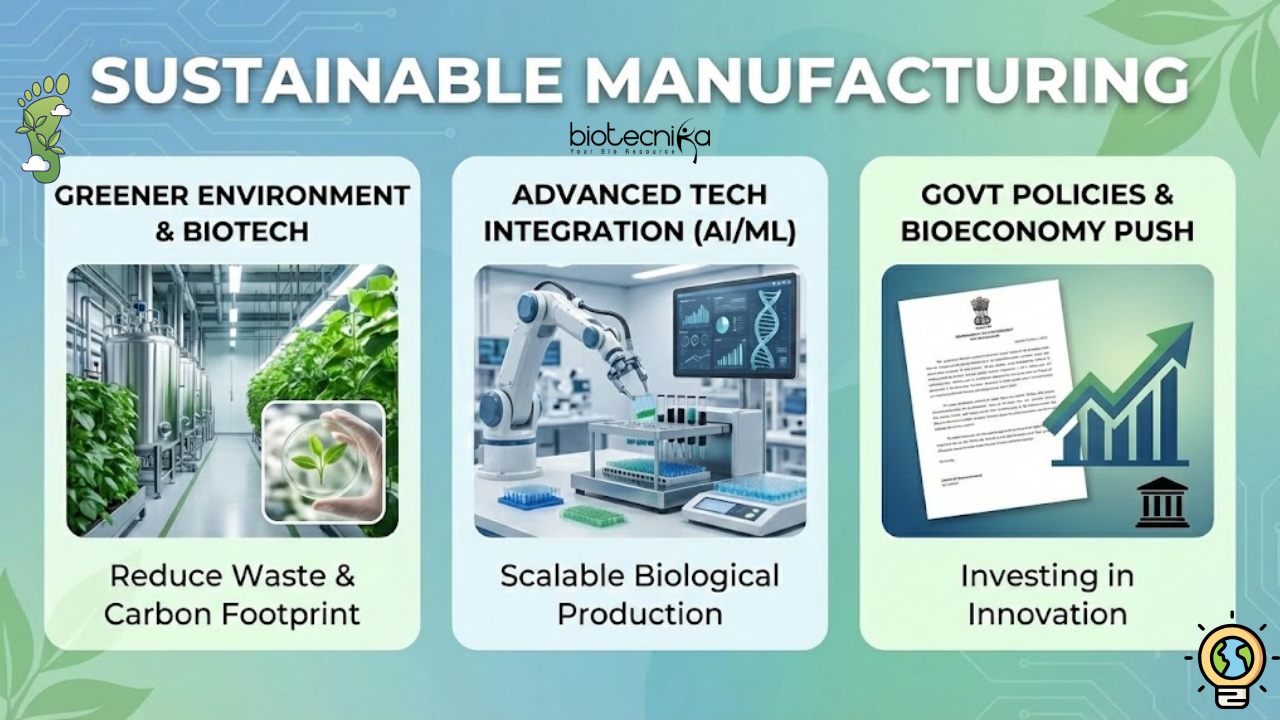
- Sustainable Manufacturing: As demand for a greener environment grows, manufacturing industries are seeking alternative options. Industrial biotechnology offers products that cut down waste and help in reducing carbon footprints.
- Advanced Tech Integration: The advancements in technology, like AI/ML and synthetic biology, have led to efficient and scalable biological production.
- Government Policies & Bioeconomy Push: Government bodies such as India’s Department of Biotechnology and BIRAC are investing in biomanufacturing innovation to accelerate greener production. Many policies have been launched to support and push the bioeconomy.
There’s a growing need for industrial biotechnologists who can manage, design, and process biomanufacturing worldwide. This opens new opportunities for those looking to excel in eco-friendly production.
The White Biotechnology Division
Industrial Biotechnology runs across different sectors and has a wide range of applications.
- Biofuels and Energy: Microbial, algal, and plant/animal biomass serve as sources for biofuel production. This aids in reducing dependence on fossil fuels.
- Pharmaceuticals and Biopharma: Cells are used to produce therapeutic proteins, vaccines, and biologics. These serve as the natural sources of medicines. Single-cell protein from Spirulina and other organisms is a known protein supplement developed through biomanufacturing.
- Chemicals and Materials: Usage of biomass and bioavailable components enables the creation of sustainable chemicals and biomaterials.
- Food and Beverage: Fermentation is the key concept in developing food components. Fermentation technology not only enhances taste but also improves nutrient availability. Optimizing bioprocess conditions leads to better products.
- Waste & Environmental Management: The Microbial system has different sets of enzymes that can break down toxic components to non-toxic ones. In this way, it helps with waste management and nutrient recycling.
Jobs in Biomanufacturing
You might be wrong if you assume there are limited roles in this sector. Industrial Biotechnology is a multidisciplinary sector and has various job opportunities, which are growing with recent technological advancements.
Here are a few exciting roles that offer a career in Biomanufacturing.
- Bioprocess Engineer: Work on designing systems for the Upstream process, from lab to factory.
- Fermentation Technologist: Optimization of fermentation conditions like temperature, pH, media components, etc, for better yield.
- Quality Assurance / GMP Specialist: Ensures products meet safety and regulatory standards.
- Biomanufacturing Specialist: Key responsibilities include automation, equipment analysis, and monitoring product workflow.
- Regulatory Affairs Specialist: Checks the regulatory compliance and navigates government approvals for novel products.
- Environmental Consultant: Focuses on plans and strategies and helps integrate biology and sustainability to achieve a cleaner environment.
Salaries vary by location, specialization, and experience. Packages for Entry-level roles may range from ₹3.5 to ₹6 LPA; with experience, this can jump upto ₹8–12 LPA. (These are subject to the latest study and are variable)
Industrial Biotechnology Courses
You don’t need to be a PhD holder to get into this field. Various pathways prepare you for the industry.
- Bachelor’s Degree: B.Tech/ B.Sc in Biotechnology or Bioengineering provides foundational knowledge in microbiology, genetics, and bioprocessing.
- Master’s Degree: M.Tech in Bioprocess Engineering, M.Sc in Industrial Biotechnology, with a focus deeper into the manufacturing processes and industrial applications concerning human and environmental needs.
- Other Online Courses: Educational platforms like BioTecNika, and other government portals like SWAYAM, MOOC offer certification courses covering various aspects of Industrial Biotechnology, like enzyme engineering, fermentation process, and bioprocess design, which is ideal for skill upgrading.
- Specialized Training: Centers and Government bodies offer hands-on training workshops that provide an opportunity to gain in-depth training in industrial aspects.
If you are looking for an exciting career in Biotechnology that addresses the environment and real-world challenges, industrial biotechnology offers demanding roles. Biomanufacturing not only focuses on technological aspects but also on sustainability. These are not just job titles but the emerging sector that transforms lab-scale to an industrial level.