





















Ebola New Strain: When Will the Vaccine Arrive?
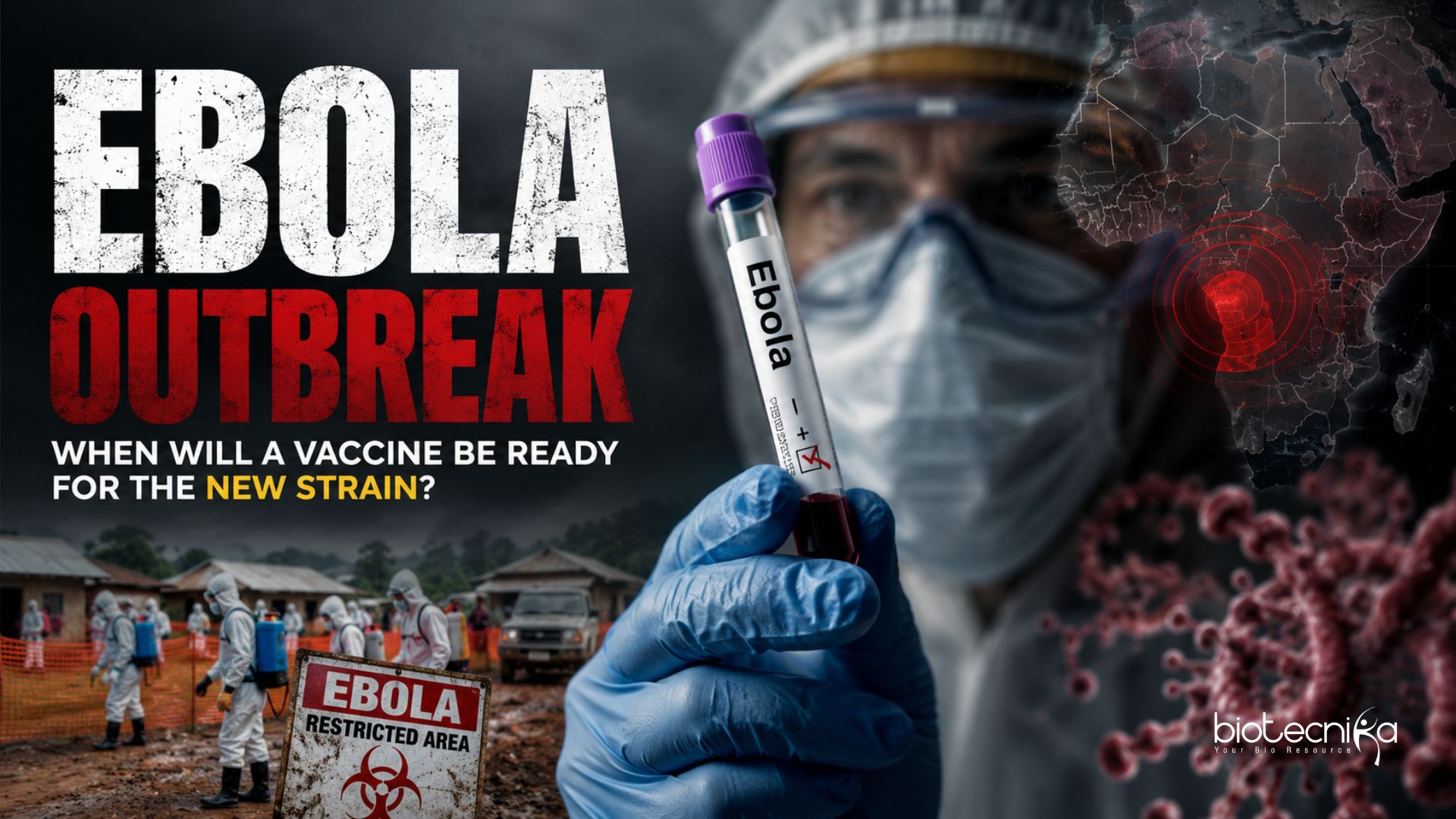
The World Health Organization (WHO) has declared the latest Ebola outbreak in the Democratic Republic of the Congo (DRC) and Uganda a “public health emergency of international concern”. The outbreak involves a rare Ebola strain called the Bundibugyo strain, for which there is currently no approved vaccine or treatment.
Ebola has caused several deadly outbreaks in Africa over the last 50 years, killing more than 15,000 people. The biggest outbreak, which happened in West Africa between 2013 and 2016, killed more than 11,000 people.
What Is Happening Now?
The center of the current outbreak is in Ituri province in northeastern DRC, near the borders of Uganda and South Sudan. Since this area is a major gold-mining region, many people travel across the borders regularly, increasing the risk of the virus spreading. The virus has already spread to nearby provinces in DRC, reaching areas almost 200km away from where the outbreak first began. Cases have also crossed international borders.
According to DRC Health Minister Samuel Roger Kamba, there have been 513 suspected cases and around 131 deaths so far. In just 24 hours, 26 more suspected cases were reported.
In Uganda, the WHO confirmed at least one death and two infections linked to the new strain. Ugandan authorities said more than 120 people are currently under quarantine. Ugandan officials say they are confident they can control the outbreak.
However, Public concern is increasing in both countries. In cities across DRC, including Bukavu and Kinshasa, people have started wearing face masks and asking authorities for stronger safety measures.
Many workers are worried because their jobs require close contact with people every day. A motorbike driver in DRC said he fears carrying the virus home to his family. Street vendors are also concerned because they interact with many strangers daily.
WHO Director-General Tedros Adhanom Ghebreyesus said he is “deeply concerned about the scale and speed of the epidemic”.
What is the Bundibugyo strain?
The Bundibugyo strain is a different type of Ebola virus from the Zaire strain, which caused the large West African outbreak between 2014 and 2016. Krutika Kuppalli, an infectious disease expert at UT Southwestern Medical Center in Texas, explained that although Bundibugyo has caused fewer outbreaks in the past, it is still extremely dangerous.
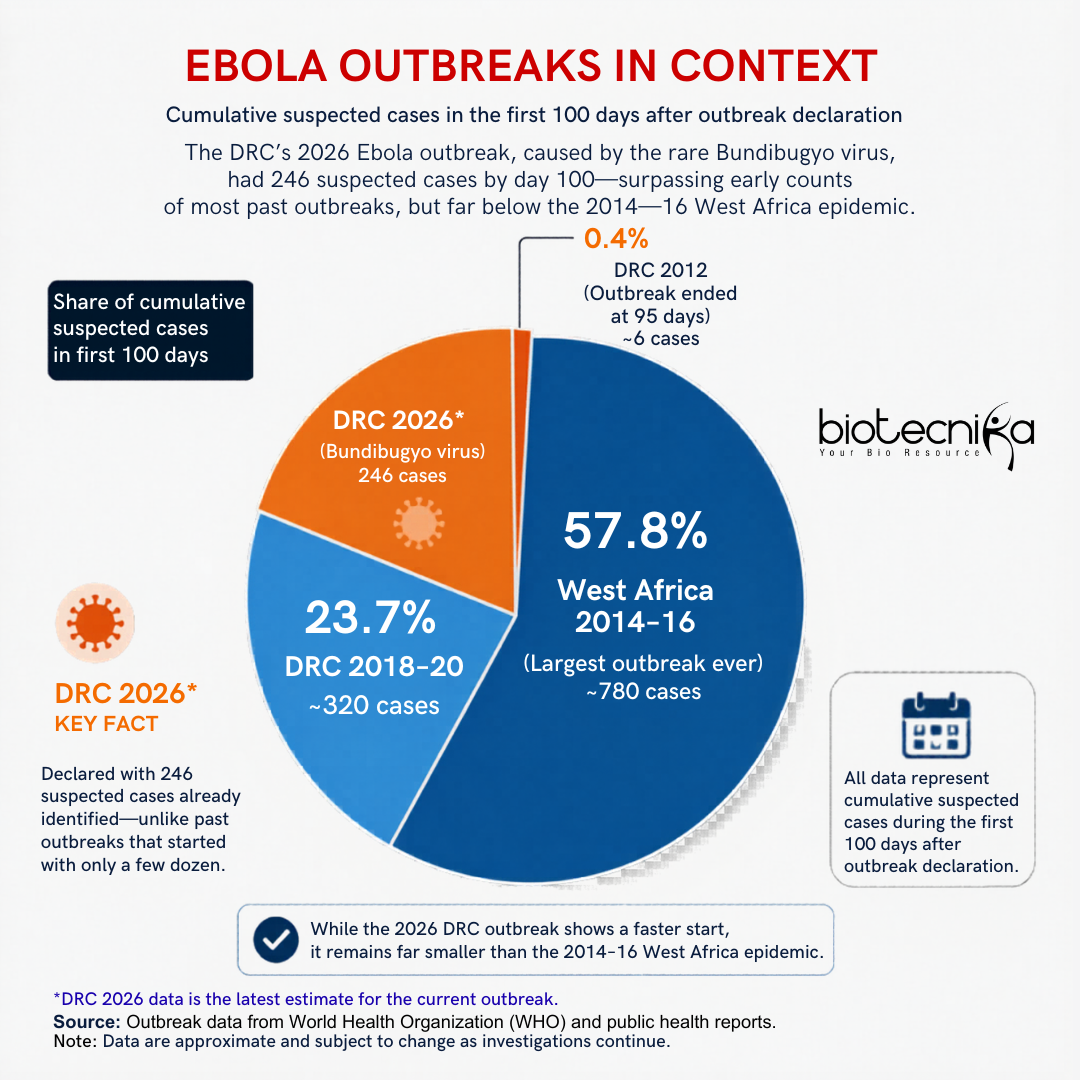
Previous outbreaks caused by this strain had death rates between 30 and 50 percent. Experts are especially worried because there are no licensed vaccines or specific medicines available for this strain.
Kuppalli also said the outbreak is harder to control because of ongoing conflict in the region, large movements of displaced people, weak health monitoring systems, and delayed detection of cases.
Another problem is that many testing systems were designed mainly to detect the Zaire Ebola strain and may not easily identify the Bundibugyo strain. Because of this, some early cases may have been missed.
Health experts are now worried because the virus has started spreading in urban areas and across borders, which increases the risk of a larger outbreak.
Is a vaccine being developed?
At the moment, there is no approved vaccine for the Bundibugyo strain.
A vaccine called Ervebo, made by Merck and used against the Zaire Ebola strain, showed some protection against Bundibugyo in animal studies. However, it has not been officially approved for this strain.
Experts say scientists are not starting from scratch because they already have years of research from previous Ebola vaccine projects. Existing technologies, including viral vector vaccines and mRNA platforms, could possibly be adapted for the Bundibugyo strain.
Still, developing a vaccine takes time. Researchers must first design the vaccine, then carry out clinical trials, manufacture doses, get approval from regulators, and finally distribute it. Doing all this during an active outbreak in countries with limited resources is extremely challenging.
The Coalition for Epidemic Preparedness Innovations (CEPI) has already funded research into broader Ebola vaccines that could protect against multiple Ebola strains instead of just one.
Kuppalli said this work is important because relying only on strain-specific vaccines leaves the world unprepared when a different Ebola strain appears.
What help is reaching the affected countries?
Until a vaccine becomes available, the WHO is sending medical supplies to the DRC to help control the outbreak.
Anne Ancia, WHO representative in Ituri province, said 12 tonnes of supplies had already been sent, with six more tonnes arriving soon. These supplies include personal protective equipment (PPE) for healthcare workers and testing materials.
Meanwhile, Jean-Jacques Muyembe, a virus expert at DRC’s National Institute of Biomedical Research, said the country is also expecting experimental Ebola vaccines from the United States and the United Kingdom.
How are other countries reacting?
Several countries have started taking precautions to stop the virus from spreading.
Bahrain has temporarily stopped entry for travelers coming from Uganda, the DRC, and South Sudan for 30 days.
Rwanda has closed its border with the DRC.
The United States has introduced temporary travel restrictions for non-US citizens and non-permanent residents who recently traveled to DRC, Uganda, or South Sudan.
Governments across Asia have begun introducing border screening and are preparing quarantine systems.
Will vaccine development be as fast as COVID-19?
Experts warn that vaccine development against Ebola will likely be slower than in the case of COVID-19. According to Kuppalli, the speed with which COVID-19 vaccines were developed was partly due to the virus’s disproportionate impact on developed countries, as well as its disastrous effects on the global economy.
She explained that Kuppalli argued that African epidemics have historically received less funding and political attention, receiving far less financial aid, attention from politicians, and investment in manufacturing, despite having terrible impacts on the region. The Ebola epidemic of 2014, for example, did not gain traction in terms of vaccine development until thousands had died. However, Kuppalli pointed out that lessons have been learned, and the collaborative mechanisms between the WHO, CEPI, GAVI, African scientists, and institutions have been considerably strengthened.
Governments and health agencies, she argued, need to invest in emergency preparedness and vaccine development prior to outbreaks occurring in order for outbreaks not to become global health emergencies. Experts say that the greater investment is yet another lesson demonstrating that global health security depends on backing all nations and not solely those with wealthier populations.
Last takeways
This present outbreak in Bundibugyo is giving cause for concern amongst medical experts, as no successful vaccine or treatment for the disease is available as yet. While scientists have started work on experimental vaccines using past Ebola studies, creating and testing new vaccines is a lengthy process, and thus, at present, countries will have to rely on containment procedures such as quarantines, border checks, and medical supplies for health workers. Furthermore, the outbreak emphasizes a problematic tendency as deadly diseases found in Africa have, to a greater extent, not been given global coverage and a sense of urgency by wealthier nations compared to outbreaks in richer countries. Experts claim that a need for greater investment in research and preparation is necessary prior to such disease threats developing further.