





















One of the recently published research papers, called “Modern Day High: The Neurocognitive Impact of Social Media Usage,” is about a neurobiological study of real-time brain function while using different social media platforms. This research article is published in the Cureus Journal of Medical Science, which is a subsidiary of Springer Nature, and it is also available in PubMed. The research uses high-resolution electroencephalography (EEG) to study the brain activity. This study analyzes different brain waves stimulated by external stimuli while using social media. The study uses different types of social media content. Each type is designed to cause different changes in the brain that could affect the brain activity, thinking ability, and emotional control.
Table of Contents
What Are the Objectives of the Research?
The research focuses on the EEG results of 100 healthy adult participants. The age group of the study participants is between 18 and 45. Each subject was asked to participate in the social media activity for 30 minutes. The researchers then monitored the EEGs using a 24-channel EEG machine.
The study focused on five important brainwave ranges: delta, theta, alpha, beta, and gamma.
The brain waves were measured during active social media use and after active social media engagement. The type of social media content fed to participants includes emotionally charged language, short videos, and visually stimulating images.
Key Findings at a Glance
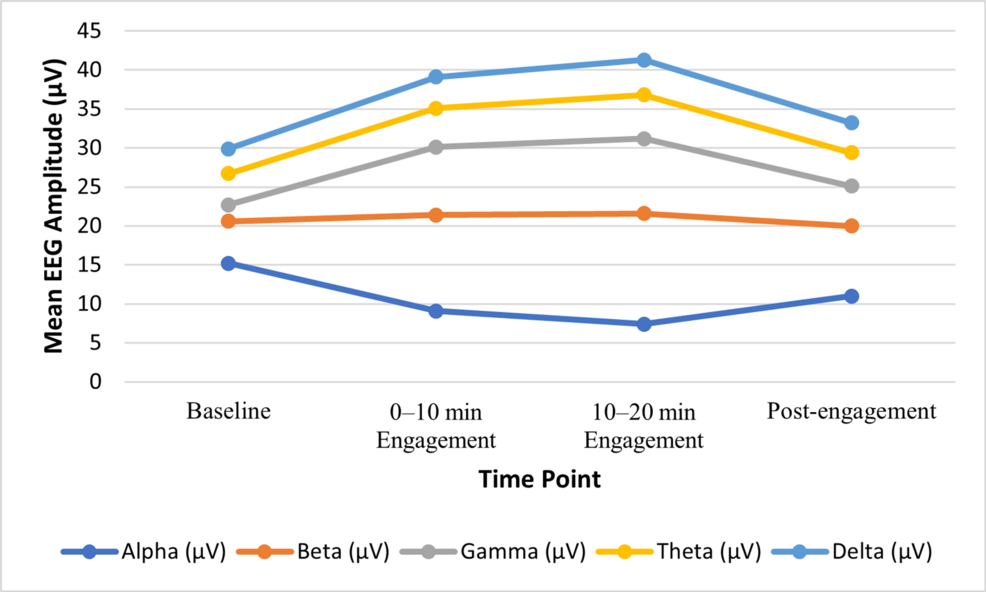
- Alpha waves (relaxation & calm focus): These waves decreased rapidly within a limited period of time. While spending time on social media, particularly on those posts that trigger emotions or involve a lot of news. Here, the recovery time (after social media disengagement) was prolonged.
- Beta and Gamma waves (attention, reward & emotional processing): These waves increase suddenly during active engagement with social media. This is triggered by activities such as scrolling, reacting, and multitasking. The spike remained elevated even after use. A similar behavior is seen in addictive behaviors.
- Theta and Delta waves (introspection & mental fatigue): These waves increased during prolonged use. Signaling the brain’s tiredness and digital overload.
Brain regions involved
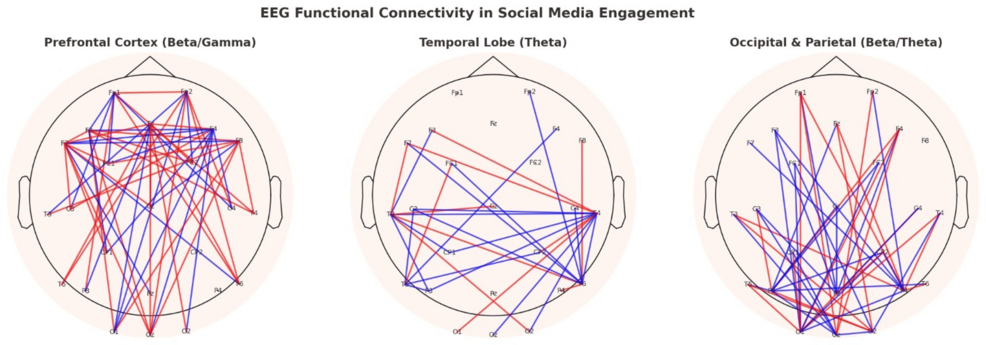
- Prefrontal cortex: Reward processing, impulsivity, affects decision-making
- Occipital lobe: Visual overload from image-heavy platforms
- Parietal lobe: Cognitive load during multitasking and app switching
Why This Matters
The study results demonstrate the effects of social media content on our brains. Social media content targets neural triggers. Seeing other people’s posts creates a risky reward situation, similar to that of cash gambling or other addictive behaviors. The more regularly you experience this stimulus, the longer the brain is constantly stimulated. This leads to a stronger impact. The tissue in the neural pathways that control attention, feelings, and even mental health will begin to degrade. The more you use your device, the bigger the impact on your brain becomes each day.
The most concerning aspect of the study was the type of content and its effects on the brain. Our brains take a longer time to recover when they consume political or crisis content. But the brain requires less recovery time when consuming light entertainment content. Alternatively, recent studies highlighting the usage of short videos over a sustained time period show that there is even higher graded Gamma brain response to rapid sequential content.
What Makes This Study Unique?
- Monitors real-time and post-engagement related brain activity.
- Contrasts findings on the brain’s response to specific content
- Detects markers on the EEG for sustained device usage and burnout.
- Integrates neuroscience with mental health and the algorithms of digital platforms.
Implications for the Future
- Brain-friendly platform design with smart break reminders
- Apps and technologies that support mental health
- Regulations to safeguard mental well-being in digital spaces
The social media platform continues to shape modern life. This study provides scientific evidence to help us understand and reduce the hidden impacts of social media on the brain.
Explore the full research article through the platforms listed below:
- Springer Nature: https://www.cureus.com/articles/380494-modern-day-high-the-neurocognitive-impact-of-social-media-usage#!/
- Pubmed: https://pmc.ncbi.nlm.nih.gov/articles/PMC12329480/