
















Deepinder Goyal Introduces Temple, Claims Better Brain Blood Flow Could Slow Ageing
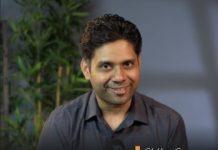
Zomato founder and CEO, Deepinder Goyal has once again grabbed the public attention! This time, not with a food tech update but for a mysterious wearable device called “Temple”, which monitors Brain Blood flow. A recent Instagram post reveals a picture of him having a small golden-coloured device placed above his right eyebrow (temple). Goyal shared a photo of that device on his Instagram, with the tagline “Temple Coming soon” and the caption “Getting there”. This sparked the internet with many questions buzzing around.
A Device that Measures Brain Blood Flow
This appearance follows months of speculation after he was first captured wearing the device. Many wondered whether it had anything to do with his unusual theory on ageing, and now Goyal has confirmed that it does. He says Temple was developed as part of his research into what he calls the “Gravity Aging Hypothesis”. This project explores his idea about how aging may be connected to brain blood flow. Temple is a compact, lightweight, and wearable device that sits near the temple region of the head, hence the name.
Goyal explained that he has been using Temple for nearly a year as a part of an ongoing research project to understand Brain blood flow.
What exactly is this Gravity Aging Hypothesis
Goyal’s hypothesis argues that standing upright and the constant downward pull of gravity can reduce blood flow to the brain. Over the years, this could accelerate aging. To test this idea, he and his team explored whether certain “inversions” positions, or exercises where the head is placed below the heart, might improve circulation to the brain. He claims their early experiments showed that using inversion tables for 10 minutes daily over six weeks resulted in a roughly 7 percent rise in average brain blood flow. According to him, this increase might offset what would typically be a decade’s worth of age-related decline.
Even if the Gravity Aging Hypothesis turns out to be incorrect, the device can still have importance, as the Brain Blood flow is already considered a meaningful biomarker for aging, overall health, longevity, and cognitive function, Goyal adds.
A Market Gimmick?
Following the hype and rapid attention, some critics have asked whether the hypothesis was invented just to market this new gadget. Goyal has strongly denied this and has described Temple not as a significant commercial venture but as a “small cute company”. He insisted that the hypothesis was developed out of sincere scientific curiosity, not as a marketing gimmick.
Excitement and Questions
So far, Goyal has not announced a launch date, scientific validation data, price, availability, or technical specifications. Experts also note that accurately measuring brain blood flow through a wearable device is exceptionally challenging. But many people online are excited about the idea of a “brain-health tracker” they can use daily.
For now, Temple remains a promising concept. Whether it becomes a mainstream health gadget or remains an experimental idea, one thing is sure: Deepinder Goyal has sparked a whole new conversation about aging, science, and wearable technology.
And everyone is waiting to see what comes next.