
















Bacteria From Frog Gut Shows Promise in Cancer Research
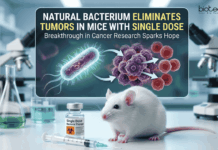
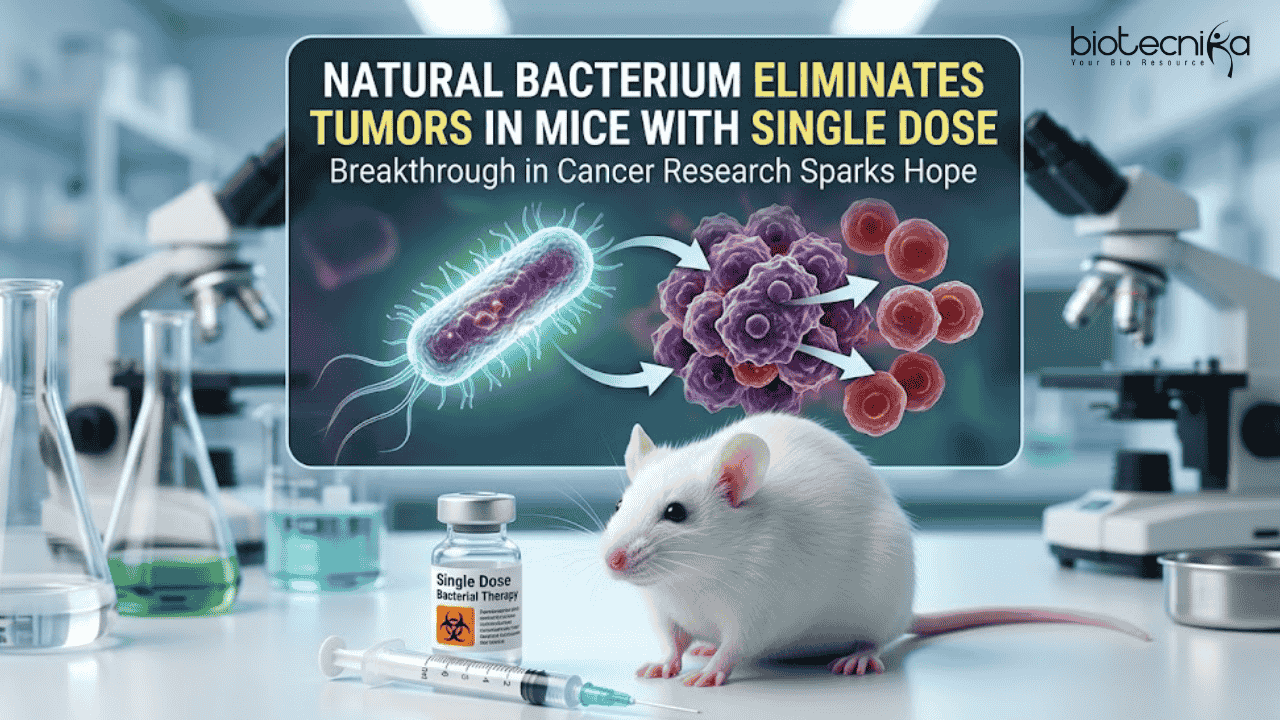
In a surprising development that could reshape the future of cancer research, scientists have identified a naturally occurring bacterium capable of completely eliminating tumors in mice with just a single dose. The discovery highlights a new and unconventional approach to cancer treatment using live microbes to directly target and destroy cancer cells.
Eijiro Miyako and the team at Japan Advanced Institute of Science and Technology explored microorganisms found in the gut of many amphibians and reptiles. Among the bunch of microbes discovered, Ewingella americana, a useful bacterial strain found in the gut of Japanese tree frogs, gained the spotlight. Published in the journal Gut Microbes, this marks an important milestone in advancing all aspects of modern cancer research.
A Unique Discovery From Amphibian Microbiota
Over the past decade, many researchers have focused on how gut microbial communities can affect cancer incidence rates. While many researchers have focused on ways to manipulate the composition of the gut microbiome via diet, probiotics, or fecal transplants. Unlike traditional methods that focused on microbial communities rather than individual strains, this study isolated individual bacteria and tested their direct effects on tumors. This targeted strategy allowed researchers to identify specific strains with strong anticancer potential.
Researchers collected 45 isolates from the gut bacteria of various amphibian and freshwater species, including the Japanese Tree Frog (Dryophytes japonicus), Japanese Pleurodeles (Cynops pyrrhogaster), and Japanese Agate Lake Turtle (Takydromus tachydromoides). From these isolates, they identified nine candidates that have the potential to exhibit anticancer effects. Ewingella americana was the most effective strain.
Tumor Eradication in Mice
In laboratory experiments involving mice with colorectal cancer, using only 1 IV injection (single dose) of E. americana resulted in 100% tumor eradication. This is an incredible success in preclinical cancer research.
This kind of tumor disappearance is rarely seen with standard treatments such as immune checkpoint therapy and chemotherapy drugs like liposomal doxorubicin. What makes this finding particularly exciting for cancer research is not just its effectiveness but also its simplicity – a one-time treatment producing dramatic results.
How the Bacteria Fights Cancer?
The study reveals that the bacterium uses two mechanisms to destroy the tumor cells. Both mechanisms are necessary for E. americana to achieve its level of efficacy:
- Direct Tumor Destruction
As a facultative anaerobe, E. americana can thrive in low-oxygen (anaerobic) environments of a tumor. As the bacterium proliferates within the tumor, it can reproduce up to 3,000 times in 24 hours, thereby causing direct damage to cancer cells.
- Immune System Activation
By activating T lymphocytes, B lymphocytes, and neutrophils, the bacteria can activate the body’s immune response. These WBCs secrete cytokines such as TNF-α and IFN-γ, creating an environment of increased inflammation that kills the cancer cells.
Due to its dual mechanisms of action, E. americana will be an essential element of a next-generation cancer research strategy.
Why Does the Bacterium Targets Tumors Specifically?
One of the most striking aspects of this discovery is its tumor specificity. E. americana selectively accumulates in cancer tissue due to:
- Hypoxic (low oxygen) tumor environments
- Immune-suppressive conditions created by cancer cells (e.g., the expression of CD47 protein produced by cancer cells creates an immunosuppressive environment)
- Leaky tumor blood vessels allow easier entry of bacteria from the bloodstream into tumor tissue.
- Unique tumor metabolic byproducts support the selective growth of bacteria, unlike normal cells.
Notably, the bacterium was absent from healthy organs, reinforcing its precision and safety. This level of precision reduces the risk of damage to normal tissues, a major limitation in many current cancer treatments.
Encouraging Safety Profile in Cancer Research
Safety comes first, especially when introducing live bacterial cells into the bloodstream. In this case, the sign is positive.
- Rapid clearance from the bloodstream within 24 hours
- No detection in major organs like liver, kidney, heart, or lungs
- Only mild, temporary inflammation resolving within 72 hours
- No long-term toxicity observed over 60 days
These findings strengthen its position as a promising candidate in advanced cancer research.
Future of Cancer Research and Treatment
While these results are highly promising, further studies are required before human application. Future directions include testing across other cancers such as breast, pancreatic, and melanoma. Future studies will also focus on the optimization of delivery methods for better safety and efficacy, and on exploring combination therapies with immunotherapy and chemotherapy
This study highlights the untapped potential of natural microbes to revolutionize cancer research. By leveraging biodiversity, scientists may unlock entirely new treatment pathways for cancers that resist current therapies.
If successful in human trials, this approach could redefine how cancer is treated, shifting from conventional methods to precision microbial therapies.