












After Infosys, Kris Gopalakrishnan Takes on the Human Brain Research
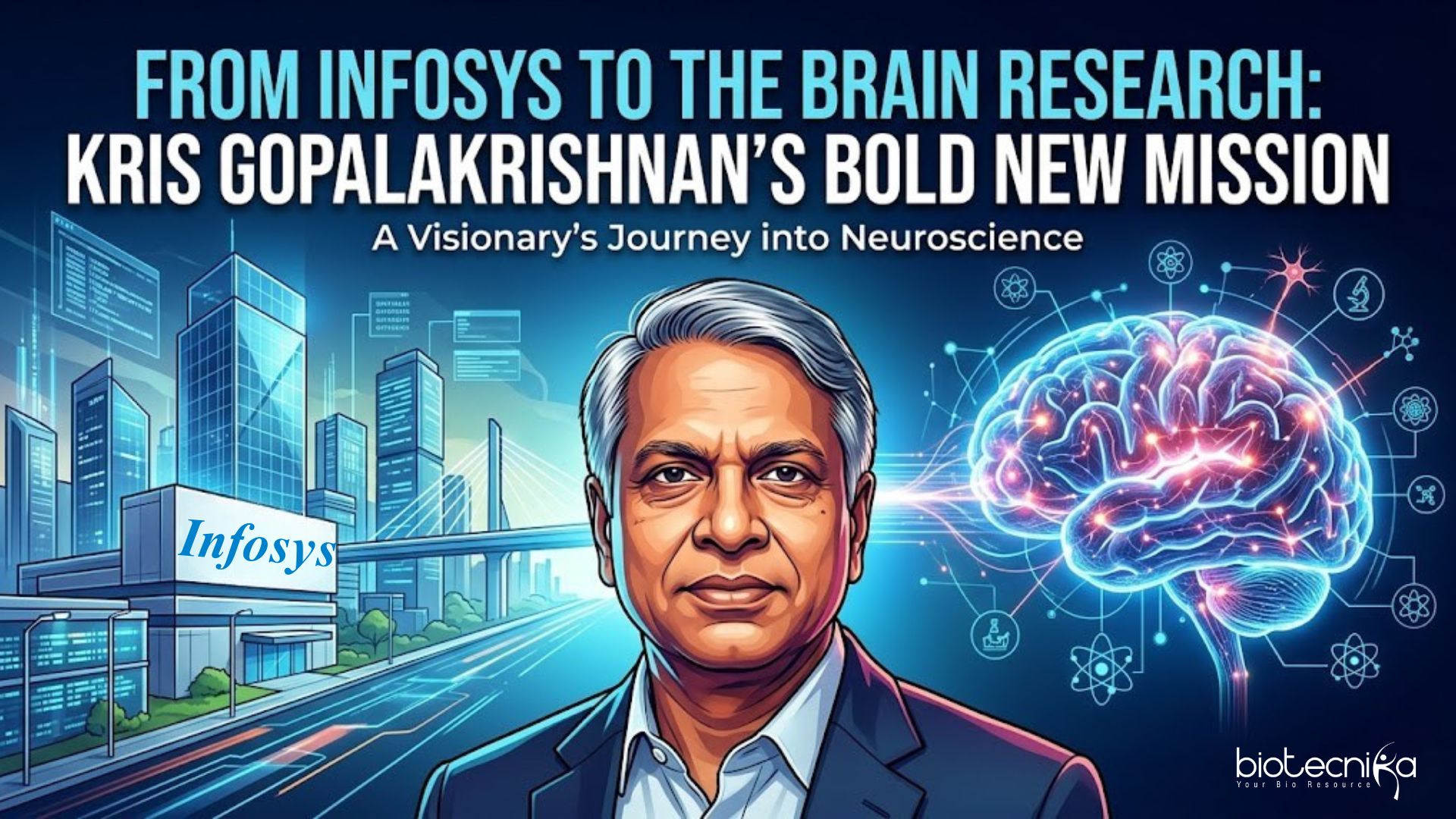
Kris Gopalakrishnan, after many years of helping build Infosys into one of India’s largest technology firms, has now turned his focus to an entirely different subject – the human brain. He is using hundreds of crores of his own money to learn more about how our brains function, including researching ways to detect Alzheimer’s and Parkinson’s diseases at the onset of these illnesses.
As a student at the Indian Institute of Technology Madras in 1977, Gopalakrishnan was inspired by Apple’s introduction of the Apple II personal computer by Steve Jobs and Steve Wozniak, because he felt it was amazing that computers were attempting to process information in a similar fashion to the human brain. The human brain weighs approximately 3 pounds (1.36 kg) and is probably the most complex and advanced organ we know of, when taking into consideration its use and ability.
Over the next 30 years, he co-founded Infosys and helped it grow into a global IT leader. He later became its CEO and saw the rapid rise of computing technology. But even after stepping down in 2014, his curiosity about the brain never went away. That’s when he decided to dedicate his time and money to brain research.
He believes that the next big breakthrough in technology will come from a better understanding of the brain. According to him, computer science itself began with the idea of understanding how humans think and trying to replicate it.
Understanding the Brain Research Like Never Before
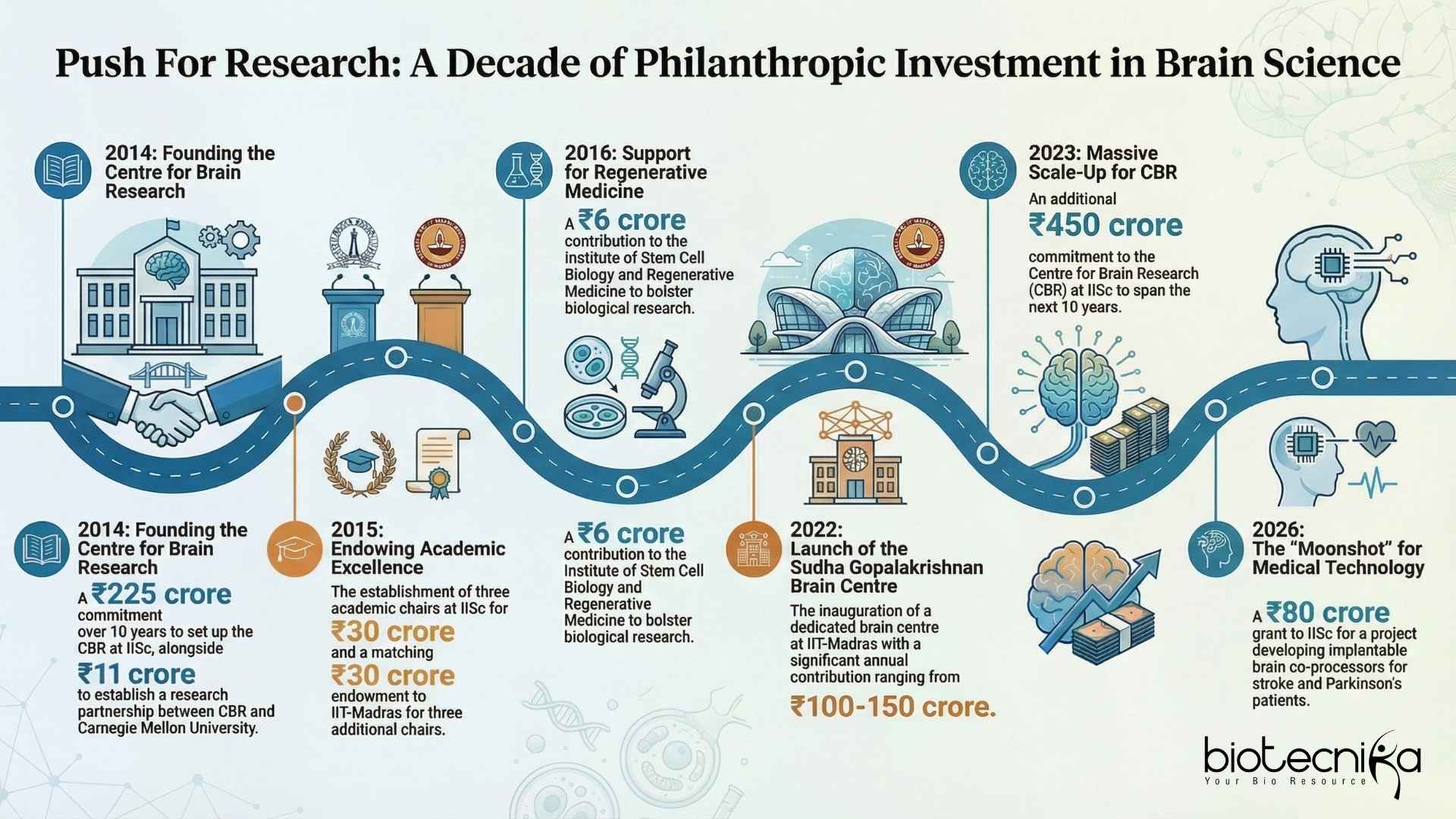
In 2014, the same year he left Infosys, Kris Gopalakrishnan donated ₹225 crore to the Indian Institute of Science (IISc) to create the Center for Brain Research (CBR). This center works on two main goals: studying brain diseases in older people and building new computing systems inspired by the brain. Later, he added ₹30 crore for research chairs and, in 2023, pledged another ₹450 crore over 10 years. This made him the largest individual donor to IISc.
He also supported his alma mater, IIT-Madras, by giving ₹30 crore in 2015 to start brain research. In 2017, he encouraged researchers there to take on a big challenge, to map the human brain at a very detailed, cellular level. This kind of mapping cannot even be done with modern MRI scans. Since the required technology did not exist, he helped fund its development along with the Government of India.
In 2022, the Sudha Gopalakrishnan Brain Center was set up at IIT-Madras, named after his wife. Both of them run the Pratiksha Trust, which supports many of these efforts. Today, he donates around ₹100–150 crore every year for brain research.
Gopalakrishnan says the brain is the most complex thing in nature, and we still don’t fully understand it. He also wants his work to help society. Diseases like Alzheimer’s, Parkinson’s, and dementia do not have cures yet. He believes that unless we understand what causes them, we won’t be able to treat them.
At IIT-Madras, scientists have already made major progress. They created a highly detailed 3D map of the fetal brain called DHARANI. It shows the brain at a microscopic level during different stages of pregnancy. This work is said to be ten times more advanced than earlier efforts by the US-based Allen Institute for Brain Science. Importantly, India has made this data publicly available for researchers around the world.
This project is now expanding to map the human brain across all stages of life and across different diseases. It is expected to help both medical research and artificial intelligence.
At IISc, the Center for Brain Research is studying how healthy people develop brain diseases over time. It is tracking people aged 45 and above. There are two groups—1,500 people from cities funded by Tata Trusts and 10,000 people from rural areas funded by the Pratiksha Trust.
Researchers are collecting detailed data, including blood samples and brain scans, to find patterns. Their goal is to identify early signs, or biomarkers, that can predict diseases before symptoms appear. They are also building AI models to study this data. This is especially important because most global research is based on Western populations, which differ from Indian genetics and lifestyles.
Recently, Gopalakrishnan’s trust and IISc also announced an ₹80 crore project to develop implantable brain chips. These chips could help restore or improve brain function in patients with conditions like epilepsy or Parkinson’s.
Thinking Long-Term: Investing in the Future
Much of this research is still in early stages and may not show results immediately. But Gopalakrishnan believes in long-term impact. He says basic research takes time, and scientists should not be pressured for quick results.
This is especially important for India, where the number of elderly people is rising quickly. By 2050, India is expected to have around 340 million older people, many of whom may face brain-related disorders.
However, India spends only about 0.6% of its GDP on brain research, which is much lower than countries like China (2.56%) and the US (3.59%). Gopalakrishnan believes India should aim for at least 3–4% if it wants to become a developed nation. He also points out that many everyday products used in India are not created by Indian companies, showing the need for stronger innovation.
He is working with the government, universities, and startups to improve research funding and turn scientific discoveries into real-world products.
His involvement has also helped attract global attention and funding. The IISc center collaborates with organizations like the UK Dementia Research Center, Gates Ventures, NIMHANS, and the Alzheimer’s Association. IIT-Madras is working with researchers from 10 countries and has received support from major investors and companies.
His approach to philanthropy is often compared to Bill Gates, who funds vaccine research. Instead of focusing only on immediate problems, both aim to build long-term solutions by strengthening systems and capabilities.
Beyond Brain Research: Giving Back to Society
Apart from brain research, Kris Gopalakrishnan also supports students through scholarships, helps farmers through non-profits like the Naandi Foundation, and works on initiatives for senior citizens. He has also created a digital platform called Itihasa to document the history of India’s IT industry.
Looking ahead, he wants to continue focusing on brain research rather than spreading his efforts too thin. He believes there is still much to learn, not just about diseases, but also about mental health, autism, and conditions like schizophrenia.
He also highlights the need for better AI systems. Currently, most AI development is controlled by a few companies in one country. He believes India should build its own models, including those for different languages.
Even though he funds these projects, Kris Gopalakrishnan does not interfere in the research. He trusts scientists to do their work and only checks in occasionally. Researchers say he is supportive but never controlling.
In the end, he believes that people who have both time and money should use them wisely—first to grow resources and then to solve real problems in society.