

















This New Innovation Turns Plastic Waste Into a Parkinson’s Treatment
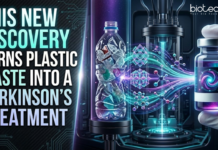
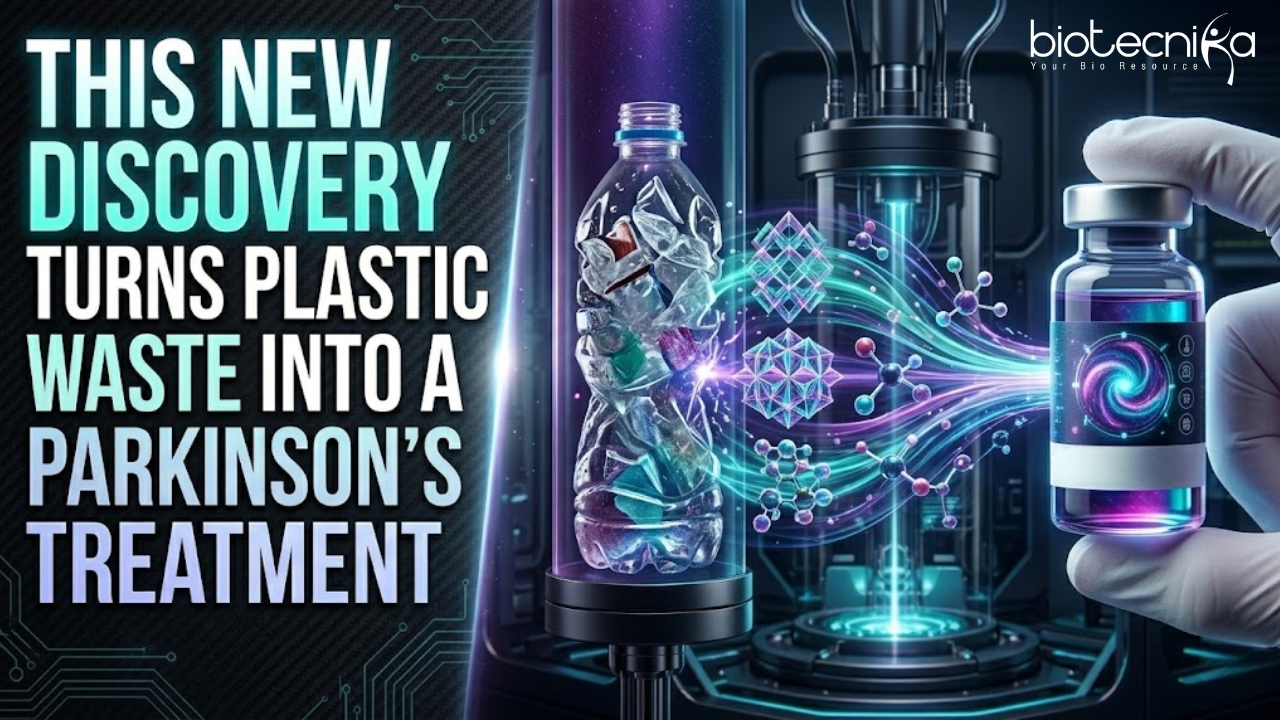
In a development that feels straight out of science fiction, Researchers at the University of Edinburgh have discovered a way to transform everyday plastic waste into a valuable medicine used to treat Parkinson’s disease. Their innovation centers on converting discarded plastic bottles into L-DOPA, one of the most widely prescribed drugs for managing the condition.
How Does The Process Work?
The innovation lies in combining chemistry with Synthetic Biology. The process begins with PET (Polyethylene Terephthalate), a common plastic found in food and drink packaging and a major contributor to global waste. This plastic is first broken down into its core building block, Terephthalic Acid, a step already achievable through existing recycling techniques.
The real innovation comes next. The Researchers engineered E. coli strains to carry out a sequence of Biological reactions. These microbes essentially act as microscopic factories, converting Terephthalic Acid into L-DOPA. By redesigning natural Biological pathways, the team has enabled bacteria to transform plastic-derived material into a clinically important drug.
This marks the first time such a Biological system has been adapted to produce a treatment for a Neurological condition directly from plastic waste.
A Sustainable Solution to Plastic Waste
What makes this approach particularly significant is its environmental impact. Traditional Pharmaceutical production often relies on fossil fuels and energy-intensive Chemical processes. In contrast, this method uses discarded plastic as its starting point and harnesses Biological systems to complete the transformation.
This shift reduces reliance on non-renewable resources while also tackling the growing issue of plastic pollution. Instead of allowing PET waste to accumulate in landfills or oceans, the process gives it a second life as a valuable Medical resource. It represents a move beyond conventional recycling toward a more advanced concept known as “bio-upcycling.”
Past Recycling: A New Industry
The implications of this innovation extend far beyond a single drug. Researchers believe the same principles could be applied to convert plastic waste into a wide range of high-value products. These could include Medicines, fragrances, and industrial Chemicals, potentially giving rise to an entirely new Bio-based manufacturing sector.
Such an approach could fundamentally change how industries view plastic waste, not as a disposal problem, but as a raw material for innovation. By integrating Biotechnology with waste management, this method could create new Economic opportunities while reducing Environmental harm.
What Comes Next?
So far, the team has successfully demonstrated the production of L-DOPA at a meaningful scale in laboratory conditions. While promising, the technology is still in its early stages. The next challenge is to refine the process to make it more efficient, scalable, and cost-effective for industrial use.
The findings, published in Nature Sustainability, highlight how advances in Engineering Biology can simultaneously address two major global challenges: plastic pollution and sustainable manufacturing. With further development, this approach could reshape both the Pharmaceutical industry and global recycling systems.
In simple terms, what was once considered worthless plastic waste may soon become a powerful resource. Instead of polluting the planet, discarded bottles could one day help produce life-changing treatments, offering a glimpse into a future where sustainability and Science work hand in hand.