














Dead Bacteria Brought Back to Life Using Synthetic Biology
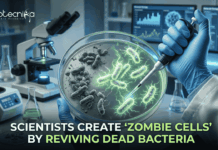
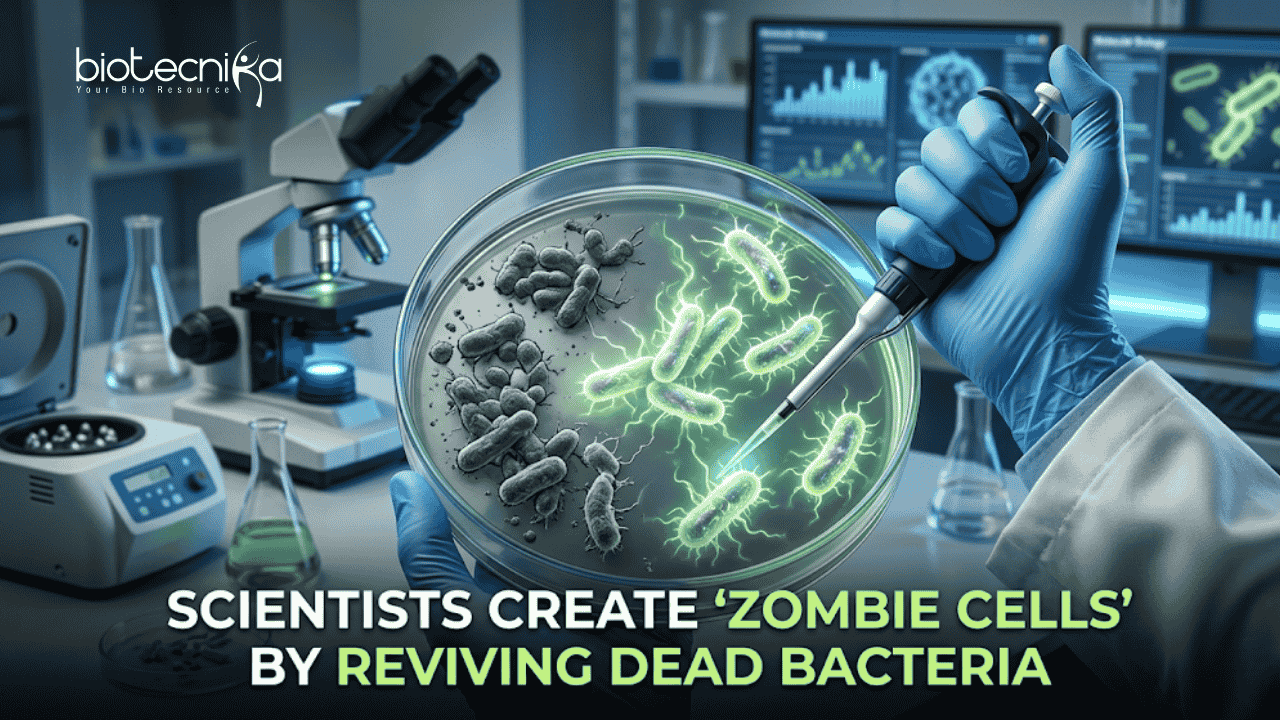
Scientists have created something called “Zombie cells”, using synthetic biology. The dead bacterial cells have been revived by inserting a complete genome from another species. These zombie cells are the first living synthetic cells developed from non-living parts. This approach can open the door to engineered microbes that are capable of producing drugs, sustainable fuels, or even generating eco-friendly raw materials.
Synthetic Biology involves modifying an existing organism/ function, or creating a new one, to introduce desirable characteristics or functions. Many studies have shown positive results in bringing in a new trait into an existing organism. One such example is the 2010 study in which the researchers synthesised a bacterial genome and transferred it into a living cell. This was called the first synthetic cell.
The Surprising Approach
Since the bacteria are known to take up genetic material from the external environment and effortlessly integrate it into their existing genome, the scientists weren’t sure if the cells were maintained by the synthetic genome or if there was any influence from the living cell. To answer this, John Glass and his colleagues at the J. Craig Venter Institute in California tried a different approach by killing the host cells or their genome. The team worked with the bacterium Mycoplasma capricolum and treated it with a common chemotherapy drug, Mitomycin C. The chemical damaged the bacterial DNA, leaving the cells metabolically active but unable to reproduce. In simple terms, the cells looked alive but were functionally dead, serving as blank templates to accept the new genome.
Injecting a New Blueprint
Next, they transplanted a fully synthetic genome from a related species, Mycoplasma mycoides, into the dead cells, using a technique called whole-genome transplantation. Some of these treated bacteria began to grow and divide normally. Genetic tests confirmed that the synthetic genome was fully controlling their functions. The result? Living cells constructed entirely from non-living components, effectively resurrected through synthetic biology.
A Leap in Synthetic Biology
“By taking a cell without a genome and adding a new one, we can resurrect it,” Glass explained. Previous synthetic biology experiments struggled because bacteria could mix their own DNA with engineered sequences, making it difficult to ensure the synthetic genome truly governed the cell. This new approach overcomes that problem, offering a more reliable and predictable method for building custom organisms.
Redefining Life Itself
The work also challenges long-held definitions of life. At the start, recipient cells cannot replicate or carry out normal metabolic processes. Elizabeth Strychalski of the National Institute of Standards and Technology noted that this experiment highlights life as a set of processes rather than a fixed state. “It makes us think about which cellular functions are truly essential for achieving our goals,” she said.
Looking Beyond Mycoplasma
While the study focused on Mycoplasma, the researchers hope to extend the technique to other microbes, including E. coli and yeast. These organisms have larger genomes and protective cell walls, which make transplantation more complex, but Glass is optimistic. Harvard’s Akos Nyerges emphasized that this method could make genome transfer more predictable, paving the way for applications in drug development, bio-manufacturing, and environmental remediation. Safety remains a priority: the bacteria used are pathogenic to goats and cattle, but the modifications do not increase virulence, and standard lab practices minimize any risk.
These “zombie” cells demonstrate that life can, in some sense, be rebooted. Beyond the technical achievement, they offer a glimpse into a future where scientists can design organisms to perform precise tasks, from producing therapeutic drugs to removing pollutants. By bridging the boundary between life and non-life, this work may redefine what is possible in synthetic biology, showing that with the right tools, even death is not necessarily the end.