



















Scientists Create Milk Plastic That Supports Biodegradable Packaging
Plastic pollution is a serious and urgent environmental issue that requires immediate attention. Plastics have been exploited in all forms and have become part and parcel of our lives. From packaging to showpieces, consumables to storage, plastics are everywhere. Conventional plastics take years to degrade and end up in landfills, water bodies, and soil, harming ecosystems and living beings. To address this prevailing condition, many researchers are developing innovative products, such as sustainable plastic alternatives for biodegradable packaging and other applications, that are eco-friendly.
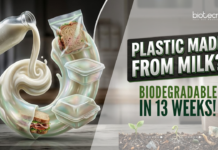
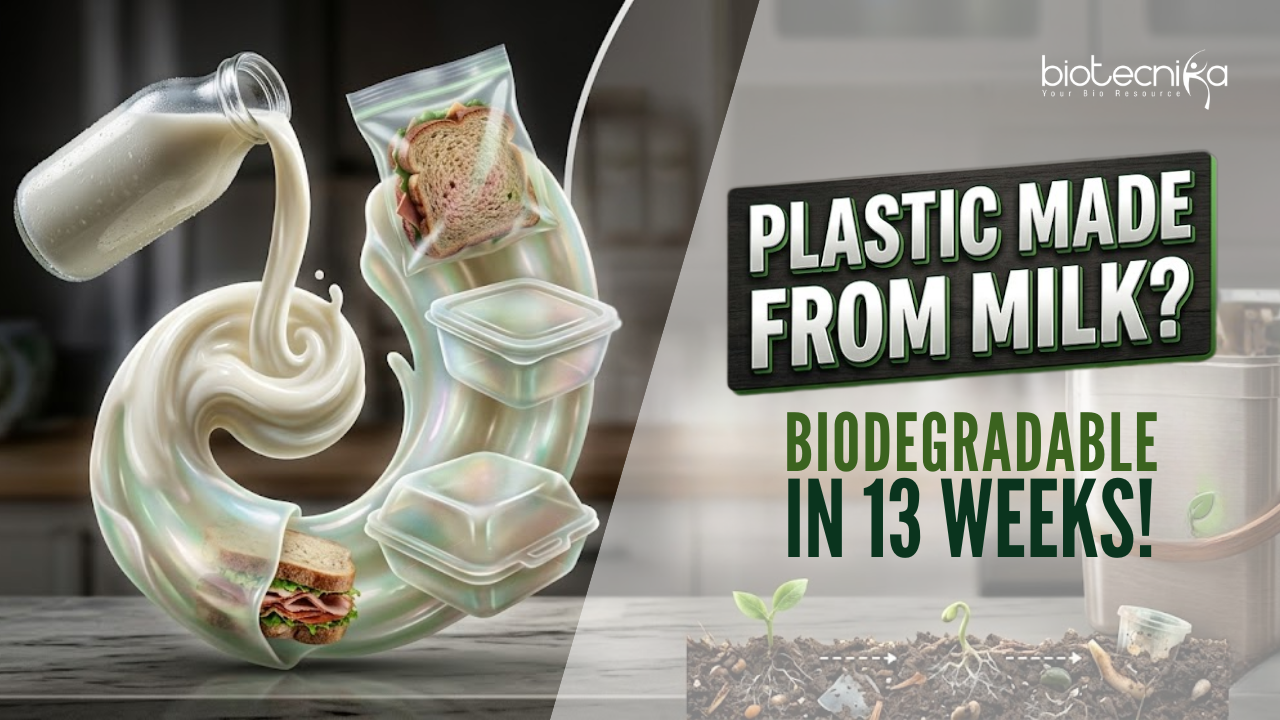
Researchers from Flinders University in South Australia have created an eco-friendly plastic that naturally decomposes in soil within 13 weeks. This discovery could help reduce the growing problem of plastic pollution worldwide and may also support the development of biodegradable packaging solutions. According to the Global Environmental Organisation Index (2024), more than 120,000 environmental NGOs are officially registered worldwide. Among different types of pollution, plastic waste is one of the most serious issues. This innovation could become an important step toward creating practical biodegradable packaging for everyday use.
How is This Plastic Made?
The new material is created using milk protein. Scientists extracted calcium caseinate, a protein found in milk, which contains about 92% protein. This protein forms the primary component of the plastic and plays a key role in producing sustainable, biodegradable packaging materials.
To make the material strong enough for packaging, the researchers added modified starch and bentonite nanoclay. These ingredients act as a support structure, giving the film strength so it can withstand weight and pressure. They also used glycerol and polyvinyl alcohol to keep the material flexible and prevent it from becoming brittle when it dries.
How Does the Plastic Break Down?
Unlike traditional plastic, which can remain in nature for centuries, this milk-based plastic breaks down quickly in soil. The main ingredients being milk protein and starch, serve as food for soil microorganisms. These tiny organisms slowly consume the material and break the bonds that hold the plastic together. This natural process is what makes the material suitable for biodegradable packaging that does not harm the environment.
Biodegradable Packaging Breakdown: What Happens During the 13 weeks?
- Week 1 to 4: The plastic film begins to absorb moisture from the soil. As it becomes softer, microorganisms begin to enter the material.
- Week 5 to 8: The structure of the plastic becomes weaker. The bentonite clay starts separating as the protein structure breaks down.
- Weeks 9 to 13: The material continues to fragment and gradually disappears. By the end of 13 weeks, laboratory tests showed that the plastic had completely decomposed without leaving harmful microplastics behind. This makes it a promising option for future biodegradable packaging solutions.
Global Collaboration on Bioplastics
This research was carried out by scientists from Flinders University in Australia, along with experts from the Universidad de Bogotá Jorge Tadeo Lozano in Colombia. The researchers say the material is affordable and strong enough for use in industrial machines, which means companies could adopt it for packaging in the future.
According to the team, using natural and inexpensive ingredients could help industries shift away from petroleum-based plastics and move toward more environmentally friendly solutions. With further development, innovations like this could make biodegradable packaging a common choice for businesses and consumers.