


















How Cats Are Quietly Revolutionizing Cancer Research
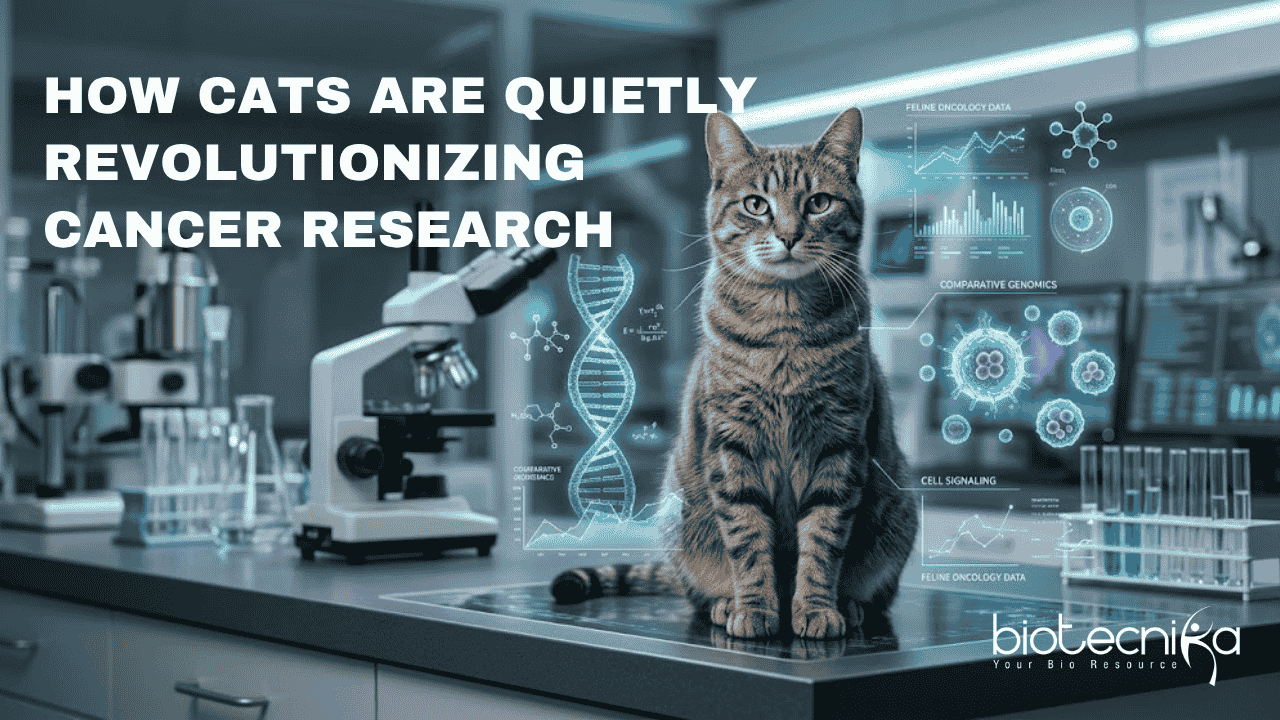
The relationship of humans with cats has been there for a long period of time. Even now, we will find them in many houses as beloved pets playing on their couches or boxes or chasing off a sunbeam from one room to another. But here’s some fascinating news: now the scientific community is claiming that these cats might have that missing link for cancer treatment.
A new study performed for the very first time on feline cancer has laid out their complete genome. This has provided the researcher with insights on exactly how the tumors are formed in domestic cats. Here comes the twist: they discovered that several of the genetic mutations responsible for cancer in cats are also the same as in humans and dogs. This has laid the conclusion of how different species are all having the same codes of instructions for the tumor formations regardless.
How the mapping of the feline genome to advanced cancer research happened
Even though cats have been one of the most beloved and commonly found pets in the world, research on their cancer genome has been very limited and has always been a matter of question. But this has recently changed when the research teams from the different universities took part to uncover this mystery. The universities include the Wellcome Sanger Institute, the University of Guelph, and the University of Bern. They are the ones who took it upon themselves to correct this.
The researchers took about 500 samples of domestic cats from 5 different countries. Once these samples were collected, they were then sequenced to get to the exact point that is responsible for the tumor formation. These results showed how the particular genetic mutations work as the driver and are responsible for corrupting the healthy cells into cancerous cells. Through this research, they have obtained the largest and most detailed collection on domestic animals in the field of cancer research.
Through their research they have uncovered that the gene FBXW7, which is known to be present in humans for breast cancers, was found in more than half of the feline mammary tumors that were examined. This gene has been associated with breast cancer in humans and was known to have very fatal effects if any modifications were made. This correlation between both the human and the feline cancer is hard to ignore due to the same gene. In short, we can clearly see that a lot of cancer biology is found to be similar across different species. Or you can take an instance of how different instruments play the same underlying tune. This finding in the future holds the key that can greatly reshape how we work on cancer research going forward.
What is the future of cancer research and its treatment?
The study showed many similarities between both the human and feline cancers, which could actually be taken as a positive and practical response for future treatment. Currently the studies in the labs, which were performed on the collected samples, showed that a few of the chemotherapy drugs seem to work better on the feline mammary tumors that were carrying the FBXW7 mutation, causing genes. Though these studies are still in their early stages, they reflect how, in the future, with their help, we can customize new treatments based on their genetic profiles. This is surely going to change the flow of translational cancer research.
There’s one more important reason to take domestic cats as the study material: they will directly provide insight into how the surrounding environment affects cancer tumor formation. Unlike lab-grown animals, they are raised in the vicinity of the human home, utilizing the same environment as well as chemicals as them. Thus, we can assume that studying cancer research on domestic cats has more potential in the advancement of cancer research, as they provide the real-time window on how certain lifestyles may be the trigger of cancer tumor formation. This will not only be beneficial for the veterinarian but also for human cancer research.
The research reflects a growing scientific philosophy known as One Medicine, the idea that human and veterinary medicine are deeply connected. By studying diseases across species, scientists can uncover patterns that might otherwise remain hidden, fueling progress in cancer research across multiple species.
For now, the discovery marks an important step forward. What began as an effort to better understand cancer in cats may ultimately help shape new approaches to treating the disease in both pets and people, proving that sometimes, answers to human health challenges may be quietly sitting beside us on the sofa.