
















AI Use in Drug Discovery Sees Rising Global Investment
India’s pharmaceutical industry is undergoing a quiet but significant shift. Long known as the “pharmacy of the world” for its strength in generic medicines, the sector is now pushing deeper into innovation, and artificial intelligence is emerging as a critical tool in that journey. The growing focus on AI in drug discovery is becoming central to this transformation.
Global Push for AI in Drug Development
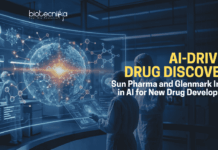
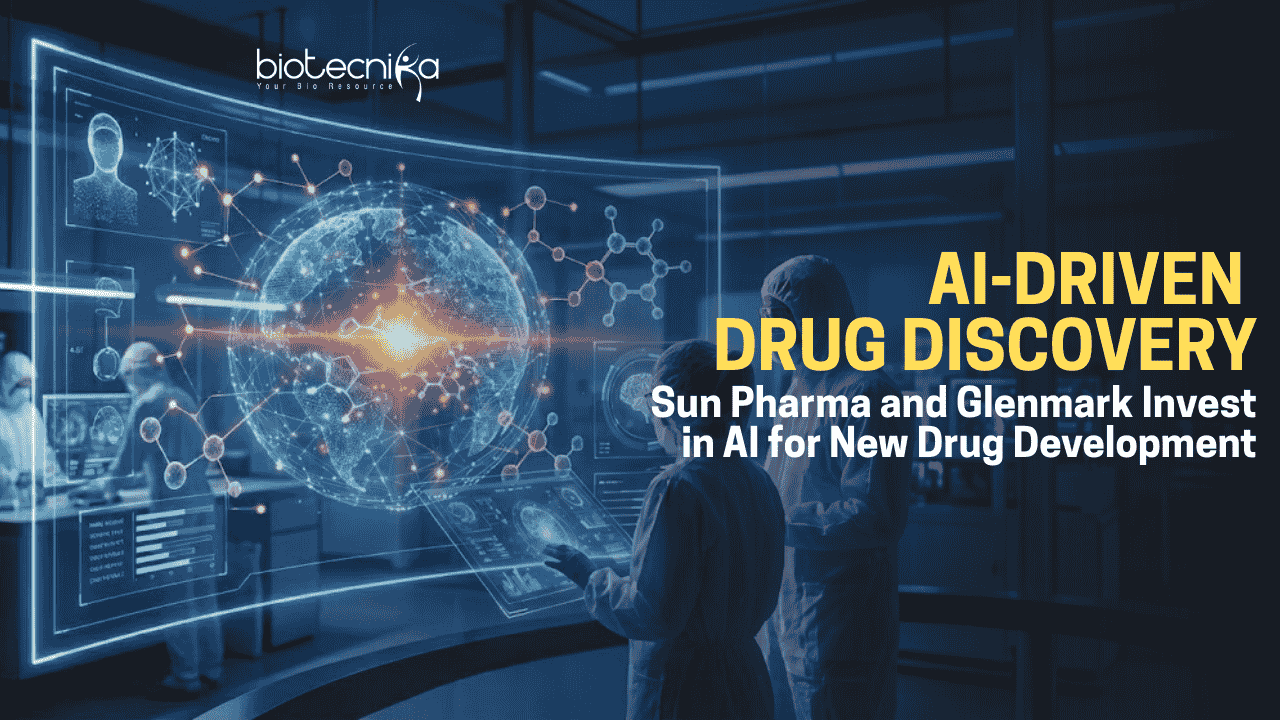
Leading companies, such as Sun Pharma and Glenmark Pharma, are exploring how AI can reduce the time and cost of developing new drugs. The move reflects a broader global trend. Drug makers worldwide invested nearly $6.93 billion in AI-driven drug discovery last year, a figure projected to more than double to $16.5 billion by 2034. For Indian firms looking to compete globally in innovative therapies, staying on the sidelines is no longer an option.
How Leading Companies Are Using AI?
At Sun Pharma, which reported revenues of ₹52,041 crore last year, innovative and specialty products already contribute about 20% of total revenue. Chairman Dilip Shanghvi has indicated that the company is seriously evaluating how AI can strengthen its research capabilities and accelerate drug development. The focus is not just on adopting new technology for its own sake, but on compressing timelines, particularly in late-stage clinical trials and regulatory filings, which can take up to a year and a half to complete.
Glenmark is taking a similar approach, though with a sharper near-term focus on small-molecule, chemistry-based drug discovery. According to Chairman Glenn Saldanha, AI in drug discovery is likely to have its immediate impact in analyzing complex clinical trial data and refining molecular modeling and drug design. He noted that Biologics may take longer to see comparable benefits, but AI is expected to play an expanding role across the research cycle.
Speed as the New Competitive Advantage
The strategy appears to be yielding results. Last year, Glenmark’s subsidiary entered into a landmark $1.9 billion out-licensing agreement with US-based AbbVie for a multiple myeloma treatment candidate. The deal included a $700 million upfront payment, highlighting the growing global expectations for innovative assets emerging from Indian labs.
For pharmaceutical companies, time is more than money, it is a competitive advantage. Bringing a drug to market even a year earlier can extend its effective patent life and significantly boost revenues. AI in drug discovery promises to reduce trial-and-error processes, speed up patient recruitment, and streamline data analysis, rather than replacing scientists altogether.
As global competition intensifies, Indian pharma companies recognize that the future will be defined not just by manufacturing scale but also by research speed and depth of innovation. Artificial intelligence may not invent the next breakthrough drug on its own, but it could well determine who brings it to patients first.