





















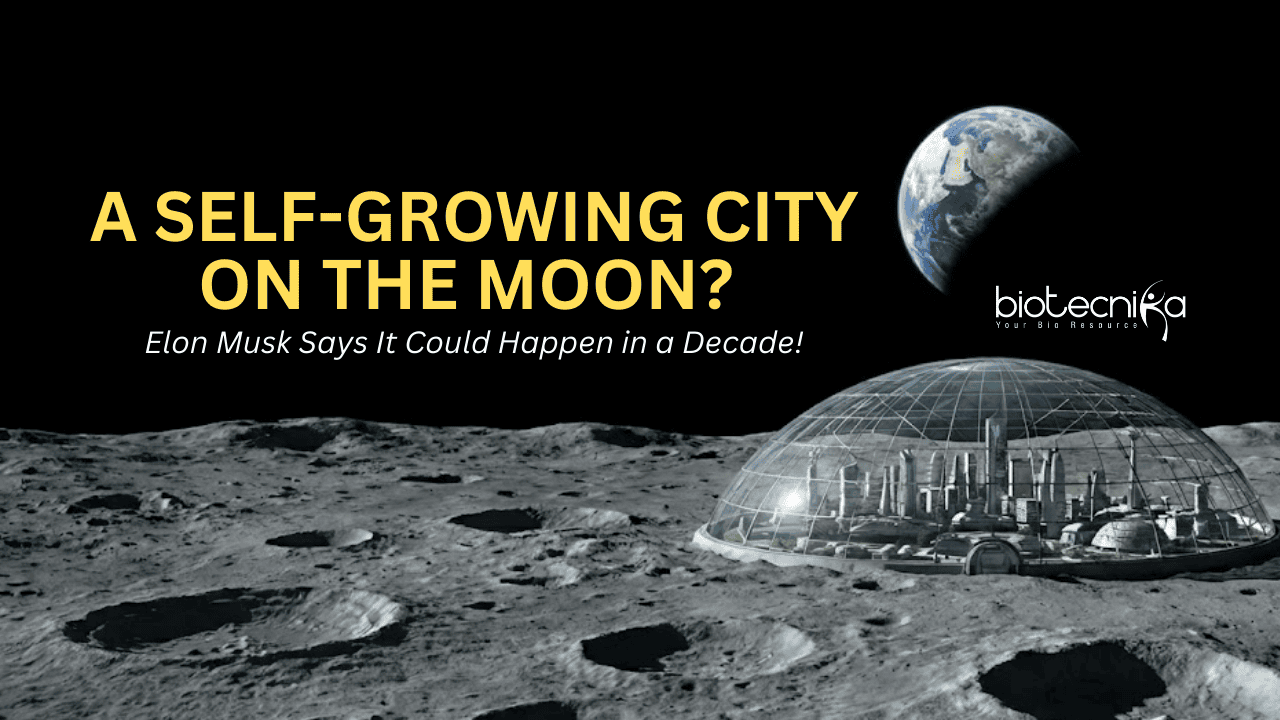
SpaceX Shifts Focus to Building a Self-Growing City on the Moon
For years, Elon Musk spoke about Mars the way explorers once spoke about the New World: bold, distant, and inevitable. He never had an eye on the Moon and considered it “a distraction”. But now, in a surprising pivot, SpaceX says its top priority is building a “self-growing city” on the Moon and doing so in less than a decade.
Yes, the Moon.
According to Musk, while the long-term dream of a city on Mars is still alive, potentially within five to seven years, the faster and more urgent step is securing civilization’s future on our closest celestial neighbor. According to reports, SpaceX Starship aims to conduct an uncrewed lunar landing as early as March 2027.
So What Exactly is a “Self-Growing City”?
Think of it less like astronauts planting flags and more like planting a seed, a technological seed. Instead of sending thousands of people immediately, SpaceX could deploy autonomous robots, AI-driven systems, and machines capable of using lunar soil and ice to build infrastructure. Imagine construction crews that don’t need oxygen, don’t sleep, and don’t complain about radiation. A city that slowly expands itself, piece by piece, long before humans arrive in large numbers.
While the U.S is racing with China to send humans to the Moon this decade, the timing of the shift is not random. No one stepped on the lunar surface since Apollo 17 in 1972. The Moon is no longer just symbolic; it’s strategic. It’s closer, more achievable, and politically urgent.
This is just the beginning, and layered with another story, and it’s powered by artificial intelligence.
SpaceX and AI
SpaceX recently deepened its ties with Musk’s AI company, xAI, in a move that highlights a bigger vision. As AI systems demand enormous computing power, Musk has floated the idea of space–based data centers. These facilities are powered by abundant solar energy in orbit. A lunar base could eventually support that infrastructure. In that sense, the Moon isn’t just a stepping stone to Mars, it could become a backbone for AI and global communications.
Financially, SpaceX is stronger than ever. Valued at nearly $1 trillion, with Starlink generating the bulk of its revenue, the company is far less dependent on NASA than it once was. Musk even noted that NASA contracts will account for less than 5% of revenue this year. This gives SpaceX room to pursue bold, independent ambitions.
Still, there’s a familiar question floating over this announcement, the timelines. Musk is well known for setting unrealistic deadlines that often stretch. From self-driving cars to Mars launch targets, reality has frequently moved more slowly than ambition.
Not sure whether this lunar city will rise in eight or fifteen years. The narrative has changed, and that is clear.
Mars may still be the dream.
But the Moon has suddenly become the frontline.
And if civilization’s backup plan is being built, it might start just 384,000 kilometers away.