
















Are Scientists Closer to Growing a Brain? The Organoid Breakthrough Explained
If someone had said this a decade ago, it might have sounded impossible: growing a brain in a lab. What once belonged only to science fiction is now quietly unfolding inside real laboratories. But thanks to rapid advances in stem cell research and the development of organoids, scientists are now closer than ever to building realistic models of the human brain.
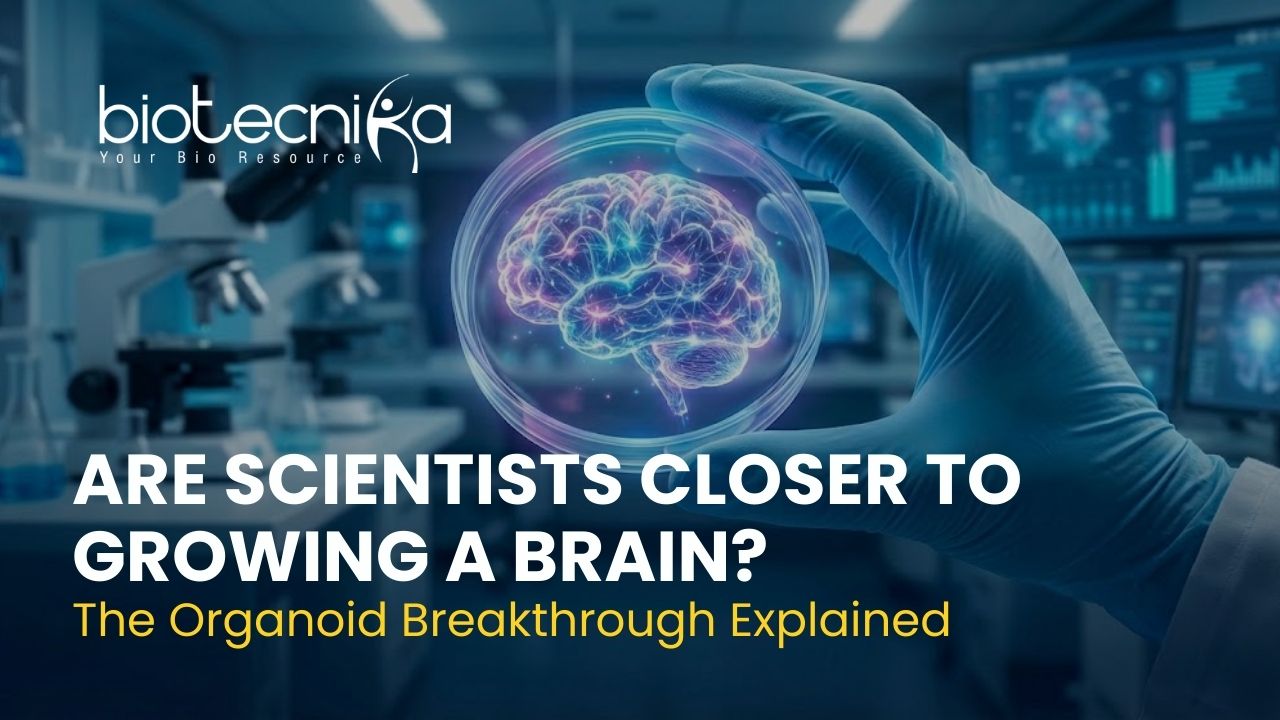
Before you imagine a fully functioning brain with thoughts and memories, let’s pause. What researchers are growing are brain organoids, tiny, three-dimensional structures made from human stem cells. Think of them as miniature versions of specific brain regions. They don’t think. They aren’t conscious. But they behave enough like early-stage human brain tissue to help scientists study how our brains develop and what goes wrong in disease.
Until now, these organoids had a major limitation. Imagine trying to grow a city without plumbing. No water supply. No waste removal. Eventually, everything collapses. That’s essentially what was happening inside lab-grown brain organoids. They lacked blood vessels, the essential “plumbing system” that carries oxygen and nutrients in real brains. Without that supply network, cells deep inside the structure would begin to die.
In this latest breakthrough, researchers tackled that exact problem. Using stem cell research techniques, they grew two different components separately: one set of organoids that formed brain-like tissue and another that developed into vessel-like structures. When combined, something remarkable happened. The vessel structures began spreading into the brain organoids, forming hollow, tube-like networks similar to real blood vessels.
This is important because blood vessels don’t just deliver nutrients. In the human brain, they are part of a highly selective shield known as the blood-brain barrier. This barrier carefully controls what enters and leaves the brain. Creating organoids with vessel networks brings scientists one step closer to mimicking how the human brain truly functions during development.
So why does this matter beyond the lab?
More realistic organoids mean better models for studying neurological disorders like autism, Alzheimer’s disease, epilepsy, and schizophrenia. Scientists could test new drugs on lab-grown brain tissue that behaves more like the real thing. In the future, patient-derived stem cells could even allow personalized disease modeling, studying how a specific individual’s brain cells respond to treatment.
But it’s important not to overstate the breakthrough. These organoids do not have real blood circulation. There is no heart pumping blood through them. They are not capable of thought, memory, or awareness. Experts emphasize that we are still far from growing a complete, functional human brain.
Still, the progress is undeniable. Each improvement in stem cell research and organoid technology adds another piece to the puzzle. Scientists are not building consciousness in a dish; they are building better tools to understand one of the most complex organs in the human body. And in science, sometimes building better tools is the real breakthrough.