





















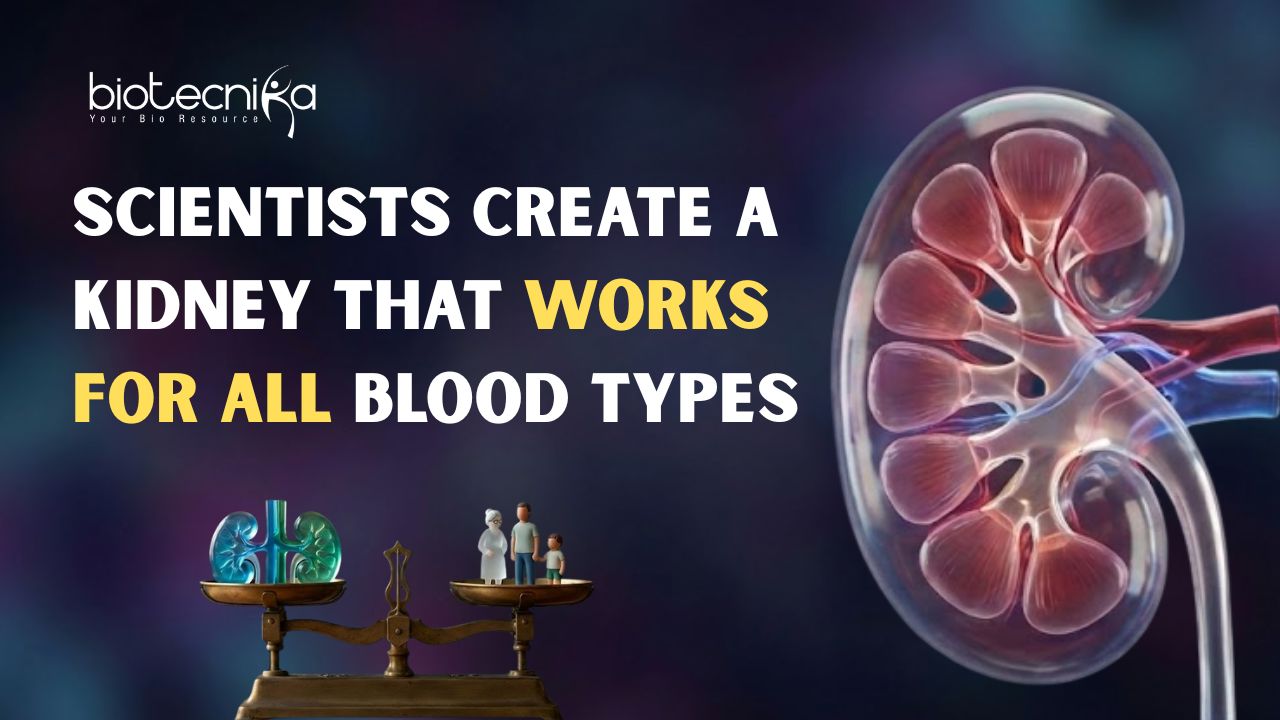
One Kidney for All Blood Types
Scientists may be closer than ever to a breakthrough that could change kidney transplants. For the first time, researchers have created a “universal” kidney that could, in theory, match any blood type. This could dramatically reduce waiting times for patients and save countless lives.
A team of scientists from Canada and China reported last year that they successfully tested a kidney in the body of a brain-dead donor, with the family’s consent. The organ survived and functioned for several days, suggesting that the concept may one day be applicable to living patients.
“This is the first time we’ve seen this play out in a human model,” said biochemist Stephen Withers from the University of British Columbia. “It gives us invaluable insight into how to improve long-term outcomes.”
Why Blood Type Matters So Much?
Currently, people with Type O blood face the longest wait for a kidney. Type O kidneys are in high demand because they can be used in recipients with other blood types, but they are limited in supply. Existing methods to use kidneys from different blood types involve preparing the recipient’s body to accept the organ. These procedures are slow, expensive, risky, and usually require a living donor.
Rewriting the Organ’s Identity
The new research takes a different approach. Scientists used special enzymes to convert a Type A kidney into a Type O kidney. These enzymes remove sugar molecules, called antigens, that mark the kidney as Type A. Think of it like stripping red paint off a car to reveal a neutral primer underneath. Once these antigens are removed, the immune system no longer sees the kidney as foreign.
However, challenges remain. By the third day, the kidney began to show Type A markers again, triggering an immune response. Still, the reaction was milder than usual, and early signs indicated that the body was attempting to accept the kidney.
Scientists see this as proof of concept, not a failure!
Why This Could Transform Kidney Donation?
If perfected, this technology could revolutionize kidney transplantation:
- More kidneys can be used, reducing organ wastage.
- Waiting times could drop, especially for blood group O patients
- Rather than favoring certain blood types, the transplantation of kidneys can be distributed equally
- Health systems could save lives at scale
The need for this research is urgent. In the U.S. alone, 11 people die every day while waiting for a kidney transplant. Most are waiting for Type O kidneys. Scientists are exploring other solutions, too, such as using pig kidneys and new antibodies, but a universal human kidney could make the greatest difference.
“This is what it looks like when years of basic science finally connect to patient care,” said Withers. “Seeing our discoveries edge closer to real-world impact is what keeps us pushing forward.”