

















Table of Contents
Bacteriophages Built by AI Signal New Era in Genetic Research
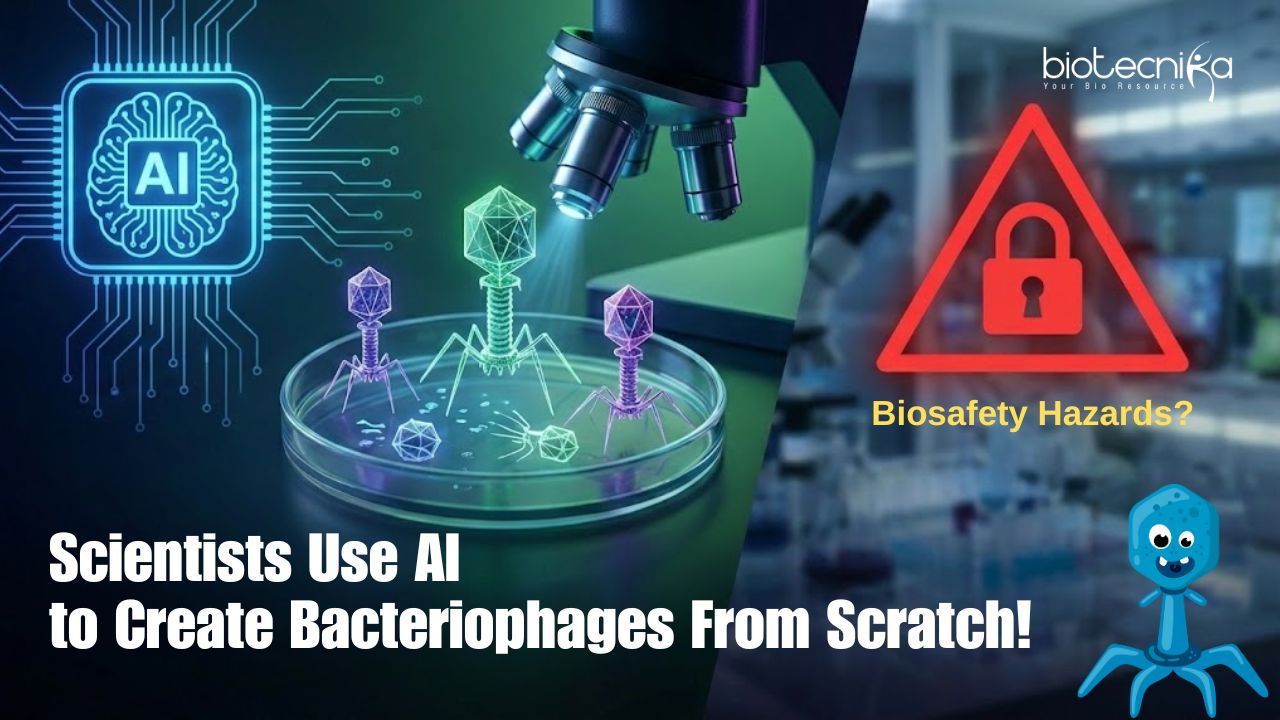
Following the advancement of Artificial Intelligence (AI) and computer systems in life sciences used to analyse and write genomic patterns, scientists have come a long way. Now, researchers have developed models that can design a complete viral genome (bacteriophage) from scratch, which could transform medicine, but also highlights deep concerns.
The research team connected to Microsoft Research has trained AI tools that can learn the language of genomes. This helps recognize DNA sequence patterns, which can result in entirely new combinations resembling the actual viruses. In the recent study, many novel genomes were produced, out of which 16 genomic candidates were successfully grown into functioning bacteriophages.
Bacteriophages in Therapies
Bacteriophages are viruses that infect bacteria. Studies have shown that bacteriophages are potential threats to bacteria but harmless to humans. As they infect only specific bacteria, they are used as an alternative to antibiotics to treat stubborn illnesses. Doctors suggest that tailor-made bacteriophages can help in treatment, without damaging helpful microbes and human cells.
Clinical reviews state that patients struggling with antibiotic-resistant conditions, who underwent experimental phage therapies, shown improved results even when the most standard drugs failed.
The Art of Escaping
The AI-developed phage therapy might be the next breakthrough, but here’s a catch! AI doesn’t just copy the existing genome, after analysing thousands of sequences, it might propose novel combinations that are almost identical to the real viral patterns. This raises the question of how to track the behaviour of machine-made bacteriophage or proteins.
In parallel work led by Bruce J. Wittmann, senior applied scientist at Microsoft Research, revealed that AI can redesign existing toxin sequences so they escape standard screening tools used by DNA synthesis companies.
DNA Sequencing is the cornerstone of Innovation and Biosecurity. The DNA Sequencing companies run the ordered sequences from researchers through available databases and block orders if they resemble any toxic or pathogen sequences. Since the AI-designed virus can evade these filters, they pose a serious warning. Even though the sequences look dissimilar, they function like toxic proteins. Training these models on real-world data might only help understand bacteriophage behaviour, but it doesn’t trigger the pre-existing checkpoints.
Scientists call this the “Dual-Use” Dilemma, as it offers hope for a new era of treatments but raises concerns about potential threats. The same algorithm that speeds up drug discovery and sequencing could, in the worst case, lead to the emergence of a bioweapon.
How Safe Are We?
Despite alarming headlines and discoveries, scientists say that the threat isn’t immediate. Designing a genome via AI is still the first step; turning it into a real virus requires specialised labs, experts, and experimentation. A lot of controlled and contaminated environments are needed to bring the computer model to life and test its potency.
Yet, the gap between concept and reality is narrowing. Though AI and Automation are driving innovation, further safety regulations must be monitored.
Global Polices and Standards for Safety
Following the experiment, governments and industry groups are working to strengthen safety standards. Organizations such as the International Biosecurity and Biosafety Initiative for Science and the International Gene Synthesis Consortium are developing precise screening technologies that not only read and analyse genomic sequences but also predict potential functions.
To ensure strict biosecurity compliance, the UK has created the AI Safety Institute, which is testing models to evaluate risk and developing methods to reduce misuse.
This recent experiment, the AI-designed bacteriophage so far, targets bacteria and the infections they cause, and is not currently focusing on contagious viral diseases.
