














Table of Contents
How Space Turned Ordinary Phages into Better Bacteria Killers
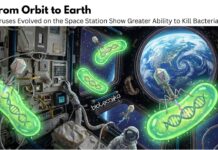
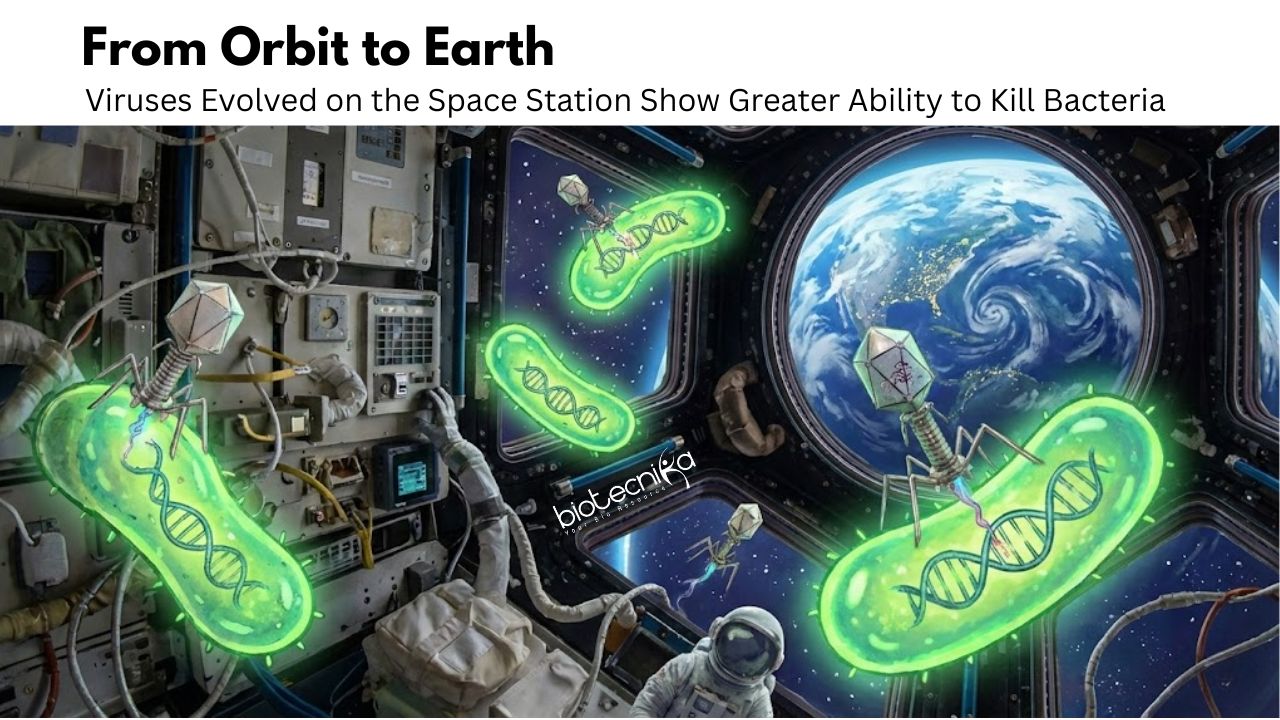
Space always amazes us with some or the other events, this time it is space microbiology. Scientists have discovered that the viruses and bacteria developed new survival mechanisms in microgravity. The phages sent from Earth into orbit aboard the International Space Station (ISS) evolved ways to potentially infect and kill bacteria. When they were brought back for testing, the revelation shocked the scientists.
The study, published in PLOS Biology, provides insights into how biology fights in the microgravity environment. The research focused entirely on bacteriophages, viruses that infect bacteria, and the changes that take place inside them aboard the ISS. These findings unfold novel strategies in medicine for treating infections caused by antimicrobial-resistant bacteria.
Lab Outside Earth for Microbial Evolution
For the study, the bacterial colonies infected with T7 phages were sent to ISS, and the other significant samples were incubated on Earth. The outcomes were interesting, as the samples outside Earth showed altered speeds and the nature of infection.
On Earth, the virus and the bacteria are constantly being stirred and collide every now and then, more frequently due to gravity. The warm liquid rises, the cold ones sink, and the solids settle, forming a distinguished zone. In space, conversely, the gravity is low, hence the fluid dynamics. The collision between bacteria and the predator virus is not so frequent, keeping the fights calm and slow, leading to different natural selection. “This result validated our hypothesis and expectation that the slower fluid dynamics in microgravity affect the infection cycles,” said lead study author Srivatsan Raman, an associate professor in the Department of Biochemistry at the University of Wisconsin-Madison.
In this new and unusual environment, both phages and bacteria developed varied mechanisms to enhance their survival abilities, which are not seen in the samples incubated on Earth. Whole-genome sequencing (WGS) revealed that the space-adapted phages accumulated specific genetic mutations that increased their infectivity, while E. coli tweaked their defence systems to boost survival.
From Space to Land, Phages Changed!
Space-adapted phages not only infect bacteria but also exhibit enhanced binding efficiency. Using deep mutational scanning technique, scientists studied the mutation patterns and noted that the unique genetic makeup and the receptor-binding proteins appeared more efficient. Due to these changes caused by the cosmic environment, the phages gained the power to attach to the bacterial surface and kill with greater success.
The phages, after transported back to Earth and tested againt earth growed E.coli, showed active and increased infecting activity. These E.coli strains commonly cause urinary tract infections and are typically resistant to T7 phages. “It was a serendipitous finding,” said Raman.
As antibiotic resistance rises globally, finding a novel approach to tackle this issue becomes crucial. The potential of this space evolved phages for applications in phage therapies lead to new opportunities. Experts suggest that more such experiments need to be conducted in space to truly bring a change in the medical system.
Nicol Caplin, a former astrobiologist at the European Space Agency, says that understanding how phages adapt their genomes to microgravity could have real-world benefits. By decoding these adaptive changes, scientists may be able to design better experiments to tackle drug-resistant bacteria, an advance that could ultimately support efforts to improve antibiotic strategies on Earth.
Microgravity, Medicine and Beyond
The research also raises important questions about astronaut health. On long missions to the Moon or Mars, even small changes in how microbes behave could impact daily hygiene and the risk of infections. This underscores the importance of understanding how these organisms adapt in space. At the same time, scientists acknowledge that running biological experiments in orbit is not cheap, and larger studies, whether on the ISS or through realistic microgravity simulations on Earth, require sophisticated technologies. Beyond its immediate applications, the study is a reminder that space doesn’t just challenge humans, but quietly reshapes life at its smallest scales.