




















Table of Contents
How Microbes Affect Your Food: Essential Facts Every Microbiology Student Should Know
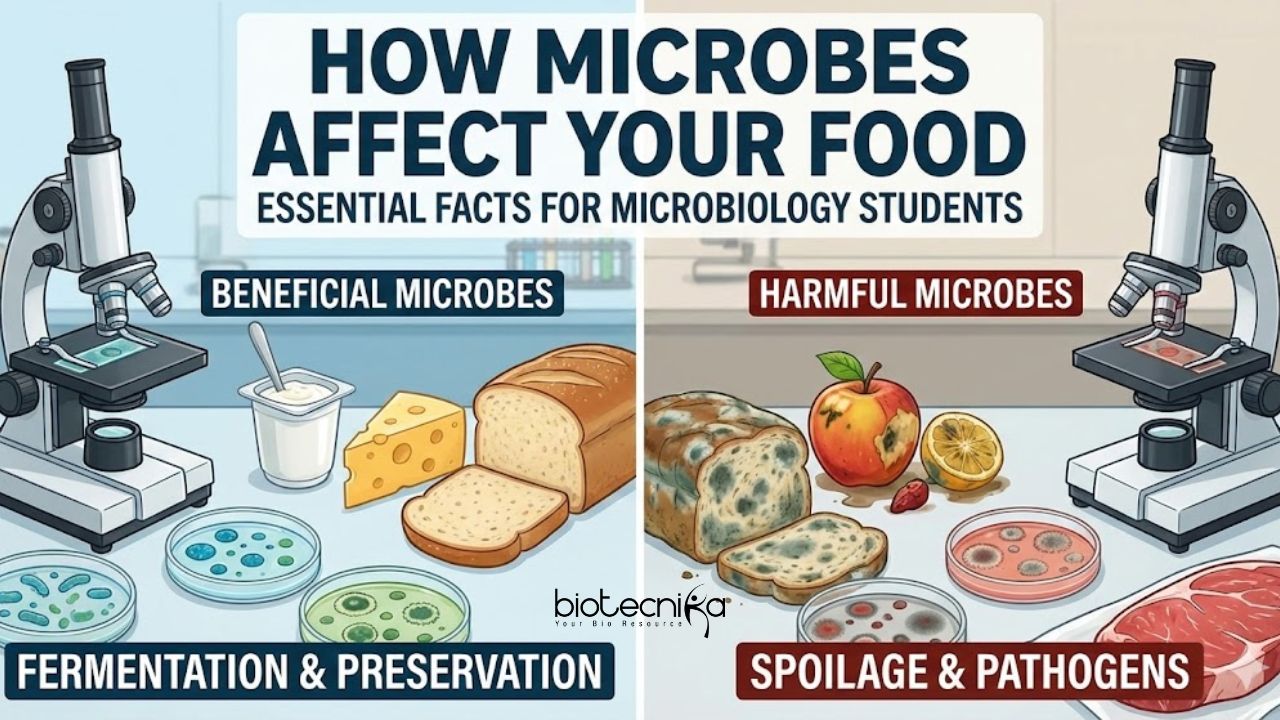
Microbes are everywhere. From the food on your plate to your gut, they play various roles. They live on almost all the surfaces, under various conditions. Some microbes enhance the flavour of the food, and some help in food preservation. In contrast, the notorious ones can contaminate and lead to food spoilage. Understanding the behaviour and growth of microbes, and their interactions with food, helps us preserve, cook, and consume food safely, avoiding illness. Food is essential, but how safely are we consuming it matters, and how it is made, too!
The purpose of this article is to break down the essential facts about microbes, food preservation, food spoilage, and contamination, and include a few examples to show how microscopic legends are shaping our food. This is the area where food microbiology takes part.
What are Food Microbes and Why are they Important?
Not one specific group, bacteria, molds, yeasts, and viruses play a key role in food microbiology. Some simple curd to cheese, fermented vegetables to wine, microbes are the science behind the taste and texture. Some are beneficial, like in curd/ cheese, while others are harmful and cause food spoilage and foodborne illness.
Why Microbes Matter?
There are a lot of factors that influence food:
- The edible period of food
- Taste, Smell and the texture of food
- They act as food spoilage indicators
- How safe the food is and whether it can be stored further.
Microbes and Food Preservation
Food preservation is the process of slowing or completely stopping microbial growth. Here are a few methods that are used in food microbiology
- Refrigeration and Freezing: There are very few classes of microbes that can survive cold temperatures. Fortunately, many of the food microbes halt their cycle in low temperatures, meaning they slow down their growth. In today’s busy lifestyle, refrigeration seems the most practical preservation method. But, the cold conditions can only slow the growth, but can’t kill the microorganisms.
- Drying and Dehydration: Just like other organisms, microbes need moisture for their growth and survival. Removal of water from foods like spices, chips, or fruits lasts longer because bacteria cannot multiply without water. Drying and Dehydration is one of the promising methods in food preservation.
- Salt and Sugar Preservation: Salinity affects microbial survival. Foods that rely on high salt or sugar levels, like Pickles, jams, and salted fish, prevent the growth of microbes by sucking the water through osmosis.
- Canning and Heat Processing: Neither at high nor at low temperatures can microbes live. They only grow at optimum temperature, and thus, high heat kills microbes. Canned foods remain stable and free from spoilage for months because they are sterilized and sealed to prevent contamination.
- Fermentation: These are the superheroes that take over the food, preventing harmful microbes from growing. Fermentation not only helps in food preservation but also enhances the texture, flavour, and nutrition. Fermented foods act as probiotics, which in turn supply “good microbes” to our gut.
Examples: Yoghurt, Cheese, Dosa batter, kimchi, Sausages etc.
Food Spoilage: How Microorganisms Change Food
Microbes, while growing on food, break down certain components of food for their nutrition. This way, the growth and multiplication cause food spoilage.
Signs of Food spoilage include:
- Foul Smell
- Changes in the colour of food
- Slimy or mushy texture
- Gas production (bloating in sealed packets)
Common spoilage microbes:
- Pseudomonas causes spoilage in sausages/ meats
- Bread molds or molds on fruits are the colonies of Penicillium and Aspergillus
- Yeasts mainly spoil sugary foods and beverages
Spoiled food can’t be considered dangerous, but it is definitely unsafe to consume. Spoilage is a natural process; it’s just the microbes breaking down organic matter for their survival.
Food Contamination: When Microorganisms Become a Threat
When harmful microorganisms enter food unintentionally, it is called food contamination. Contamination can happen at any stage, be it in the source (farm), during transport/ processing or even in the kitchen.
Microbes that Contaminate Food:
- Salmonella is found in paneer, eggs, and poultry
- E. coli is present in raw vegetables and undercooked meat
- Listeria has the potential to grow even in refrigeration.
- Norovirus can also spoil the food that is maintained with poor hygiene
How contamination happens in everyday life
- Cutting vegetables and raw meat on the same board
- Leaving cooked food at room temperature
- Street food is exposed to air and flies
- Improper packaging of ready-to-eat foods
Modern living involves frequent takeaways and stored foods. This increases the risk of contamination if hygiene is not maintained.
Helpful Food Facts about Microbes that Students Must Know
There are certain practices every food microbiology student and every consumer should be aware of.
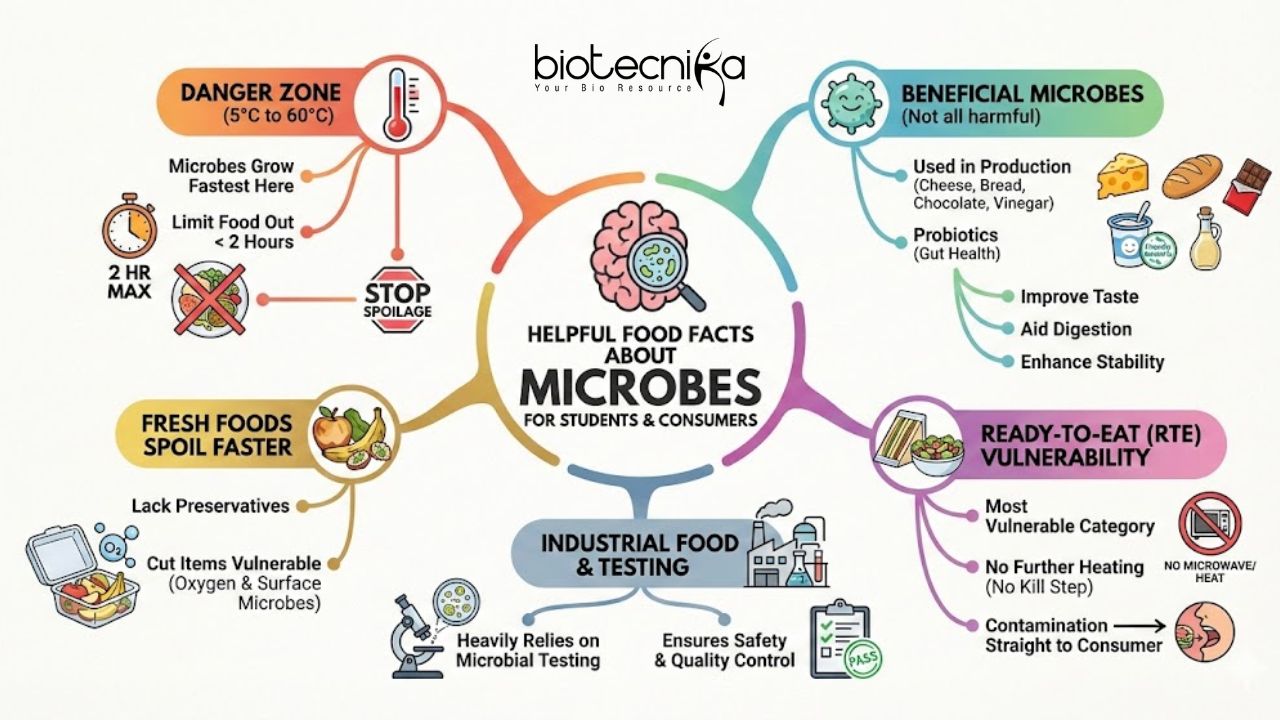
Modern food industries follow standards like HACCP, ISO 22000, and FSSAI guidelines.
which are built around controlling microbial risks.
Microbes shape almost everything about the food we eat. They can help preserve food, enhance taste through fermentation, or break down nutrients through spoilage. But when harmful microbes contaminate food, they pose serious health risks. Understanding how microbes work is essential not only for food microbiology students but also for anyone living in a world filled with packaged foods, fast meals, and global supply chains. By learning how microbes behave, we become better equipped to store food safely, prevent contamination, reduce wastage, and make informed choices. In the end, mastering the world of microbes is key to mastering the world of food.