



















Life Sciences Career – Bioinformatics vs Clinical Research vs Medical Coding – Which Career Should You Choose?
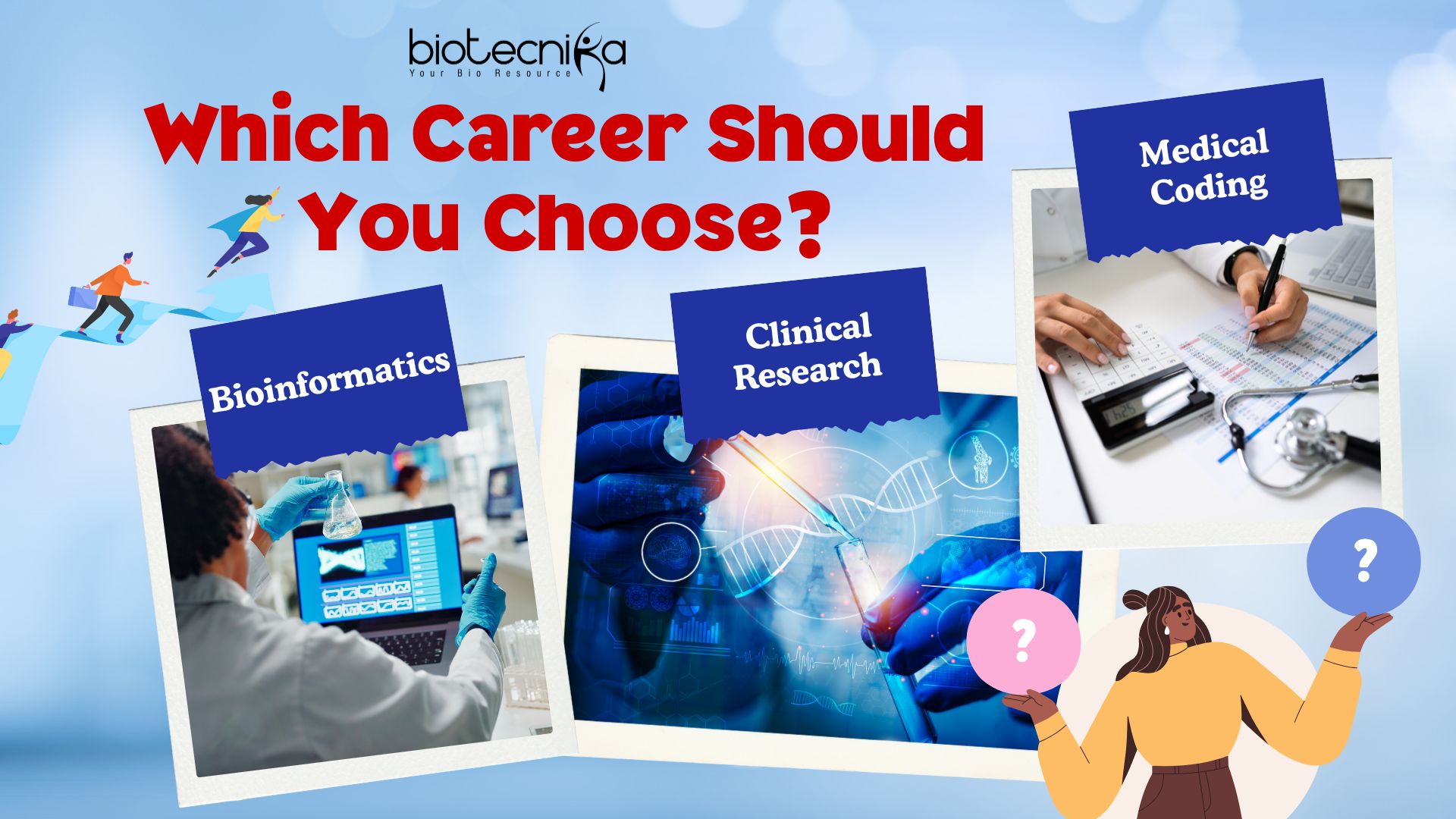
The Healthcare and Life Sciences sectors are shifting faster than ever and advancing at an unprecedented rate. Digital Health, AI (Artificial Intelligence), global Clinical Trials, Electronic Health Documentation, as well as Precision Medicine are revolutionizing the Healthcare industry. As a result of Technological advancements and Global demand, three major career options have emerged as among the most future-proof and strongest Life Sciences career paths for fresh graduates and career switchers: i.e., Bioinformatics, Medical Coding, and Clinical Research.
While all three fields offer impactful work, excellent growth, as well as job stability, they are fundamentally quite different in how they function in the industry, type of professionals in demand, and the skills they should possess. This article is carefully curated in a way that breaks down each career path in simple terms, so that you can choose your best career path and one that truly aligns with your long-term goals, strengths, as well as interests.
Are you ready to decide which Life Sciences career path is ideal for you and where you should be heading? Let’s understand the three evolving career paths and gain some valuable and career-guiding insights. Let’s Go!
Bioinformatics
Bioinformatics sits at the intersection of Biology, Computational Science, and big Data analysis. As the world shifts toward Precision Medicine, Genomics, and AI-driven Drug Discovery, Bioinformatics professionals are becoming indispensable.
-
What Do Bioinformaticians Do?
- Support R&D (Research & Development) in Molecular Diagnostics, Cancer Biology, Drug Discovery, as well as Personalized Medicine.
- Develop Computational Tools, Algorithms, as well as pipelines.
- Analyze large Biological Datasets, including Biological pathways, Genomic sequences, as well as Protein structures.
-
Education and Skills Required For Bioinformaticians
- A University Degree in Bioinformatics, Biotechnology, Computational Biology, Life Sciences, or a related field is essential. Additional skillsets in AI, CC (Cloud Computing), as well as ML (Machine Learning) are now highly valued and sought by the top companies.
- Coding (SQL, Python, and R).
- Knowledge of Molecular Biology.
- Working with Biological Datasets.
- Statistical thinking approach and Problem-solving attitude.
-
Career Opportunities and Scope For Bioinformaticians
- Research Bioinformatician
- Genomics Data Scientist
- Bioinformatics Analyst
- NGS Analyst
- Computational Biologist
With Europe, India, and the US (United States) witnessing rapid Technological growth in Research Institutes, Genomics startups, as well as AI-driven Biotechnology companies, opportunities are expanding significantly across the globe for Bioinformaticians.
Why Choose this Life Sciences Career Field: Bioinformatics?
You should choose the Bioinformatics field if you:
- Want to contribute to the advanced and futuristic innovations such as Personalized Medicine or Gene Therapies.
- Prefer doing Research-oriented and Analytical work.
- Love both Biology and Coding, as well as want a cutting-edge Life Sciences Career path driven by Data.
Quick Summary: Bioinformatics
- Bioinformatics is Ideal for: Analytical thinkers, Research-Driven Personalities, and Coding Professionals.
- Bioinformaticians’ Work Type: Computational, Research-centric, and Biological Data-dependent
- Bioinformatics Future Demand: It is exceptionally high, especially in Personalized Medicine, AI (Artificial Intelligence), and Genomics
- Remote Option For Bioinformaticians: It is moderate in Biotechnology companies and Research teams.
Clinical Research
Clinical Research is essential for testing novel Vaccines, Medications, treatment strategies, as well as Medical Devices. Soon after the COVID-19 pandemic, the Clinical Research industry has witnessed a tremendous expansion across the globe, creating massive demand for trained and skilled professionals in Clinical Research Institutes and companies.
-
What Do Clinical Research Professionals Do?
- Coordinate with Pharmaceutical companies, Hospitals, as well as CROs (Contract Research Organizations).
- Monitor and manage Clinical Research Trials.
- Coordinate and work with global Regulatory authorities, investigators, as well as Ethics committees.
- Ensure Data accuracy and Regulatory Compliance.
-
Education and Skills Required For Clinical Research Professionals
- A University Degree in Life Sciences, Biotechnology, Pharmacy, or related fields is essential.
- Authorized Certifications in Clinical Research, Pharmacovigilance (PV), or GCP (Good Clinical Practice) strengthen career profile.
- Documentation and strong communication skills.
- Professionals should have a keen interest in project coordination, patient Data, as well as Regulatory processes.
-
Career Opportunities and Scope For Clinical Research Professionals
- CRA (Clinical Research Associate)
- CRC (Clinical Research Coordinator)
- Pharmacovigilance Associate
- Regulatory Affairs (RA) Executive
- Clinical Trial Manager
The field of Clinical Research is experiencing continuous, evolving growth due to India’s rising Clinical Trials Research, increasing investment in Healthcare and Research innovation, and Pharmaceutical expansion worldwide.
Why Choose This Life Sciences Career Field: Clinical Research?
You should choose Clinical Research if you:
- Seek a balance between Project Management and Scientific Research work.
- Enjoy Documentation-driven and structured career positions.
- Prefer working in Hospitals, CROs, or Pharmaceutical companies
You should choose Clinical Research if you seek a stable and impactful Life Sciences Career.
Quick Summary: Clinical Research
- Clinical Research is Ideal for: Research and Documentation-focused professionals.
- Clinical Research Professionals’ Work Type: Regulatory-driven, People-centric, and structured.
- Clinical Research Future Demand: Demand is high, and India is becoming a global Clinical Trials center.
- Remote Option For Clinical Research Professionals: Moderate (PV, Regulatory)
Medical Coding
Medical Coding is growing rapidly and is the process of translating Medical Documentation, Healthcare diagnoses, and Healthcare procedures into valid Standardized Codes used for Medical Insurance and billing globally. It is becoming one of the most remote-friendly, stable, and scalable Life Sciences Career paths in the Healthcare sector. Some major Medical Standardized Code Systems include:
- ICD system (International Classification of Diseases) for Medical Diagnoses
- HCPCS system (Healthcare Common Procedure Coding System) for Medical equipment and supplies
- CPT system (Current Procedural Terminology) for Medical services and procedures.
It is becoming one of the most remote-friendly, stable, and scalable career paths in the Healthcare sector.
-
What Do Medical Coders Do?
- Work with RCM companies, Healthcare providers, and Hospitals.
- Assign HCPCS, ICD-10, and CPT codes to Medical records and documentation.
- Maintain Healthcare Documentation Standards in accordance with the Standardized Code Systems.
- Ensure legibility as well as accuracy for insurance Audits and claims.
-
Education and Skills Required For Medical Coders
- Graduates from Biotechnology, Life Sciences, Pharmacy, or related Health fields are essential. Authentic Certifications, such as CCS (Certified Coding Specialist) and CPC (Certified Professional Coder), can further boost employability for Medical Coders.
- Interested in Medical Documentation
- Should be comfortable with repetitive but accuracy-driven work
- Analytical and Detail-oriented approach
-
Career Opportunities and Scope for Medical Coders
- Coding Auditor
- RCM Specialist
- Senior Medical Coder
- Quality Analyst
With Digital Health Records, Telehealth, as well as global outsourcing evolving, the Medical Coding career has witnessed a good growth in career stability and Remote job options worldwide.
Why Choose This Life Sciences Career Field: Medical Coding?
Choose Medical Coding if you:
- Seek a strong work-life balance
- Prefer a regular and structured desk job
- Looking for hybrid or Remote working options
- Are you looking for an entry into the Healthcare sector
Quick Summary: Medical Coding
- Medical Coding is Ideal for: Accuracy-focused and Detail-oriented professionals.
- Medical Coding Professionals’ Work Type: Work on Coding systems and Documentation.
- Medical Coding Future Demand: Demand is very high as Digital RCM and Telehealth are growing.
- Remote Option for Medical Coding Professionals: It is excellent
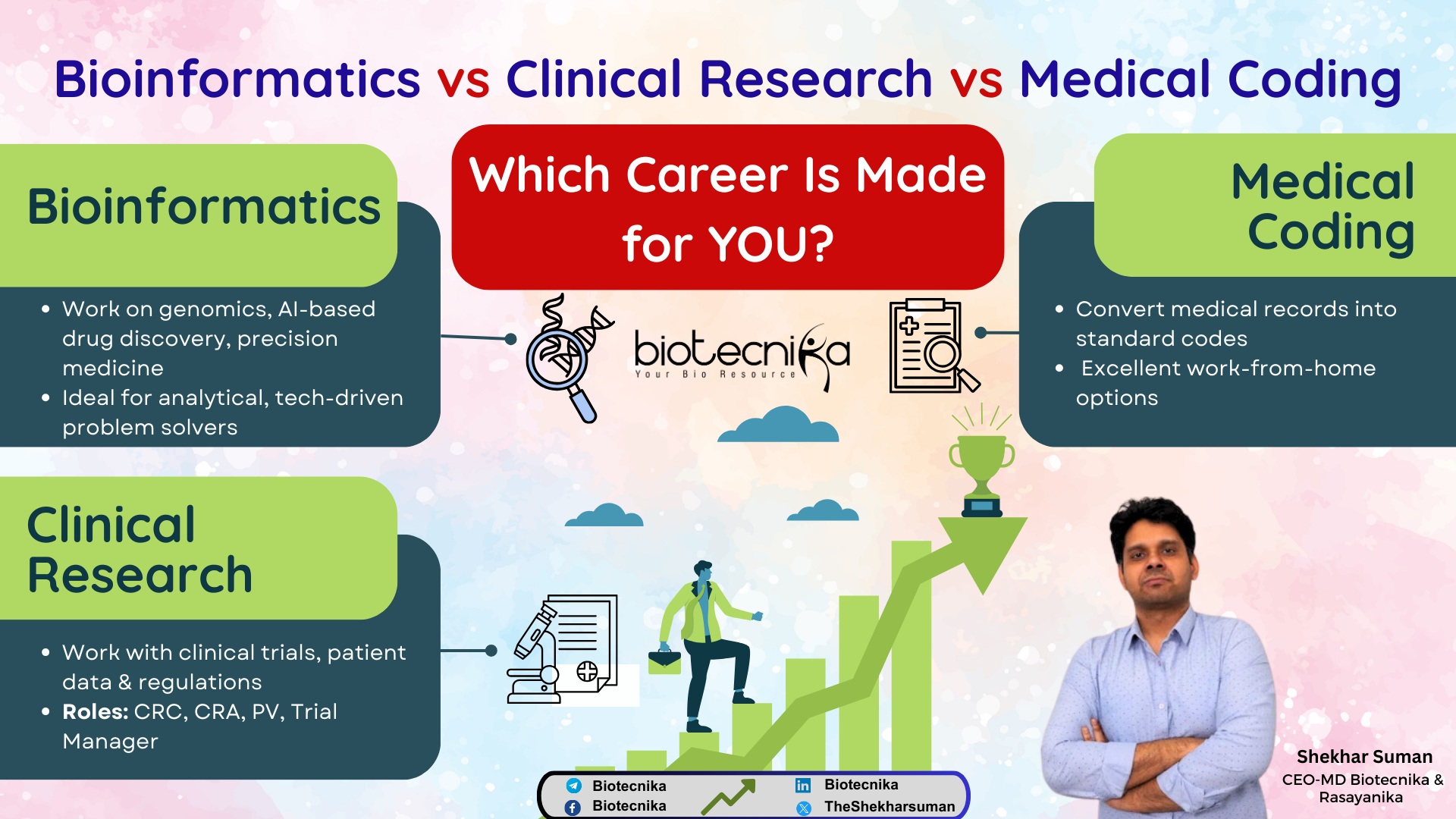
Bioinformatics vs Clinical Research vs Medical Coding: A Clear Comparison of the growing Life Sciences Career paths
|
Feature |
Bioinformatics | Clinical Research | Medical Coding |
|
Core Work |
Data Analysis, Computational Biology | Clinical trials, Regulatory processes | Coding Medical records for billing |
|
Skills Needed |
Coding + Biology | Communication, Documentation, Regulatory knowledge | Accuracy, Healthcare terminology |
|
Ideal For |
Tech-driven thinkers | Organized communicators | Detail-focused professionals |
| Work Environment | Research laboratories, Biotechnology firms, Genomic centers | Hospitals, CROs, Pharmaceuticals |
RCM firms, Hospitals, Remote setups |
| Growth Trend | High due to Genomics + AI | Strong due to Drug Development |
Very high due to global outsourcing |
India Salary Insights & Comparison Table of the Three Life Sciences Careers
Here’s a table of typical salary ranges for Entry-level, Mid-level, as well as Senior professionals in Bioinformatics, Clinical Research, and Medical Coding:
|
Career |
Entry-Level | Mid-Level |
Senior-Level / Specialist |
|
Bioinformatics |
₹ 3–6 LPA | ₹ 6–12 LPA |
₹ 15–25+ LPA (PhD or lead roles) |
|
Clinical Research (CRA) |
₹ 2.1–3.5 LPA | ₹ 4–6 LPA typical for 2 to 4 years of experience |
Up to ~₹ 8.5 LPA for experienced CRAs |
|
Medical Coding |
₹ 2.5–4 LPA for beginners | ₹ 4.5–7.5 LPA for 2 to 5 years of experience |
(Senior / Auditor roles are less publicly documented, but experienced Coders + Auditors can earn higher, especially in outsourcing or specialist firms) |
(Salary ranges may vary depending upon the company, location, certifications, and global outsourcing demands.)
- Bioinformatics: as a career option, provides high career growth potential, especially with AI integration, Proteomics, and Genomics, and rewards professionals with Technical expertise.
- Clinical Research: is appropriate for a steady career expansion, especially in countries such as India, due to increasing Regulatory complexity and Clinical Trial activity.
- Medical Coding: is a Remote-friendly and stable career path, growing in importance as Healthcare digitizes across the world.
Which Life Sciences Career Should You Choose?
Deciding the right career path is not about selecting the “ideal” field; it is more about choosing the right field that best suits your knowledge, interests, long-term goals, as well as strengths for a fulfilling Life Sciences career.
You Should Choose Bioinformatics if you:
- Want to work in AI-driven and Multi-omics Research
- Enjoy Biology, Analytical work, and Coding
- Love solving Scientific Research problems
You Should Choose Clinical Research if you:
- Want to contribute to patient safety and Drug Development significantly
- Enjoy people-centric and Research roles
- Prefer Regulatory and Documentation work
You Should Choose Medical Coding if you:
- Want strong Remote job options
- Prefer working with interpreting Medical records
- Enjoy an accuracy-driven and structured desk job
At the end of the day, the best career path is the one that aligns with who you are and what you prefer for your work.
Whether you are drawn to accuracy-focused and structured work, motivated by Clinical Research impact, or driven by Data and Research innovations, each of these career options provides meaningful career opportunities.
Take your time to reflect on your interests, your knowledge, and your strengths. When your career role matches your aspirations and natural abilities, satisfaction and success follow.
All three careers are expanding, but in different ways:
- The career in Bioinformatics will see the fastest rise due to innovations in AI, Biotechnology, Precision Medicine, and Genomics.
- The career in Clinical Research will continue to grow as India becomes a global Clinical Trial hub.
- The career in Medical Coding will remain one of the sought-after, Remote-friendly, and stable professions due to global RCM outsourcing, Digital Health, as well as Telemedicine.
The right career path is the one that aligns with who you are.
When you choose the field that fits your natural strengths, whether it’s Data, coordination, or Documentation, you build not only a successful career but a rewarding one.
Frequently Asked Questions (FAQ)
- Which career is easiest to start?
-> Medical Coding – fastest entry with minimal training.
- Which field has the highest long-term growth?
-> Bioinformatics – driven by AI, Genomics, and Precision Medicine.
- Which role is more people-focused?
-> Clinical Research – involves coordination with Hospitals, investigators, and trial teams.
- Do I need Coding skills?
-> Only for Bioinformatics. The other two do not require programming.
- Which field offers the best work-life balance?
-> Medical Coding, especially due to Remote and flexible work options.
Final Takeaway
Each field is growing rapidly, but the right choice depends on where your natural strengths lie:
- Data & Tech? → Bioinformatics
- People, process & Science? → Clinical Research
- Accuracy, structure & stability? → Medical Coding
Choosing the path that matches your interests will set you up for a Life Sciences career that is not only successful but also fulfilling and rewarding.