


















Table of Contents
Career in Pharmacovigilance
Millions of people rely on medications to fight against deadly diseases. But what if, behind the scenes, these medications were causing harm that no one knew about? That’s where the field of pharmacovigilance steps in—the silent guardians of public health, ensuring that each drug reaching the public is not only effective but also safe.
Pharmacovigilance is a career that few know about, yet it is essential to the healthcare industry. If you have ever wondered how to make an impact on global health without being directly involved in clinical care, then pharmacovigilance might be the perfect path for you.
Instead of vague advice, think of pharmacovigilance as a career staircase. You don’t jump to the top. You climb it—step by step, phase by phase. Once you understand those phases, the path becomes surprisingly clear.
In this guide, we’ll walk you through everything you need to know about starting your career in pharmacovigilance—an exciting, challenging, and incredibly rewarding field. Ready to take the first step? Let’s get started.
Understand Pharmacovigilance
Before beginning your pharmacovigilance journey, it is important to understand what pharmacovigilance entails and the expectations from a professional in this field. Pharmacovigilance is the science of collecting, analyzing, and preventing adverse effects of drugs. This vital field of pharma helps ensure the safety and effectiveness of our medications and plays an important role in public health.
In India, drug safety regulations are monitored by the World Health Organization (WHO) and the Central Drugs Standard Control Organization (CDSCO). Pharmacovigilance professionals work in pharmaceutical companies, regulatory agencies, contract research organizations (CROs), and hospitals. Their primary responsibilities include:
- Monitoring and reporting Adverse Drug Reactions (ADRs)
- Conducting risk assessments
- Ensuring regulatory compliance
- Managing drug safety databases
Stage 1: Getting Oriented Is Pharmacovigilance Right for You?
Timeline: First 3–4 weeks
Every successful pharmacovigilance career starts with awareness. Not excitement—clarity. Before enrolling in courses or applying for jobs, you need to understand what this role truly involves.
Pharmacovigilance professionals don’t prescribe medicines or run lab experiments. They track, evaluate, and report drug safety data once medicines reach real patients. It’s detail-driven work with real-world consequences.
At this stage, your focus should be on understanding the nature of the work, the typical job roles, and the career trajectory.
What you should actively do now
- Read actual job descriptions for Drug Safety Associates
- Watch real-world pharmacovigilance workflow explanations
- Understand how PV differs from clinical research and regulatory affairs
Helpful learning resources: Introductory pharmacovigilance webinars or short courses explaining post-marketing drug safety and global regulations.
Milestone to move forward: You should be able to confidently explain what pharmacovigilance professionals do and why the work suits you.
- Do: Research before investing money
- Don’t: Assume PV is non-technical or “easy”
Stage 2: Building the Right Skills Learning What the Job Actually Requires
Timeline: Month 1–3
Once you’re sure pharmacovigilance is the right fit, the next step is skill-building—not theory overload.
Entry-level roles are centered around case processing. This means handling adverse event reports, assessing seriousness, coding medical terms, writing narratives, and submitting data within strict timelines.
This stage is about learning how work is done, not just what pharmacovigilance means.
Key skills you should focus on:
- Individual Case Safety Report (ICSR) workflow
- MedDRA terminology and coding logic
- Regulatory timelines (FDA, EMA, WHO)
- Clear, compliant safety narrative writing
Recommended courses or certifications: Hands-on pharmacovigilance training programs that include:
- Realistic case scenarios
- MedDRA practice
- Exposure to safety databases like Argus or VigiFlow
Milestone to move forward: You should be able to walk someone through the full life cycle of a safety case—step by step.
- Do: Choose practical, workflow-based training
- Don’t: Study guidelines without understanding how they’re applied
Stage 3: Breaking In Landing Your First Pharmacovigilance Role
Timeline: Month 3–6
This is the most stressful phase and also the most misunderstood. Companies do not expect freshers to know everything. They expect baseline competence, accuracy, and trainability.
Most first roles fall under titles like Drug Safety Associate or Pharmacovigilance Executive. Your job at this stage is to prove that you understand the basics and can work within regulated systems.
| Entry-Level Role | What You’ll Mostly Do |
|---|---|
| Drug Safety Associate | Case processing and data entry |
| PV Executive | Case review and follow-ups |
| Safety Data Associate | ADR documentation and reporting |
What you should actively do
- Build a pharmacovigilance-focused resume
- Practice interview questions around case processing
- Apply consistently to CROs and pharma companies
Helpful support: Interview preparation programs and resume workshops tailored to pharmacovigilance roles.
Milestone to move forward: Securing your first job in pharmacovigilance within six months of focused effort.
- Do: Apply steadily and track progress
- Don’t: Pause learning while waiting for interview calls
Stage 4: Growing in the Role From Executor to Contributor
Timeline: Year 1–3
Once you’re inside the industry, growth depends on initiative. This phase is where you move beyond basic case handling and begin understanding why decisions are made, not just how tasks are completed.
You may start contributing to:
- Signal detection activities
- Aggregate safety reports (PSUR, PBRER)
- Risk management plans
- Audit preparation and quality checks
What helps at this stage
- Volunteering for cross-functional tasks
- Learning global regulatory expectations
- Documenting your work and outcomes
Recommended learning: Advanced courses in signal management, aggregate reporting, and global PV regulations.
Milestone to move forward: Being trusted with complex cases and review-level responsibilities.
- Do: Ask questions and seek responsibility
- Don’t: Get comfortable doing only repetitive tasks
Stage 5: Leadership & Long-Term Growth
Timeline: Year 4 onward
At senior levels, pharmacovigilance becomes less about individual cases and more about systems, compliance, and people.
You may lead teams, handle inspections, develop SOPs, or interact directly with regulatory authorities.
What defines success here
- Strong decision-making
- Clear communication
- Deep regulatory understanding
- Ability to mentor others
Helpful development areas: Leadership training, quality management systems, and inspection-readiness programs.
Milestone to aim for: Taking ownership of safety processes not just participating in them.
- Do: Keep learning as regulations evolve
- Don’t: Ignore soft skills and leadership development
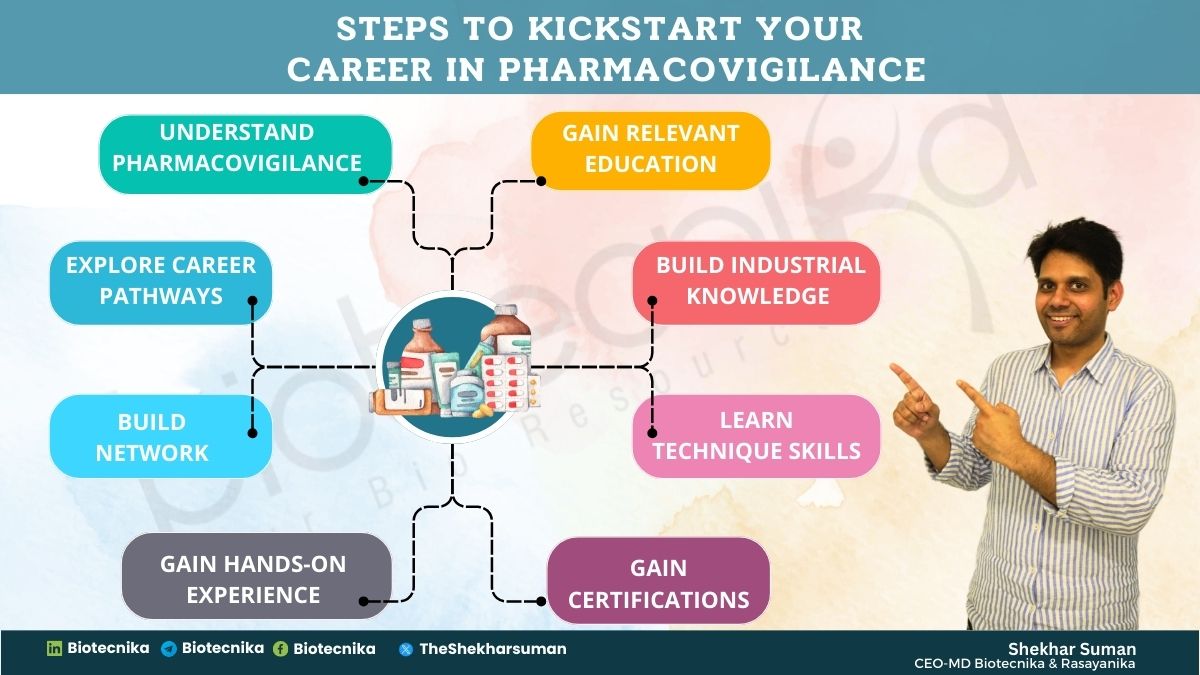
List of Technical Skills Required for Pharmacovigilance
Pharmacovigilance requires a combination of technical and analytical skills. These skills help in assessing data, identifying patterns, and ensuring the safety of drugs on the market.
- Case Processing: Handling Individual Case Safety Reports (ICSRs) to document adverse drug reactions. Professionals must accurately collect, assess, and report these cases to regulatory authorities.
- Signal Detection: Identifying patterns or trends in adverse event reports by analyzing large datasets.
- Literature Review: Monitoring scientific literature for new safety information to stay updated on emerging drug safety issues.
- Regulatory Reporting: Ensuring compliance with global regulations by submitting safety data to agencies such as the FDA, EMA, and CDSCO.
Software Knowledge: Proficiency in drug safety software, including:
- Oracle Argus Safety
- ArisG
- VigiFlow
Mastering these skills is essential for excelling in pharmacovigilance roles and ensuring patient safety.
Relevant Pharmacovigilance Certifications
Certifications are essential for boosting credibility and job prospects in pharmacovigilance. Here are some recognized certifications:
- Postgraduate Diploma in Pharmacovigilance (PGDPV): In-depth knowledge of drug safety, case processing, regulatory compliance, and risk assessment. Offered by institutes like IGMPI and IICR.
- Certified Professional in Pharmacovigilance (CPPV): Validates expertise in adverse drug reaction monitoring, signal detection, and compliance with global regulations.
- ICH-GCP Certification: Ensures understanding of clinical trial ethics, safety protocols, and regulatory obligations related to pharmacovigilance.
- Drug Safety and Pharmacovigilance Certificate from DIA: Covers drug safety concepts, risk management, and regulatory requirements.
- MedDRA Training Courses: Enhances accuracy in case processing and regulatory submissions through standardized terminology training.
Obtaining these certifications significantly improves career opportunities in pharmacovigilance.
How to Gain Hands-on Experience?
Practical experience is essential for building a strong foundation in pharmacovigilance. Here are ways to gain experience:
- Internships: Offered by pharmaceutical companies, CROs, and regulatory bodies, providing exposure to case processing and regulatory compliance.
- Entry-Level Jobs: Positions such as Drug Safety Associate (DSA) or Pharmacovigilance Associate involve handling individual case safety reports and ADR monitoring.
- Clinical Research Organizations (CROs): Companies like IQVIA, Parexel, and Covance offer structured training programs and entry-level roles.
- Freelance Work: Some organizations offer freelance opportunities in case processing, medical writing, and pharmacovigilance auditing through LinkedIn or specialized freelancing platforms.
Get Trained in Pharmacovigilance with Biotecnika!
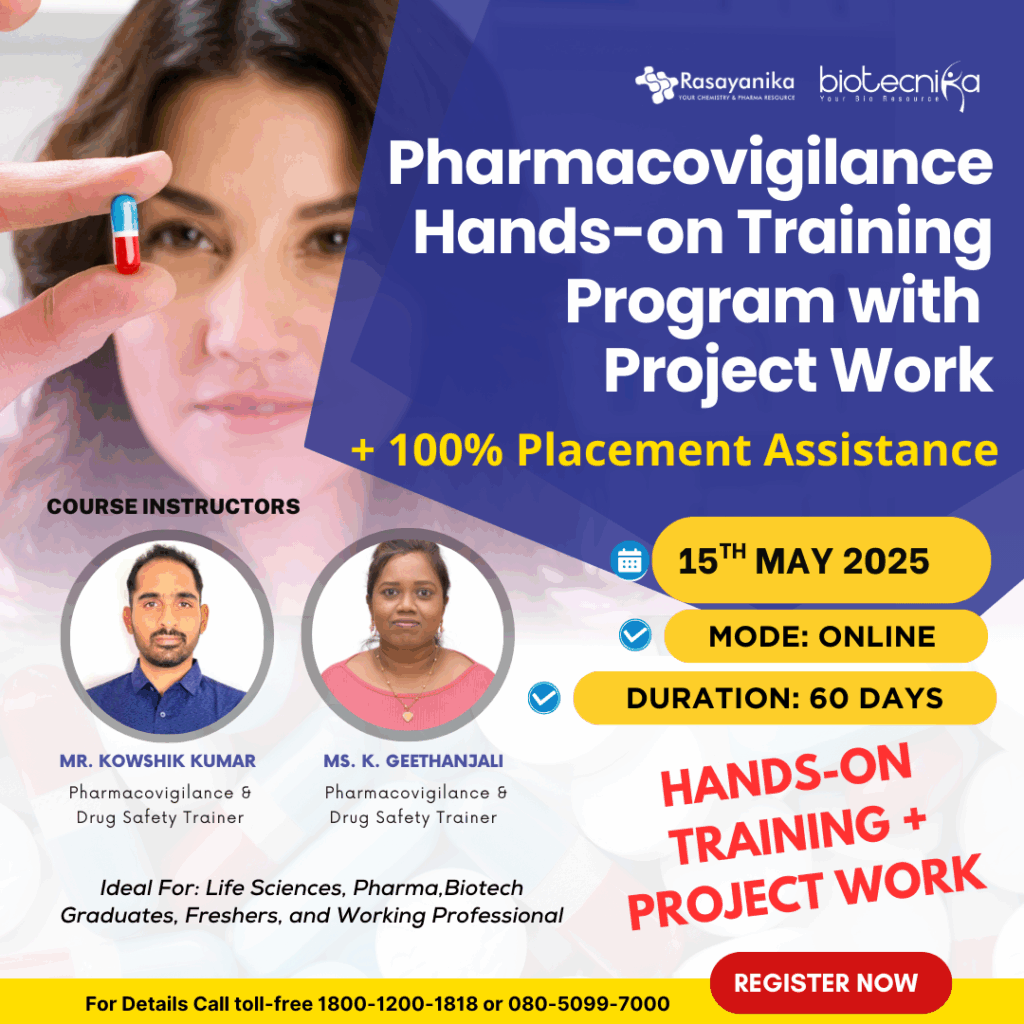
Next Batch Starts: May 15, 2025
Limited Seats! Register Now: https://btnk.org/PV-training-project
Chat with a PV Expert: https://btnk.org/contact-PV-Expert
100% Online | Duration: 60 Days
Beginner-friendly – Perfect for Freshers!
What’s Included:
✅ Hands-on Project Work
✅ 100% Placement Assistance
Build your career in Pharmacovigilance from scratch!
Network Within the Industry
Networking is essential for career growth. It helps professionals find job opportunities and stay informed about industry trends.
- Joining Professional Associations: Organizations like ISoP and PvPI offer webinars, workshops, and networking opportunities.
- Attending Conferences and Webinars: Events organized by the Drug Information Association (DIA) and other leaders provide insights into regulatory updates and trends.
- Using LinkedIn: Engaging with industry professionals, recruiters, and experts can help with job searches and mentorship opportunities.
Explore Career Pathways in Pharmacovigilance
Pharmacovigilance offers several career pathways, including:
| Career Role | Primary Responsibilities |
|---|---|
| Drug Safety Associate (DSA) | Adverse event reporting |
| Pharmacovigilance Scientist | Signal detection and risk assessment |
| Signal Detection Specialist | Identifying patterns in ADRs |
| Regulatory Affairs Specialist | Ensuring compliance with drug safety laws |
| Medical Reviewer | Reviewing and validating safety reports |
| Risk Management Specialist | Developing safety and risk mitigation strategies |
Challenges
While pharmacovigilance is a rewarding career, it comes with challenges:
- Regulatory Changes: Constantly evolving drug safety laws require professionals to stay updated.
- Data Management: Handling large volumes of safety reports can be overwhelming.
- Timely Reporting: Meeting strict deadlines for regulatory submissions.
- Workload Pressure: High expectations for accuracy and compliance due to tight submission schedules.
Tips for Success
To thrive in your pharmacovigilance career, consider the following suggestions:
- Be Alert: Stay updated on regulatory changes and industry trends.
- Polish Your Skills: Learn the latest pharmacovigilance programs and tools.
- Work on Communication: Report clearly and document precisely.
- Further Your Training: Pursue a Master’s degree or advanced certifications.
- Attention to Detail: Precision is crucial for pharmacovigilance reports.
Pharmacovigilance is not a shortcut career, but it is a structured one. If you follow the phases—awareness, skill building, entry, development, and leadership—you replace confusion with clarity.
The biggest mistake beginners make is trying to skip steps. The most successful professionals are the ones who respected the process, built skills intentionally, and stayed consistent even when results took time.
If you treat pharmacovigilance like a journey rather than a buzzword, getting hired stops being luck—and starts being inevitable.